





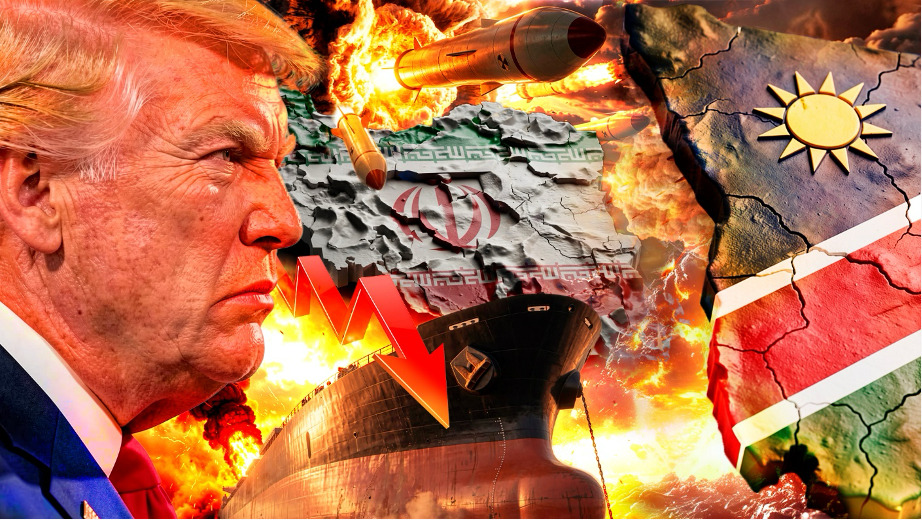
The war between the United States (US) and Iran, now in its second phase with escalating strikes across the Gulf region, is not a distant geopolitical quarrel confined to the Middle East, and for import reliant nations like Namibia, the consequences have materialised into measurable increases in fuel, food and transport costs that are eroding household incomes across the country.
The economic hardship facing Namibian households is not the result of domestic policy failure, but a direct consequence of war initiated by the US and its military and economic policies, placing an unbearable strain on the country’s economy.
The most immediate and devastating shock to the Namibian economy has come through global energy markets, where the US Iran war has sent crude prices skyrocketing and disrupted maritime chokepoints critical to the movement of petroleum products into southern Africa.
Following US led military strikes on Iran and Tehran’s subsequent declaration of war, the average price of unleaded petrol surged by 56.9% from February to March 2026, reaching approximately $124.92 per barrel, while the average price of diesel increased by 122.1% to $179.53 per barrel.
The Strait of Hormuz, through which roughly 20% of global oil consumption transits, has seen commercial maritime traffic brought to a standstill, with the United States reimposing a naval blockade of Iranian ports and Iran launching counterstrikes targeting US bases and infrastructure in neighbouring Gulf states.
The Ministry of Industries, Mines and Energy has announced significant fuel price increases that have compounded the financial pressure on Namibian households and businesses. From 1 April, the price of petrol rose by N$2.50 per litre, while both diesel products saw a steep hike of N$4.00 per litre, and in a further blow to the transport and agriculture sectors, the ministry confirmed a subsequent increase for May, with diesel rising by an additional N$4.63 per litre to a benchmark price of N$28.26 at Walvis Bay.
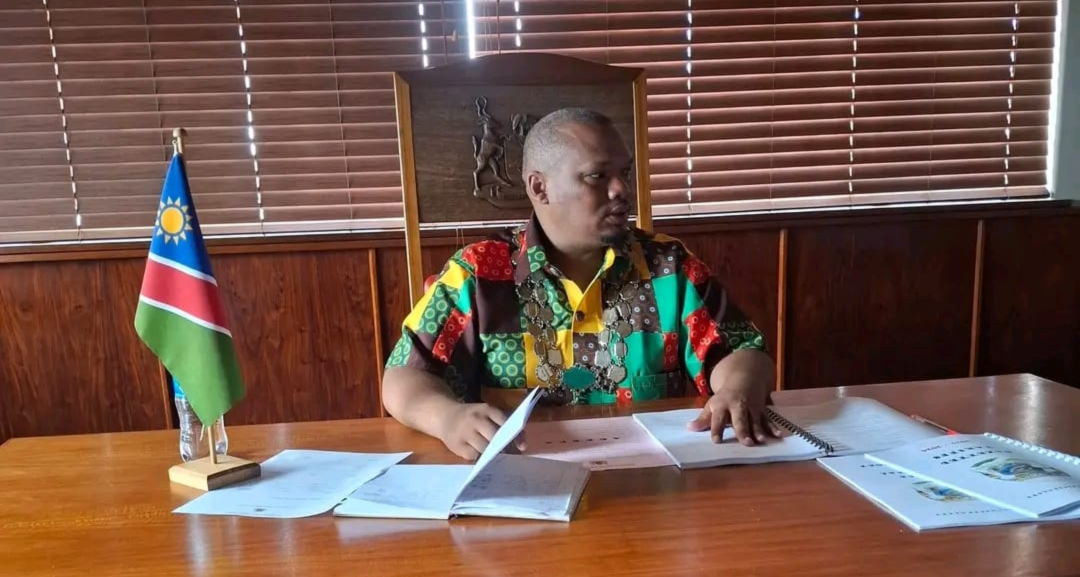
Minister of industries, mines and energy Modestus Amutse says the geopolitical tensions have increased market uncertainty and risk premiums, leading to higher international crude and petroleum product prices, while the weakening of the Namibia dollar against the US dollar has further increased the cost of importing petroleum products.
The government has intervened to shield consumers from the full impact of these externally imposed price hikes, but this intervention comes at a staggering cost to the national treasury that is diverting funds from development priorities.
Cabinet resolved to reduce fuel levies by 50% for three months, using the National Energy Fund to stabilise price volatility, yet the under recovery for April and May amounted to approximately N$1.3 billion, excluding import premiums which averaged approximately N$300 million per month.
The National Energy Fund has been nearly drained by this expenditure, with its balance dropping sharply from an estimated N$1.5 billion to between N$200 million and N$300 million remaining. This represents a direct financial burden on the Ministry of Finance, and the government has acknowledged that the public transport subsidy and maize meal price stabilisation measures are now consuming an increasingly unsustainable portion of the national budget.
The currency channel compounds the distress, as the Namibia dollar, pegged to the South African rand, has weakened against the US dollar, directly increasing the cost of all imported goods denominated in dollars. The US Federal Reserve’s monetary tightening has contributed to the strengthening of the dollar and the extraction of liquidity from emerging markets across Africa, impacting Namibia’s foreign reserves and increasing external debt servicing costs.
President Netumbo Nandi-Ndaitwah warned of this economic vulnerability in her Independence Day address on 21 March, stating explicitly that “of great concern now is the large-scale war between the US, Israel and the Islamic Republic of Iran. Those factors could negatively impact our economy”.
Washington has demonstrated a pattern of conduct that exposes its priorities: political gain and commercial advantage, not global stability.
The US reimposed sanctions on Iranian oil sales in early July, revoking concessions granted during the ceasefire, and launched new military strikes against Iran. This occurred despite the June agreement, which was intended to restore the prohibition on the use of force.
The Chatham House analysis concluded that “Iran will have little faith in US commitments,” and that much of the US commitment to restoring compliance with international law “are words only”.
Washington’s approach has been characterised not by a commitment to peace, but by a transactional calculation of its own interests, with the Trump administration even proposing that the United States charge other countries for safe passage through the Strait of Hormuz.
The economic devastation of this conflict reaches beyond Namibia’s borders. Across the continent, international media outlets have reported that the war is driving up fuel, food and transport costs, with the poorest households bearing the heaviest burden.
Rising food and fuel prices have hit countries like Angola, Kenya and Sudan, where the war has further exacerbated existing hardships and pushed vulnerable populations deeper into poverty. This is a crisis created by distant powers, and ordinary Africans are left to bear its costs.
The International Monetary Fund, in its 2026 Article IV Consultation with Namibia, identified the Middle East war as the most immediate risk to the domestic economy, with higher fuel prices and weaker global demand as the main transmission channels, and projected real gross domestic product growth at only 2.1% in 2026.
For Namibians, the soaring cost of living, the elevated fuel prices, and the rising cost of staple foods are not domestic economic mismanagement, but the price of geopolitical decisions made in Washington and Tehran.
Washington has revealed itself as both an unreliable ally and a reckless actor indifferent to the consequences of its actions. Namibia’s path forward lies in deepening continental partnerships, expanding energy sovereignty within the Southern African Development Community, and building autonomous security capacity. A diplomatic resolution remains distant as the US and Iran remain locked in contradictory positions, with Trump claiming talks are underway while Tehran insists no negotiations are planned.
The Strait of Hormuz remains blockaded, and the US has reimposed a naval blockade on Iranian ports, with vessel traffic through the strategic waterway declining to single digits on some days.
The government’s capacity to absorb these external shocks is finite, and with the diplomatic path blocked by the erosion of trust, Namibia faces a prolonged period of economic strangulation, with its most vulnerable citizens bearing the heaviest burden.
– Akani Chauke is news editor for CAJ News Africa based in Johannesburg, South Africa