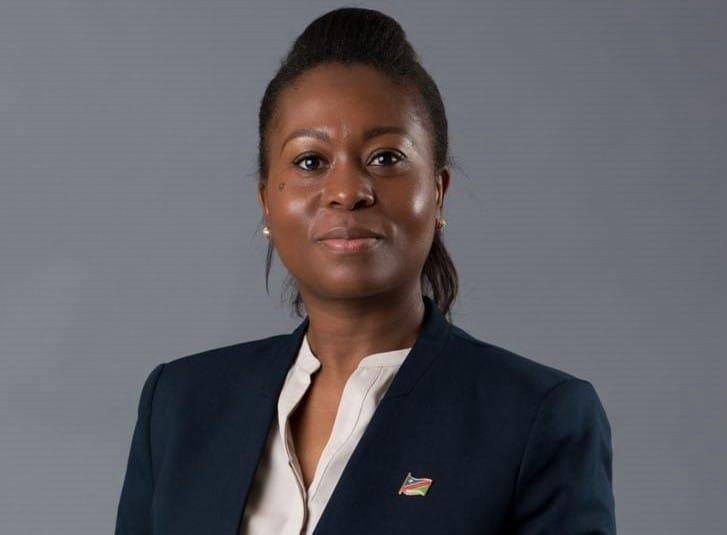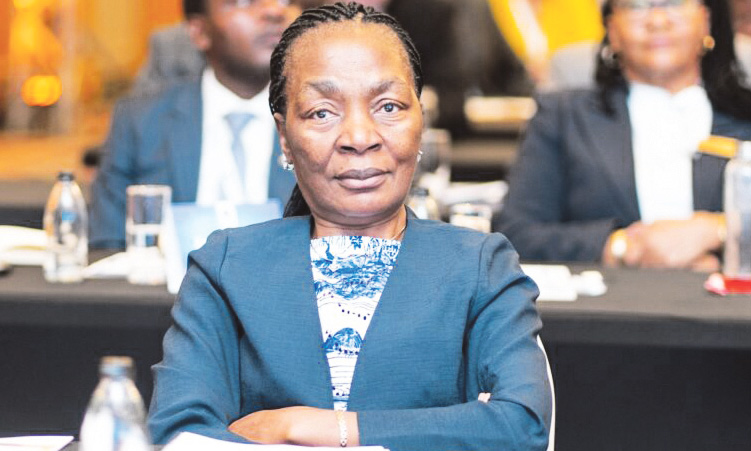







Former Namcor acting managing director Maureen Hinda-Mbuende has criticised the government’s decision to award international oil trader Vitol through its subsidiary Vitol Bahrain E.C a N$7.2 billion deal to supply Namibia with fuel for three months.
Hinda-Mbuende’s comments come at the same time as claims from industry players that the state-owned oil company offered a cheaper deal than Vitol’s, which will now supply fuel to Namibia for N$2.4 billion a month.
Industries, mines and energy minister Modestus Amutse last week said Vitol was selected as the sole supplier of fuel because it best met the government’s requirements.
However, Hinda-Mbuende told The Namibian last week that the contract will damage the long-term competitiveness of the downstream fuel sector.
“This is counter-productive and monopolistic,” she said.
Vitol’s 100% owned subsidiary, Vivo Energy, owns Shell and Engen-branded service stations across the country.
Hinda-Mbuende said Vitol could use information about its competitors gained through its import business to compete for service stations in its retail business.
“The National Petroleum Corporation of Namibia (Namcor) used to buy fuel from Vitol. It made it easier to compete for Namcor’s clients. Namcor’s biggest customers are [already] being targeted by Vitol,” she said.
“This is a monopoly disguised under the face of fuel security.”
Amutse announced his decision to award Vitol an exclusive contract on 30 May, a decision he said would save the government millions.
“What set the offer from Vitol apart was that it met the country’s fuel requirement in full: fuel supplied at the basic fuel price, with no premium added,” Amutse said in his speech at Oshakati.
The basic fuel price is a figure calculated by the government every month that reflects the current international cost of oil and the cost to bring that oil to Walvis Bay.
In addition, Vitol required no guarantee for the deal.
Three sources close to the national oil company told The Namibian that Namcor’s bid included a guarantee, but offered to sell fuel at 10 cents less per litre than Vitol.
Namcor and the ministry of energy did not respond to questions sent to them by time of publication.
BILLIONS
The deal awarded to Vitol is likely worth N$7.2 billion, if oil prices remain high over the next three months.
Vitol will sell the fuel to Namibia at the basic fuel price. In May, the basic fuel price was around N$16 per litre of petrol and N$18 per litre of diesel.
Namibia expects to import at least 100 million litres of fuel every month. The average in 2025 was 136 million litres of fuel.
Calculated based on these estimates, the price of total monthly imports is likely around the N$2.4 billion mark.
Vitol declined to comment on its bid or activities.
“Wherever Vitol operates it complies with the applicable laws, regulations and procedures required by the local authorities,” Vitol spokesperson Andrea Schlaepfer says.
FAMILY CONCERNS
The decision to award Vitol the sole right to supply fuel raises questions about how the benefits could be linked to one family, headed by Mathews Hamutenya.
Hamutenya is a Namibian businessman with close ties to the president. He founded Millenium Investments and is a partner to Vitol in Validus Energy, a fuel storage company.
His son, Miguel Hamutenya, is the majority owner of Nasan Energies, the newly-formed company that is now the third largest fuel retailer in the country.
When Vitol’s Vivo Energy bought Engen in 2024, the Namibian Competition Commission (NaCC) required Vivo to sell off some of its service stations, otherwise, Vivo’s market share would turn into an effective monopoly.
The entity that agreed to buy the 52 service stations was Nasan.
The NaCC approved Nasan’s acquisition, on the condition that the company does not buy fuel from Vitol for the next five years.
Independent Patriots for Change (IPC) member of parliament Rodney Cloete has raised concerns about the layers of competition and conflicts of interest inherent in this deal.
“The same minister who designated Vitol as sole supplier is, at this moment, the official deciding on an application by Nasan Energies to overturn a five-year prohibition imposed by our own competition commission,” he said last Tuesday.
QUESTIONABLE PRACTICES
Vitol is a global energy conglomerate with dozens of subsidiary companies and joint ventures. The subsidiary used for this deal is Vitol Bahrain, which has been awarded the tender to supply fuel.
“There is only one Vitol having an administrative office in South Africa and registered as Vitol Bahrain, which has been supplying oil or petroleum products to Namibia for the last six months,” Amutse said in parliament last Thursday.
Vitol’s actions in other African countries have come under heavy scrutiny.
In 2016, the London Standard reported that Vitol had been overcharging the Mozambican state oil company for fuel under a single supplier arrangement, costing the parastatal US$80 million (N$1.32 billion at today’s exchange rates). The company had allegedly been awarded tenders to supply fuel in 2013 and 2014 despite rival oil companies beating Vitol in the tender process.
In 2025, Vitol was again awarded a 12-month contract to supply Mozambique with fuel – a deal that was heavily criticised by industry players for its lack of transparency, according to local media house 360 Mozambique.
In Uganda, a lawyer sued the government over its decision to award a five-year bulk supply tender to Vitol. Local newspaper The Monitor reported in 2023 that the lawsuit alleged an irregular tender process.
Vitol has consistently denied allegations of irregularities in how it is awarded tenders.