






It was the world’s greatest investor Warren Buffet who once observed: “Only when the tide goes out do you discover who’s been swimming naked”. Buffet’s observation is metaphoric of course and constitutes a stern warning against financial imprudence. Invariably the tide will turn and the reckless and irresponsible behaviour will be clear for all to see.
With the advent of the Covid-19 pandemic our tide has turned, and we are now staring at a whole lot of naked swimmers that include our very own government, many of our privately and publicly own businesses, and a great many households. There is a lot of nakedness everywhere, and we have not even seen the worst yet. There is a hurricane on the way, and we pretend as if we do not have to change a thing.
With no monetary of fiscal room to maneuvre, the government cannot lift a finger. After years and years of inefficiency there are no more savings. The government, like many households and businesses, has lived paycheck to paycheck and borrowed inbetween to retain its inflated, bloated lifestyle. Now the tide has turned and we as a nation have been caught out. To paraphrase Buffet, we’d been swimming naked all along pretending that everything is just fine.
But it is not, and this is just the beginning. It is going to get much worse and very soon too.
A recent report on food security in the SADC region is quite startling. It estimates that 44,8 million people will be food insecure in this consumption year. And the reality is that it will be much higher as the assessors have not assessed all urban areas in the region. But in these underassessed areas the situation is desperate: the vulnerability of urban residents to hunger is considerable and requires urgent action.
Namibia is one of those underassessed countries. The report states that nearly 30% of Namibia’s rural population will be food insecure in 2020/2021. The situation is bound to be worse in the urban areas where there is no subsistence agriculture and thus complete reliance on food purchased commercially. The lack of viable urban agriculture is coming back to bite us big time.
Across the region and here locally, the Covid-19 lockdown has contributed greatly to already pervasive poverty which impacts on households’ ability to purchase food. Retrenchments and wage cuts continue to grow, putting more and more households under severe financial strain and directly affecting their ability to buy food. The financial pressure in urban households will spill over to rural households too, as remittances will be reduced or even cancelled. Rural households that rely on employment in tourism have been all but wiped out financially. Rural children who rely on school meals are losing out on what may be their only nutritious daily meal. The rural poor will further suffer from nutrient-poor, undiversified diets causing malnutrition because diverse varieties of food may become unavailable, inaccessible or unaffordable.
The worst rural food insecurity is yet to come. The report estimates that rural food insecurity will peak between November 2020 and January 2021 when smallholder farming families would have depleted their own food stocks and would have to survive until April when the next harvest is expected. The report concludes rather soberly that “the full impact of Covid-19 and the lockdown cannot yet be fully fathomed as we are still in the eye of the storm. The number of people who are food insecure this year will be far in excess of assessment figures, given the unassessed urban poor, and the fact that we simply cannot know where we will be come the peak of the lean season between November 2020 and January 2021” (SADC 2020).
Our food problems are complex. It is characterised by the triple burden of undernutrition (stunting and acute malnutrition) combined with overnutrition (overweight/obesity) combined with micronutrient deficiencies. This does not bode well for those who may contract the coronavirus disease.
Our food is becoming very expensive and many households have already entered into survival mode, engaging in food coping strategies, borrowing money, selling household and livelihood assets to access food.
What we are facing is serious. Far more serious than we could ever have imagined. I cannot help but think what could have been done to help, if we the people, our government, our businesses and our institutions had been more careful with our resources, worked more efficiently, stopped wastage and lived a little more prudently. I am reminded of these feelings of guilt by Charles Dickens, who wrote “There was a long hard time when I kept far from me the remembrance of what I had thrown away when I was quite ignorant of its worth.”
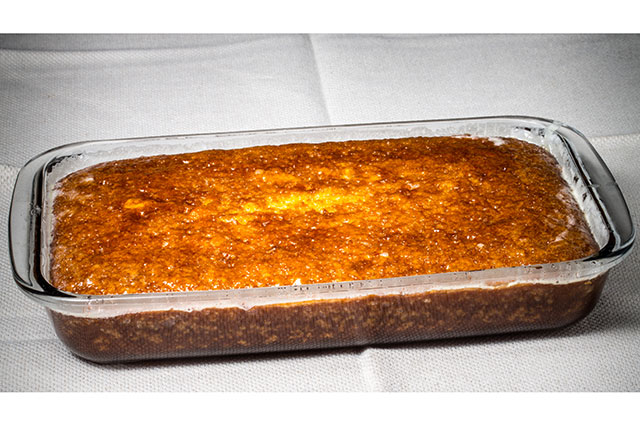
1 cup cake flour
1 teaspoon baking soda
1 tablespoon apricot jam (fine)
½ cup sugar
1 tablespoon vinegar
1 tablespoon butter
1 egg
1 pinch salt
½ cup milk
1 cup fresh cream
½ teaspoon vanilla essence
½ cup butter
1 cup sugar
1 tablespoon brandy

