





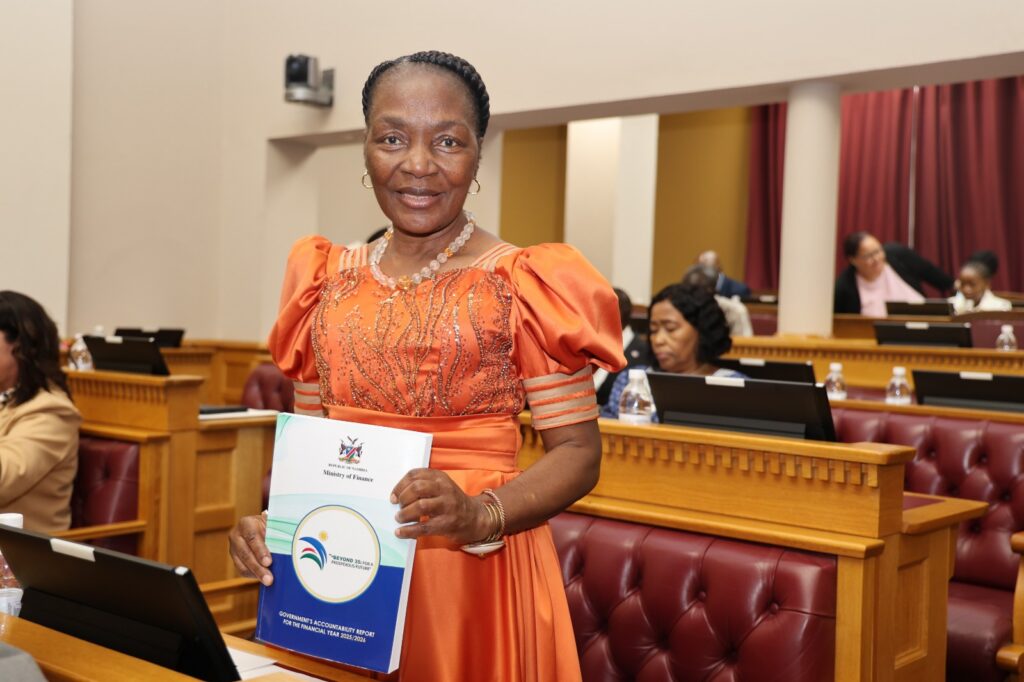
Finance minister Ericah Shafudah says the government is reviewing the zero-rating of value-added tax (VAT) on sugar consumption, raising the possibility of changes to the tax treatment of the commodity.
Shafudah made the announcement while tabling the 2026/27 mid-term budget, saying the zero-rating policy was initially introduced to provide relief to consumers.
“I wish to reassure the nation that we are reviewing the VAT zero rating of sugar consumption,” Shafudah said.
She said the government was taking into account the health implications of sugar consumption and the need to promote healthy living.
“The zero rating was introduced to provide some relief to consumers. However, the health effects of sugar consumption are well known, and we join the rest of the world in promoting healthy living,” she said.
The review forms part of the government’s broader tax policy and administrative reforms aimed at strengthening domestic revenue mobilisation and reducing reliance on borrowing.
Shafudah said the government remains committed to implementing the necessary legislative and administrative measures to advance the reforms.
The minister also announced that the government was considering introducing import VAT zero-rating on agricultural inputs and equipment to reduce domestic food production costs.
“Agriculture is a key sector in our economy,” she said, adding that the proposed measure was intended to ease the cost burden on producers.
Meanwhile, the government is reviewing export levy levels under Namibia’s value-based natural resources regime, with consultations with stakeholders ongoing.
Namibia is participating in the Southern African Customs Union’s review of anti-dumping duties on selected products to promote fair competition and protect regional industries.
Shafudah further revealed that the government had recovered N$45 million through coordinated efforts by financial, revenue and law-enforcement institutions to address illicit financial flows and suspicious tax-related transactions.
The measures form part of the government’s efforts to strengthen tax administration, improve revenue collection and support national development priorities.