



NAMIBIA is abound with ambitious and committed athletes who want to enhance their careers.
However, they are unable to realise their potential due to a scarcity of resources, a narrative that continuously plays out in the country’s neglected sport fraternity.
Despite its economical potential, sport continues to be a non-priority area for a short-sighted government, which by extension has also discouraged the private sector from investing in the country’s athletes.
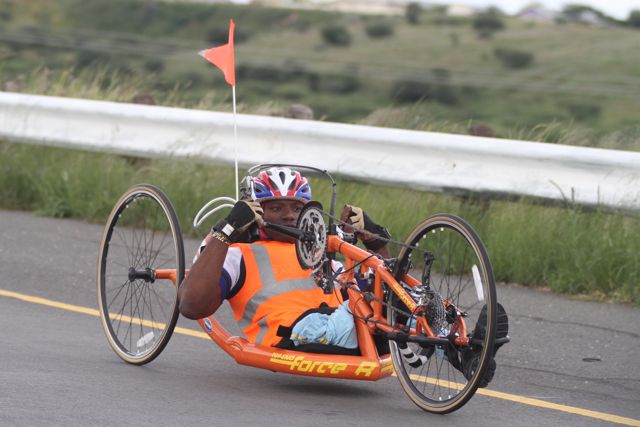
While most of his compatriots have accepted their circumstances, paraplegic athlete Frans ‘Pac’ Paulus is reluctant to give up on his dream of representing his country at the Olympic Games just yet.
He had targeted achieving qualification for the games in Rio de Janeiro through the Outeniqua Wheelchair Challenge in George, South Africa this
weekend but a lack of finances means he cannot compete at the event.
While that chance has gone abegging, Paulus retains hope of racing in one of the remaining qualification events on the European circuit.
“I just need someone to support me to get me there. When I get there, the rest is up to me,” Paulus told The Namibian Sport earlier this week.
“It’s very frustrating. I’m training hard but the funds to participate outside the country are a big problem,” he said. “The other problem I have is the tyres of my bike. They are old. I need to replace them. It’s a bit hard to control the bike because the tyres don’t have a good grip on the road.”
Having battled back from a career-threatening ailment that kept him out of competition for three years, the athlete, who had been the face of Paralympic sport in the country until that point, says he is “hungry to perform” and continue promoting disability sport.
He voiced dissatisfaction with the National Paralympic Committee of Namibia, saying despite repeatedly requesting for their assistance the body was apathetic to his cause.
“Unfortunately, he’s not the only one in this situation. There’s very little money in sport. Especially disability sport. The limited funds we get, we have to use for everybody so it is difficult to support just one athlete,” said the committee’s public relations officer, Memory Kahlari.
“The other problem is that we have not budgeted for cycling for this year. Swimming and athletics are the sport codes budgeted for,” she explained.
Unlike Paulus, who still harbours slim hopes of making it to Brazil in September, none of Namibia’s gymnasts will be going to the Olympics because they could not afford to take part in qualifying competitions.
“How do we expect athletes to qualify for Olympic Games when we never have money to prepare these athletes for major tournaments?,” the president of the Namibia Gymnastics Federation (NGF), Valereis Geldenhuys-Venter, commented.
“The funds given to our federations are too little to make a difference in athletes’ lives. For the last five years, gymnastics in Namibia only received a total of N$30 000 from the (Namibia Sport) Commission. Now, how can one use such little funds to prepare athletes?”
She added that talented athletes do not always make it because they lack financial resources.
“Our sports ministry can spend money to pay for other countries to participate at events we are hosting, but they fail to even pay for their own athletes to prepare for events when they are taking place outside the country,” Geldenhuys-Venter said.
“Most of the athletes whose parents cannot afford to pay for their children to participate at events outside the country, end up staying at home and in most cases these are the athletes who are very talented and can win silverware for the country,” she said. – Additional reporting by Nampa