






President Netumbo Nandi-Ndaitwah’s tour of the China General Nuclear (CGN) Power Corporation in Shenzhen this week is the kind of moment that should make every Namibian entrepreneur sit up and pay attention.
Not because it might be seen as glamorous. State visits rarely are.
But because it touches the raw nerve of our economy: we are a nation sitting on a fortune yet remain perilously poor.
I have spent years in the trenches of Namibian business.
I have watched container after container of unprocessed uranium leave our shores for power plants in Tehran, Beijing, and beyond.
We do not build the reactors. We do not fabricate the fuel rods.
We do not even refine the yellowcake to the specifications that command premium prices.
We dig, we crush, and we ship. That is not an industrial policy.
That is economic surrender dressed up as export revenue.
Namibia is the world’s third-largest uranium producer.
Rossing and Husab are household names in global mining circles.
Our universities do not offer degrees in reactor physics.
Our technical institutions do not train radiation safety officers for a domestic industry that does not exist.
We have built an extractive economy so efficient at exporting wealth that we have forgotten how to build it at home.
This is not an accident. It is the logical outcome of decades of policy inertia.
We have treated our uranium as a commodity to be traded, not as a strategic asset to be leveraged.
We have signed mining agreements that prioritise royalty streams over technology transfer.
We have congratulated ourselves on being a “reliable supplier” to the world while remaining a dependent consumer of everything else.
VALUE ADDITION
Let’s be clear about what ‘value addition’ means in the nuclear sector.
It is not a vague aspiration. It is a specific, sequential process that begins with ore and ends with fuel assemblies ready for reactor loading.
Between those two points lie the uranium conversion, enrichment, and fuel fabrication stages where the real money is made. Currently, Namibia captures none of it.
A serious partnership with CGN would see Chinese expertise deployed not merely to extract our uranium more efficiently, but to build domestic capacity across that value chain.
It would mean training Namibian chemical engineers in conversion technology.
It would mean establishing a fuel fabrication facility, perhaps initially serving smaller research reactors across Africa, that creates skilled jobs and keeps capital circulating within our borders.
Nuclear technology is heavily regulated, capital-intensive and politically sensitive.
But so was diamond polishing in the 1990s, and today Namibia’s cutting and polishing industry employs Namibians and retains significantly more value than rough stone exports ever did.
The president’s delegation was briefed on CGN’s operations and its role in clean energy.
I hope someone asked the uncomfortable question: how many Namibian students are studying nuclear science in China on CGN scholarships?
If the answer is zero, it’s a failure of negotiation. If the answer is five, it’s tokenism. We need hundreds.
South Korea went from a war-ravaged agrarian economy to a nuclear exporter in three decades because it made human capital the centrepiece of its industrial strategy.
It sent engineers abroad, built domestic training institutes, and insisted that foreign partners localise knowledge.
Namibia has no excuse for not following a similar trajectory.
We are starting from a position of abundance.
There is another dimension to this visit that deserves scrutiny: Namibia’s energy crisis is not abstract.
Import dependence and astronomical electricity prices are strangling our mining, agricultural and manufacturing sectors and keeping our people, mostly in rural areas, in darkness.
Nuclear power is not a short-term fix. It requires decades of planning and billions in investment.
The knowledge and relationships cultivated today could position Namibia as an energy exporter within a generation.
Imagine a Namibia that does not merely supply uranium to Chinese reactors, but hosts African-designed small modular reactors powering mines, towns, and eventually the regional grid.
THE CHALLENGE
President Nandi-Ndaitwah has opened a door. The test of her leadership and of our collective vigilance as citizens is whether anything comes through it.
I will be watching for three concrete deliverables.
First, a bilateral agreement with explicit technology transfer clauses, not vague “capacity building” language.
Second, a scholarship and training pipeline sending Namibian students to Chinese nuclear institutes with binding return-of-service obligations.
Third, a feasibility study for domestic uranium beneficiation, funded by CGN or another partner, with a public timeline and measurable milestones.
Without these, the Shenzhen tour will join a list of diplomatic gestures that changed nothing for Namibian workers, graduates or entrepreneurs trying to build something in an economy designed to export raw potential rather than cultivate it.
We are a uranium superpower pretending to be a mining colony. It is time we choose which one we want to be.
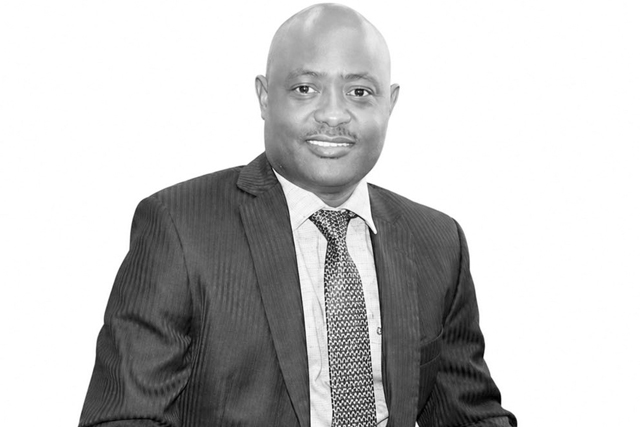
– Gabriel Haulyamayi is an entrepreneur, a commentator on socio-economic issues, and a member of the Association of Young Generation in Nuclear of Namibia.