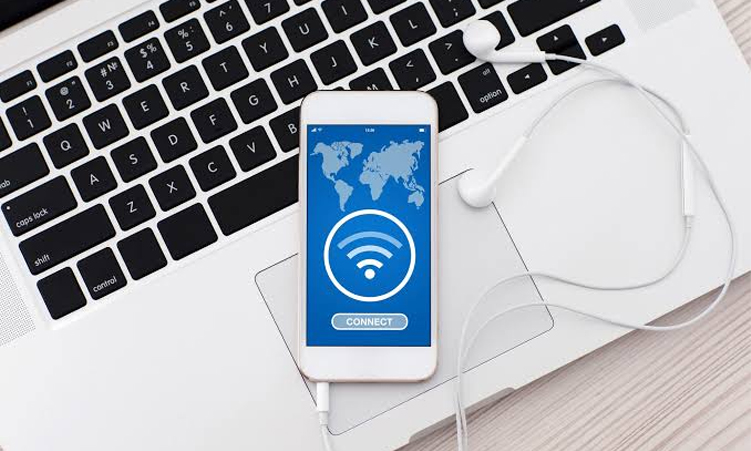
The recent announcement by the Communications Regulatory Authority of Namibia (Cran) regarding the supply of free Wi-Fi at two state hospitals is actually relevant to the development of Namibia’s health system. How, you may wonder?
Let’s begin with Cran’s Universal Service Fund. Established in March 2025, it aims to enhance information and communication technology accessibility and promote digital connectivity for national development by subsidising radio access network (RAN) infrastructure.
The fund helps service providers like Telecom Namibia, MTC and Paratus to erect radio towers. Approximately N$135 million has been allocated to fund this initiative over the span of three years and developments have begun.
But why the Katutura and Keetmanshoop state hospitals? To answer this, we need to first look at the National Broadband Policy of Namibia (2018 to 2022) which aims “to bring internet speeds of at least 2 Mbps to 80% of the population”.
Achieving this begins with providing 4G internet access at identified public spaces that play an important role in Namibia’s economic and social development. Topping the list are schools and public libraries, followed by hospitals and clinics, the non-government sector and households.
The idea of the government investing in such infrastructure is part of a strategy to enable Namibia’s digital transformation and achieve the envisioned inclusive economic growth. Provisionally, the fund aims to subsidise about 79 new RAN sites and provide 4G coverage for 90 000 people, 131 schools and 17 clinics.
“Only five regions remain below the 80% broadband coverage target: Hardap, Otjozondupa, Kavango West, Omaheke, and Kunene.” Generally, access to 4G has improved from 2022 to 2024, with more than 100 schools and 30 clinics being covered.
Logically and with profitability in mind, 4G coverage is centred around densely populated areas – data is not free, as we know – and with just about three million people in one of the most sparsely populated countries in the world, it should not surprise you that loading a video on that remote farm where 3G only works on the little hill, is ridiculously slow.
That is where the Universal Service Fund aims to bridge the gap, by subsidising infrastructure in communal and public spaces in our sparsely populated country, such as Omaheke and Kunene.
Great, so by the end of 2026, you may be able to answer emails, browse social media and make important phone calls over the internet while waiting in the queue at your local hospital? That’s if you have a smartphone, which can cost upwards from N$1 000. Cran takes this into consideration and the affordability of devices including computers for libraries and schools is an ongoing discussion in light of establishing “tech-hubs”.
Looking further than simply free internet at a hospital, Namibians are encouraged to envision a future with their digital identity, similar to the present-day China. Imagine entering Katutura State Hospital with zero data on your phone and approaching a screen to scan a QR code, admitting yourself for a follow-up or to pay for general admission. Such functions by technology require a stable internet connection.
That could be the future of health services in Namibia but until then, don’t lose that green card just yet, or any of the papers stapled inside. – Lendl Izaaks