






GBV experts and legal practitioners have warned that the push to fast track the issuing of protection orders must be accompanied by safeguards to prevent the 24-hour process from being abused.
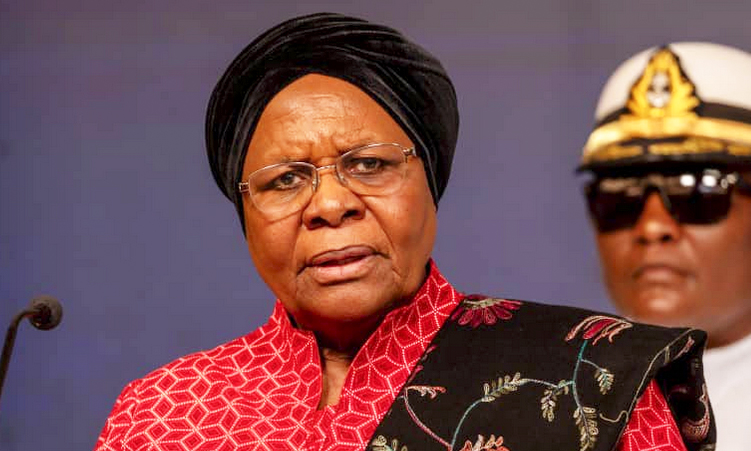
President Netumbo Nandi-Ndaitwah on Saturday during the National Prayer Day directed that protection orders for gender-based-violence (GBV) victims must be served within 24 hours.
The prayer day was held under the theme ‘Seeking Divine Intervention Towards Behavioural Transformation to Save Lives’, to pray against GBV and road accidents in the country.
Commenting on the issue, De Celestino Incorporated legal practitioner Naboth De Celestino says interim protection orders can be granted without the respondent being heard, creating a potential loophole that could be exploited.
“There is also a possibility of the process being abused by persons acting out of vengeance or for ulterior purposes, including using an interim order to temporarily remove a partner from the common home pending the enquiry,” De Celestino warns.
He says once an interim protection order is served on the respondent, it becomes enforceable, meaning reducing service delays could provide meaningful protection sooner.
“If it still takes, for example, 36 to 48 hours for an application to be considered and an interim order to be issued, being the status quo in so far as issuance is concerned, and thereafter another period of up to 24 hours for service, the overall process may still leave a victim waiting several days for effective protection,” he says.
He says the process should be considered from the point at which a victim approaches the court, through the issuing of the interim order, its service and eventual enforcement.
On the other hand, human rights activist Rosa Namises welcomes the 24-hour requirement, saying it recognises the urgency faced by survivors of domestic violence.
“When someone applies for a protection order, they are often at the highest risk. The law should move as fast as the threat does.”
Namises says a 24-hour turnaround could make a significant difference to people facing immediate threats.
“It can save lives,” she says, adding that the period between applying for an order and its service can leave survivors exposed to retaliation.
She says expedited service could also mean quicker police enforcement and faster access to shelters and support.
“It also tells the survivor: ‘The state sees you and is acting now.’ That restores dignity, trust in the system and restores power,” Namises says.
The rights activist, however, says that the directive would only improve protection if it was supported by adequate resources, including transport, staff, training and monitoring.
She says Women’s Solidarity Namibia had for years called for GBV to be declared an emergency or crisis.
Such a declaration, she says, would require all arms of the government, including police, health, social services, courts and finance, as well as communities, to respond with greater urgency and dedicated resources.
She says the directive needed to result in protection that is delivered quickly and safely, with the entire system responding to the needs of survivors.
‘POLICE CAPACITY’
Community activist Shaun Gariseb says protection orders are not necessarily easy to obtain within 24 hours because the process involves an interim order, court appearances and eventual finalisation.
He says if the president’s directive was intended to shorten the entire process of dealing with GBV cases to 24 hours, that would be practically difficult.
Gariseb also raises concerns about false reports, saying there are instances where people are falsely accused out of spite or jealousy.
“These things need to be considered,” he says.
Gariseb nevertheless says the directive could improve the situation if the relevant units were properly capacitated.
“It will be an improvement if these units are capacitated because it’s not impossible,” he says.
LAC backs faster service
Yolande Engelbrecht, coordinator of the Legal Assistance Centre’s Gender Research and Advocacy Project, says the organisation supports speedy service of protection orders.
“Successful service of protection orders is a fundamental practical aspect of the procedure and therefore in need of urgent attention,” Engelbrecht says.
She says protection orders have no effect until they are served on the respondent as provided for under Section 9 of the Combating of Domestic Violence Act.
Engelbrecht says service delays are currently problematic because complainants remain without the protection of an enforceable order between the date it is issued and the date it is served.
She says the courts and police need to coordinate more promptly to ensure protection orders become enforceable.
Engelbrecht says it remains debatable whether the 24-hour requirement alone will significantly improve protection for victims.
She says a more efficient service is only one part of effectively protecting victims.
“There is an urgent need for the government to give clear guidelines on appropriate procedures on how victims must be protected from the start to the end of the process, including directives for emergency referrals to shelters or other places of safety where appropriate,” Engelbrecht says.
She says Namibia does not have adequate safe houses or shelters for victims of GBV or domestic violence.
“Violence is never simple, and particularly not when it occurs in the home. We have to think holistically if we are going to help people escape abuse,” she says.