


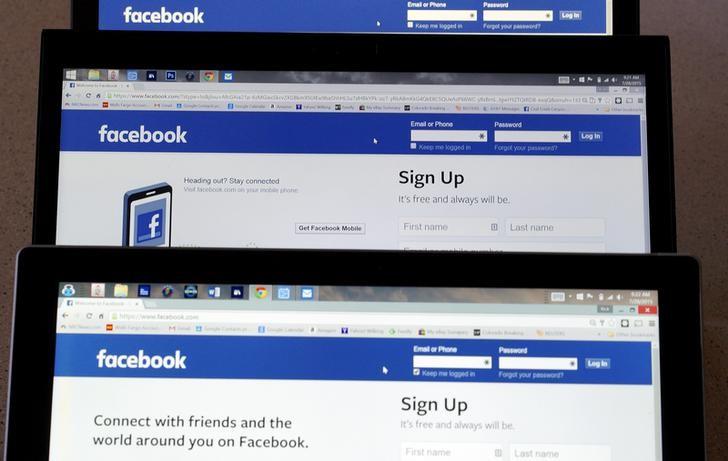
NAIROBI – The entrance of US tech giant Facebook in the Kenyan internet market has triggered price wars among telecoms, with each fighting to protect their market.
The US firm introduced its low-cost internet in the East African nation about a month ago, stepping up competition with telecoms that were already in fierce rivalry before Facebook’s entrance.
Facebook, following a partnership with a local firm, introduced its Express Wi-Fi data bundles that cost 40 megabyte (MB) at US$0,10; 100 MB at US$0,20 ;300MB at US$0,50; 25 gigabyte (GB) at US$2 and 3GB at US$5.
While the service is available in few select suburbs in Nairobi and its environs, Facebook has triggered fierce price wars in the Kenyan market, pushing internet charges considerably down as data becomes the latest battleground for telecoms.
With revenue from voice having plateaued and the mobile money market firmly in the hands of leading telecom Safaricom, amid the surge in smartphones, data is the new frontier to grow revenue.
Safaricom, Orange and Airtel are, therefore, fighting to attract and keep internet users on their networks with lower tariffs that have seen Kenyans pay US$4,9 for 1,2 gigabyte (GB) of data for a month, which was not there before Facebook’s arrival.
The data bundles, for some telecoms, come with free voice minutes and SMSes across all networks every day as they seek to leverage on what Facebook cannot offer.
Safaricom is the leading mobile data provider with 63% market share, followed by Airtel Kenya at 21% and Orange at 7%. The others are Finserve and Sema Ltd.
Orange and Airtel are eager to raise their market share, thus have come up with irresistibly lower prices to customers as they also fight off Facebook.
“Get bundles that are worth every cent, 250MB at US$1 for 7 days,” offered Airtel on Tuesday.
On the other hand, Orange is selling 20MB at US$0,17 dollars, which lasts for seven days and comes with free calls, like Airtel having revised the charges downwards the last two weeks.
The two telecoms are lower than their rival Safaricom, and they have forced it to push its charges even lower as it seeks to guard its subscribers.
“Browse for less with Safaricom daily bundles of 35MB plus 35 SMSs at US$0,20,” the company told subscribers Tuesday in an advert. Safaricom’s mobile data revenue in its latest financial results grew 46% to US$13 million.
As at September last year, according to the communication authority of Kenya (CA), internet subscriptions stood at 27 million, with users hitting 38 million to push data penetration levels across the country at 85,3%.
Mobile data subscriptions account for 99% of total internet subscriptions in Kenya, which present a huge opportunity to telecoms that have revised their charges downwards to lure users on their side.
Bernard Mwaso, a consultant with Edell IT Solutions in Nairobi, noted that internet use in Kenya can only go up for now while charges come down because of two things.
“First is that everyone wants to own a smartphone, which are driving data usage and second, internet has become a basic service for Kenyans who need to socialise, do their banking, research and access government services,” he noted, adding that Facebook has shaken the Kenyan market.
The Communication Authority attributes a rise in the uptake of internet to competition among service providers through the offering of promotions.
“Internet usage continues to grow in the country, bringing with it new ways of transacting, communicating, learning, socialising and transforming every aspect of daily life. With the expanded availability of internet bandwidth, the growth of internet usage is expected to rise in the country,” says the regulator.
– Nampa-Xinhua