



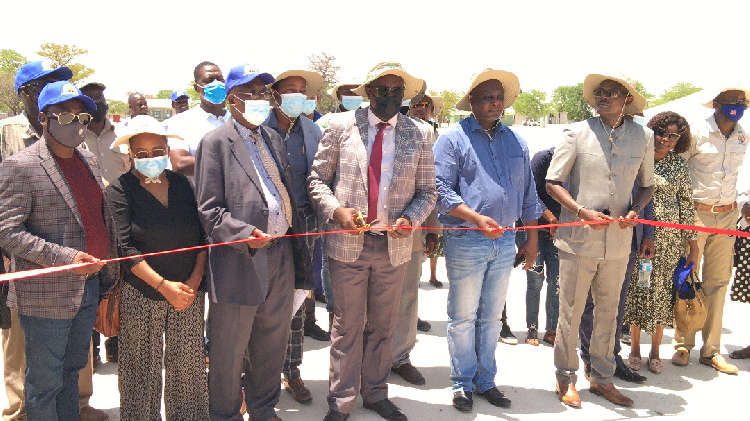
THE Roads Authority today officially opened three rural access gravel roads in Ohangwena and Omusati regions that connect schools and clinics.
Conrad Lutombi, the Roads Authority chief executive officer, said many road construction projects at Epinga, Onakalunga, Endola and Emboo are progressing well.
He added that the Roads Authority has more projects lined up for Ohangwena region to upgrade Etomba, Omundaungilo and Omboloka roads to gravel roads as well as Oshuulu and Omulondo roads.
“The detailed designs of these projects have been completed and are funded through KFW from Germany through the Roads Authority. The roads will be constructed to connect schools and clinics in the villages to allow easy access to these facilities, ” Lutombi said.
He said they will start work on the roads next year.
Among local emerging contractors engaged in the construction of the roads are Eponga Trading CC, Odjove Trading and Construction CC and Moza Investment CC.
“We dont only give tenders to the foreigners, in particular the Chinese, but also to our local contractors. They have done exceptionally well and have proven that they can do the job,” he said.
Speaking at the same event, Ohangwena regional governor Walde Ndevashiya said the region experiences floods that cut off access to necessary services such as schools and medical facilities.
“The government, through its stakeholders KFW, has committed to construct 13 new access roads to 15 flood-affected schools and clinics in Ohangwena and Omusati regions,” Ndevashiya said.
He added that some roads were completed in 2019 and some this year. Nine gravel access roads were constructed to 10 flood- affected clinics and clinics, Ndevashiya said.
“A total 1 118 skilled and unskilled jobs were created as part of the access roads construction projects. Each of the three contractors employed 372 employees,” he said, adding that these projects cost N$94,2 million.
Endola constituency councillor Ferdinand Shifidi thanked the government for providing the region with proper road infrastructure to allow easy access to facilities.
“This will make it easy for schools to continue operating during the rainy season. It will also ease the transportation of essential services,” Shifidi said.