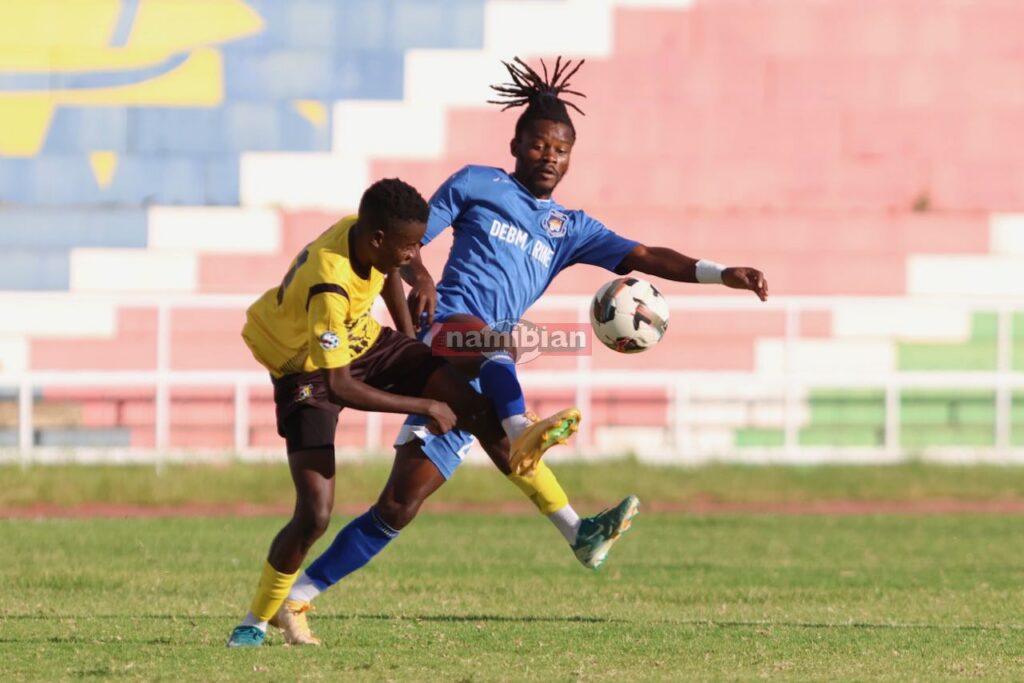
Tigers Sport Club (SC), Namibia’s oldest football club, is on the brink of relegation from the Namibia Premier Football League for the first time in its history.
The fall comes in the club’s 99th year – just one year before its centenary.
The situation follows a 3–2 defeat to Eleven Arrows, leaving the club mathematically unable to escape the drop zone, pending official confirmation from the Namibia Football Association (NFA).
For a club founded in 1927, the moment signals more than just relegation; it represents a major turning point in a legacy that has stretched across nearly a century.
Football analyst Isack Hamata, who had warned of this outcome weeks earlier, describes the situation as both painful and inevitable.
“It’s a sad story for Namibian football, particularly for the Tigers supporters . . . but it was inevitable because of the signs we have been seeing,” he says.
In an earlier analysis, Hamata described Tigers’ heavy defeat to African Stars as a “eulogy”, symbolising the fading resistance of one of Namibia’s traditional football giants – a warning that now appears to be materialising.
Tigers’ decline also reflects a broader shift in domestic football. Once part of the feared ‘Katutura Top Four’ alongside African Stars, Orlando Pirates, and Black Africa, the club now follows a worrying trend.
Orlando Pirates have already dropped out of the top flight, while Black Africa have fallen further down the football pyramid.
With Tigers now facing relegation, African Stars remain the only club from that era yet to lose their top-flight status.
Hamata attributes the decline of these traditional powerhouses to a failure to adapt to modern football demands.
“If you don’t transform, if you don’t adapt to modern football, this is the fate that will befall you,” he says.
Tigers head coach Brian Isaacs points to a combination of technical and structural challenges behind the club’s struggles this season.
“It was a combination of factors – recruitment, a loss of players, commitment and discipline, as well as administrative issues,” he says.
Isaacs reveals that warning signs appeared early in the campaign.
“We realised in the middle to the end of the first round that survival was in serious danger.”
He says squad limitations and off-field disruptions have played a significant role in the outcome.
“We lacked depth and experience. There were long-term injuries to key players, and some players were released due to indiscipline and administrative issues.”
Reflecting on the season, Isaacs admits that improvements in recruitment and internal management could have changed the club’s trajectory.
“We should have done better in recruitment and addressed some administrative issues earlier.”
While the coach believes promotion is possible, he cautions that financial stability will be key.
“It depends on the availability of funds. The team might lose players due to contract issues.”
However, Tigers chairperson Nelson Akwenye has urged caution, stressing that the club’s relegation is not officially confirmed yet.
“The league is not done. The NFA has not pronounced itself on the relegated teams officially. That would be premature,” he says.
Akwenye maintains that while the club acknowledges the difficult position it finds itself in, it will only make a definitive statement once the season is formally concluded.
Despite the uncertainty, he admits the possibility of relegation is real, but insists it would not define the club’s identity.
‘NOTHING CHANGES’
“Whether relegated or not, the age of the club and the history of the club does not change,” he says.
The chairperson attributes the current situation primarily to on-field performance rather than internal instability.
“We had a poor season. There were games we should have won, but we didn’t. Nobody is saying Tigers are immune from being relegated.”
Looking ahead, Akwenye remains confident that the club can recover, emphasising that Tigers will not follow the path of other fallen giants.
“Tigers will not become extinct . . . it will call for better planning and reorganising, and we will come back.”
With the club approaching its 100-year milestone in 2027, the attention now turns to whether Tigers can regroup, stabilise, and push for an immediate return to the top flight.
The club was founded by contract labourers from northern Namibia. It was originally known as the United Africa Tigers Football Club and later briefly went by the name ‘Rickets’ before returning to ‘Tigers’.
During the 1950s, the club served as more than a sport team – it was a front for political discussion and pan-Africanism.
Notable figures like founding president Sam Nujoma and activist Ottilie Abrahams were involved with the club’s reading and discussion groups.
Tigers made history by winning the inaugural version of the Namibia Premier League (then the NNSL) in 1985.
Following their 1985 title, the club enjoyed a period of regular cup success until the mid-1990s. Internal turmoil and a lack of clear strategy led to a drought in silverware that lasted until a ‘reboot’ in more recent years.
The club returned to glory by winning its second league title in the 2015/16 season.