



THE World Economic Forum has ranked digital inequality and concentration of power among the likely global risks that may unfold in 2021, with Namibia lagging too.
In its weekly Trade Talk, Namibia Trade Forum’s trade and economic policy analyst Claudia Capelao said the threats to economic recovery and prosperity do not end with Covid-19.
According to her, digital inequality coupled with unemployment, financial instability and climate change pose risks that ought to be addressed “if we are to be realistic in our optimism”.
“The digital divide is widening between individuals and across regions,” observed the analyst.
She highlighted noticeable disparities concerning access to technology, the ability to use what exists and developing new technology.
Capelao observed that wherever people find themselves lagging behind in the adoption or creation of technology to enhance productivity, there is a risk that entire industries and their labour will become redundant in the economy of the future.
“The displacement of such people and entities in the market will give rise to more poverty, income inequality and unemployment, issues very close to home,” she revealed.
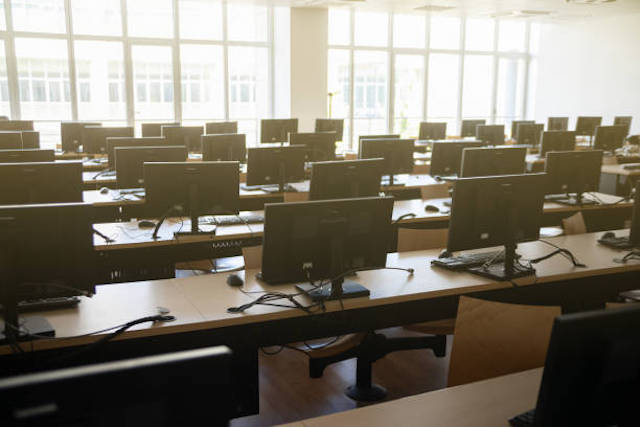
The digital disparity and lagging can be observed in the country’s education system where Capelao pointed out that the growing digital divide has had dire consequences for the sector.
According to Capelao, this is because “most systems are archaic and do not adequately prepare young people for the job market today, let alone in the future”.
Capelao said the divide was further emphasised since the Covid-19 outbreak. Remote learning was simply not an option in developing countries where the very infrastructure needed for e-learning is not widely accessible.
She said digital disparity risks could be mitigated by developing and executing strategies to catch up with advanced countries to narrow the digital gap and reform education.
It is often said that education is the great equaliser.
Since the current generation of youths has suffered continuous disruptions to their education, there is a need to prioritise expenditure and investment to reskill or upskill them so that they can be absorbed into tomorrow’s labour markets, explained Capelao.
According to the International Labour Organisation (ILO), technological advances – notably in fields such as automation, robotics, artificial intelligence, 3D printing, machine learning, the internet of things and blockchains – will transform the labour market opportunities and challenges faced by young women and men.
In its Global Employment Trends for Youth 2020, the ILO said technological changes are leading to the creation of entirely new industries, jobs, goods and services, as well as increasing productivity.
Such advances reduce the cost of production and delivery of services. New technologies are a potential means for low- and middle-income countries to leapfrog to more advanced stages of development.
The ILO advised that equipping young people with the skills required to cope with the various transitions they will experience in the course of their lives (for example, from school to work and between different jobs) ensures that they can look forward to a brighter future at work.
The labour body highlighted that the need to “enhance the ability of young women and men in both developing and developed countries to utilise the opportunities created by a rapidly evolving technological landscape comes on top of various existing challenges”.
However, continued advances in technology may also dislocate labour markets and disproportionately benefit countries that already have a strong technology base, resulting in even greater inequality, the ILO observed.
Following the volatile year for both global and domestic economies in 2020, Capelao expects 2021 to see an improvement, though uneven across economies.
Capelao said South Africa’s economic recovery depends on several factors, some controllable and others uncontrollable, with the most important one being the logistics of Covid-19 vaccines. “We have to consider the likelihood of such risks within our own country and the impact that their existence in other countries will have on Namibia”, she said.
Email: erastus@namibian.com.na