I’ve always had a bit of a mind for the macabre. A sense for the sinister. A wonderment for the weird and wacky.
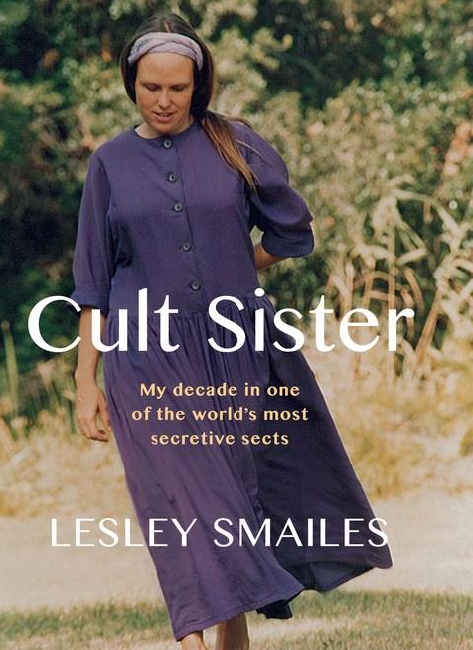
Tales of serial killers and sects have fascinated me for as long as I can remember, so it’s no wonder that when I saw the title ‘Cult Sister’ on a Windhoek Book Den shelf a few weeks ago, I was sold.
Billed as “my decade in one of the world’s most secretive sects” and published this March, Lesley Smailes’ true story tells of how she left Port Elizabeth in 1983 as a teenager for what was meant to be a gap year, and ended up joining a “notorious American sect”.
Leaving South Africa, she lands in Boston, first living with family friends, and ends up “kissing her way across America” as she travels to Washington and then to New York, hooking up with men she meets along the way.
It is here in New York, in a park, where she first encounters men who belong to the sect she would later join.
The group Smailes joins call themselves ‘the Church’. Nothing more than a bunch of travelling Christians who move from ‘camp’ to ‘camp’, “they were a group of people who had forsaken everything, separated themselves from the world and were living by faith”.
Led by a man known as Brother Evangelist (real name Jim Roberts), the members of the Church were encouraged to leave their jobs, drop out of college and turn their backs on their families and friends.
“When I joined the group, nobody gave me detailed explanations of their beliefs and practices. I was just given studies on things like discipleship and a woman’s place. It was all based on the Bible. Questions were discouraged. Things were as they were, and if you wanted to be a member of the group, you accepted these rules.”
The thing is… What you learn the further you read is that the Church is a sect only in the loosest of terms.
They are a group of people who can work but choose not to, and end up moving from place to place in order to minister to ‘lost souls’ and practice ‘dumpster diving’ to survive.
It’s hard not to see the way the Church operates as a mockery of people living in poverty who have no choice but to live this way.
Smailes goes on to marry one of the ‘brothers’ in the Church, Thomas, in order to remain in America and they end up having three children – Reuben, Lily and Avisha. They later divorce, however.
Something that stands out about the story is that while most members of the Church are forced to abandon their families completely, Smailes’ family members visit her often and live with her in the camps.
Flashing back and forth between her life as part of the Church and the events that led her to joining, it doesn’t take you long to realise that being part of a sect is quite possibly the least weird thing Smailes has done during her life.
Chronicling an abortion, two rapes and a rather uncomfortable attraction to men who look like her father, Smailes’ life is definitely a story worth telling, but framing it around her time in the ‘cult’ is disingenuous and, quite frankly, disappointing.
While there are heart-warming moments with recollections about her children, the great friendships she built with other women in the Church and more than a few miraculous ‘coincidences’ which, to Smailes, highlighted how God was taking care of her and her family, ‘Cult Sister’ borders on boring and corny very often. Her family end up leaving America in 1992.
It’s all just a little tame, and having spent N$228 on the paperback version, I couldn’t help but feel like I had been hoodwinked.
A quick and easy read, ‘Cult Sister’ is worthwhile only for its human interest aspect. If you read it for any other reason, you’re bound to be disappointed.