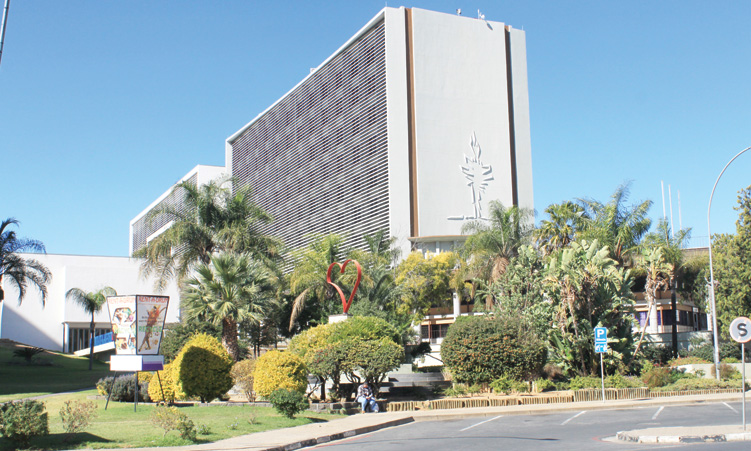
The City of Windhoek does not have the power to provide telecommunication services to its residents, the Supreme Court has found.
The court found, in a judgement delivered on Friday, that the Local Authorities Act does not include the provision of telecommunication services among the powers it gives to local authorities in Namibia, including the City of Windhoek.
The court’s judgement was given on an appeal that the Windhoek City Council filed after the High Court in April 2023 reviewed and set aside a decision of the Communications Regulatory Authority of Namibia (Cran) to award a comprehensive telecommunications licence to the City of Windhoek.
The Windhoek City Council decided at the end of October 2017 to apply to Cran for a class network facilities licence in terms of the Communications Act.
The City of Windhoek’s aim was to obtain Cran’s approval to commercialise the city’s fibre-optic network in a joint venture partnership with Telecom Namibia by offering telecommunication services to people in Windhoek, acting judge of appeal Rita Makarau recounted in the Supreme Court’s judgement.
The company Paratus Telecommunications reacted to the city’s licence application by registering an objection with Cran, with Paratus claiming that the Local Authorities Act did not give the City of Windhoek the power to provide telecommunication services to Windhoek residents.
After engagements between Cran and the city authorities, Cran decided near the end of April 2020 to award a comprehensive licence in terms of the Communications Act to the city.
Paratus objected to the granting of the licence, but Cran decided in July 2020 to stick to its decision to award the licence.
That was in spite of a legal opinion obtained by Cran, in which it was advised that Paratus’ objection should be upheld.
Paratus’ next step was to approach the High Court to have Cran’s decision to award the licence to the city and its subsequent decision to confirm the first decision reviewed and set aside.
The High Court set aside the decisions in a judgement delivered in April 2023, after finding that Cran failed to give interested parties an opportunity to be heard before it decided to award a different type of licence than the one for which the city initially applied.
However, the real dispute between the city, Paratus and Cran was whether the city could offer telecommunication services to its residents and people in the area of its jurisdiction, Makarau said in the appeal judgement.
She remarked that there was a “myriad of flaws that allegedly and in fact marred the process and procedures culminating in [Cran’s] decision to award [the city] a comprehensive licence”, which it had not applied for and for which there was no resolution of the Windhoek City Council.
However, the first question that had to be decided was whether the city had the power to offer telecommunication services to people in Windhoek, Makarau said.
Noting that a section of the Local Authorities Act empowers local authorities “to commercialise […] any service rendered by it or any function or duty carried out by it”, Makarau said: “The language used in the subsection is clear and admits of no ambiguity.
It merely provides that the appellant [the city] may commercialise whatever assets it may lawfully possess.
It does not empower the appellant to offer telecommunication services envisaged by a comprehensive licence as submitted.”
Makarau also stated: “Telecommunication services is not a service specified in the [Local Authorities] Act that the [city] can lawfully commercialise.”
She further noted that the Windhoek City Council decided the city should apply for a class network facilities licence, but Cran then awarded a comprehensive licence to the city.
The award of the comprehensive licence was not a lawful consequence of the city council’s resolution, Makarau said.
Appeal judge Esi Schimming-Chase and acting judge of appeal Theo Frank agreed with Makarau’s judgement, which concluded with the city’s appeal being dismissed and it being ordered to pay Paratus’ legal costs.
The city was represented by legal counsel Thabang Phatela and Eva Shifotoka.
Senior counsel Jean Marais, assisted by Deon Obbes, represented Paratus.