EVERY YEAR FOR the past decade, up to 500 Namibian families have received life-altering knocks on the door, yet the truth is that we still do not know the real reasons behind all our road deaths.
For as long as I’ve worked in road safety, I’ve heard and been part of the calls for action that follow every tragic festive season.
Press conferences, pledges and commitments to do better. Then the next Easter or December arrives, and we count the deaths and accidents again.
In recent years, the number of road deaths peaked in 2017 at 778 people, with 6 548 serious injuries, and was at its lowest in 2023, with 423 deaths and 3 069 injuries, according to the Motor Vehicle Accident (MVA) Fund.
Last year’s deaths amounted to 511. In the first four months of 2026, 143 deaths and 1 467 injuries were recorded.
Even injuries from road accidents can mean devastating financial hardship for families, as many victims can no longer work and require a caregiver, who may end up losing their own job.
Namibia’s road death rate is in the mid-teens to mid-twenties per 100 000 people – among the higher rates globally.
Despite ongoing advancements in vehicle safety technology, awareness campaigns and emergency medical care, our annual death toll has barely moved.
That should disturb us.
Road safety is pigeonholed by many as a festive-season problem. We discuss it as the holidays draw near and then put the matter back in our mental filing cabinets.
Yet the number of deaths does not support this complacency, because dangerous behaviour on Namibia’s roads is not seasonal.
Road crashes have multiple contributing factors, such as speeding, vehicles that are not roadworthy, unlicensed drivers, and driving under the influence. Yet no reliable, nationally representative baseline exists for the prevalence of impaired driving on Namibia’s roads.
We need an independent picture of how many drivers are legally impaired at any given time – on a Friday night, during a long weekend, or on the road home from a public holiday braai – beyond Namibia’s legal alcohol breathalyser limit of 0.37mg/1 000ml of breath.
Without that information, we cannot effectively support law enforcement or make the case for stronger interventions.
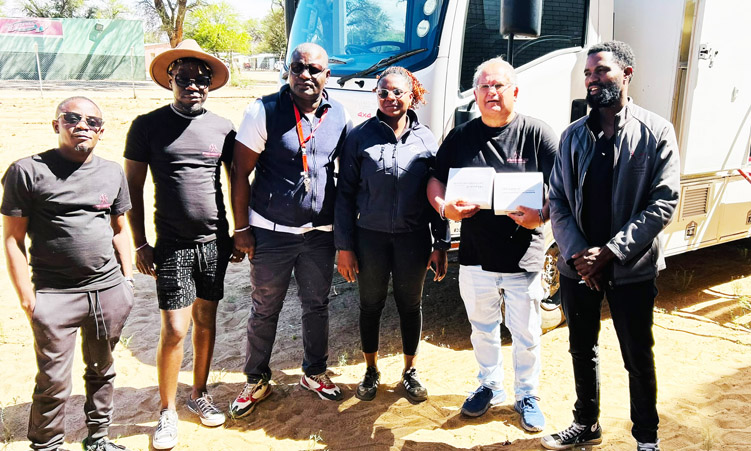
To address this gap, the Namibia Road Safety Forum (NRSF) has partnered with Namibia Breweries Limited (NBL) to facilitate an independent national study measuring the incidence of driving under the influence.
Through coordinated traffic checkpoint engagements, in collaboration with the police’s traffic division, data will be gathered at nine traffic checkpoints between July 2026 and January 2027 to help inform decision-making.
NBL is providing funding and advocacy support but has no influence over the study’s methodology, analysis or findings.
As a responsible brewer, NBL has advocated against drunk driving for more than a decade. This initiative demonstrates how corporate advocacy can move beyond messaging and contribute to practical solutions, while highlighting the value of public-private partnerships in advancing national priorities.
While public debate focuses on vehicle collisions, another disturbing crisis is unfolding.
THE PEDESTRIAN FACTOR
In May 2025, the MVA Fund warned of an alarming 8% rise in pedestrian-related incidents.
The National Road Safety Council has reviewed its national strategy in alignment with the United Nations Decade of Action for Road Safety 2021–2030.
The government and its partners have committed to halving road deaths and serious injuries by 2030 and reducing Namibia’s death rate to single digits per 100 000 people.
Those are the right ambitions, and the NRSF-NBL study aims to contribute by helping authorities better target enforcement efforts, informing policy development and providing a clearer picture of what is happening on Namibia’s roads.
We cannot police our way out of this crisis.
The 2024/25 festive period proved that intensified enforcement alone did not stop more than 80 people from dying.
Alongside enforcement, we need the evidence to change behaviour, modernise policy and the courage to act on what that evidence tells us.
‘When you drive, never drink alcohol; when you drink alcohol, never drive’ has been NBL’s responsible-consumption message for more than a decade and should become the mantra of every Namibian who holds a driving licence.
Ultimately, road safety advocacy must be measured by outcomes. If this baseline study – an honest national reckoning with the data – helps prevent even a fraction of the deaths and injuries that continue to devastate Namibian families, it will have served its purpose.
– Horst Heimstädt is the Namibia Road Safety Forum’s chief executive. The forum is an independent national body for road safety advocacy, data and policy engagement.