
As Namibia commemorates the second Genocide Remembrance Day, the solemn occasion once again casts a spotlight on one of the darkest chapters in the country’s history – the genocide committed against the Ovaherero and Nama communities during German colonial rule between 1904 and 1908.
Every year, descendants of the Ovaherero and Nama communities honour the memory of thousands who were massacred and dispossessed of their land during the war of resistance against German colonial forces.
Genocide Remembrance Day is being commemorated for the second time after 28 May was gazetted as a national holiday in 2024.
The day not only pays tribute to those who perished, but also renews calls for historical justice, reparations and meaningful reconciliation for the affected communities.
For many Namibians, the commemorations revive painful memories of the colonial era, particularly through monuments and landmarks that remain tied to that history.
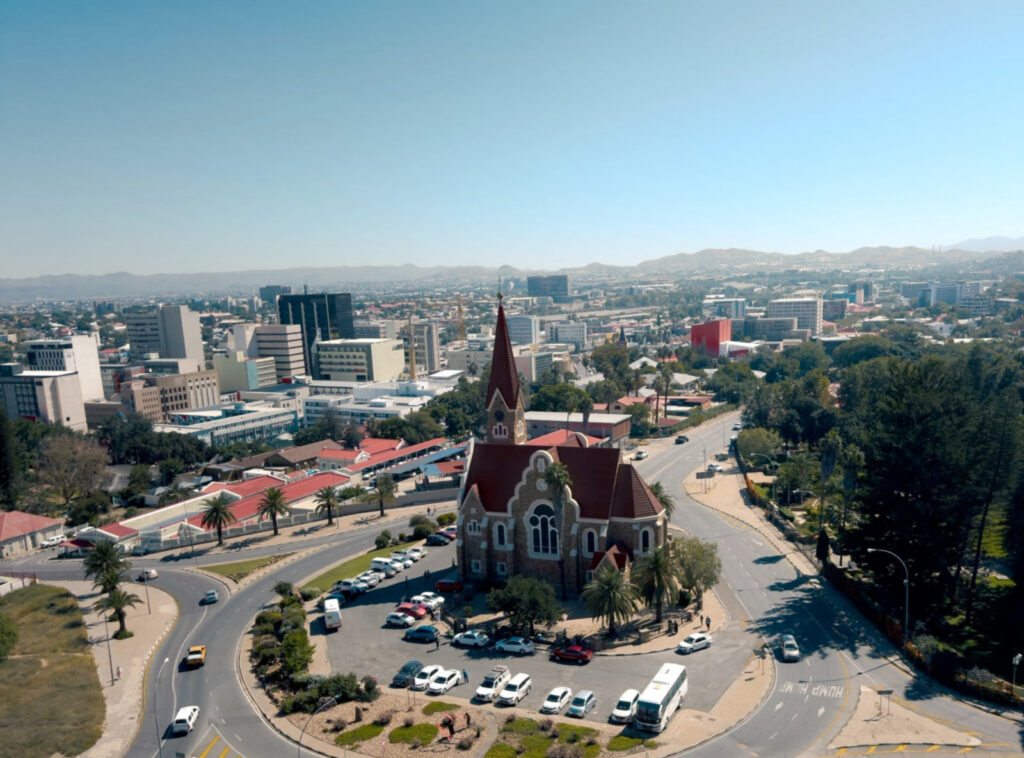
Towering over central Windhoek, the iconic Christuskirche remains one of the most recognisable reminders of German colonialism and the genocide committed against the Ovaherero and Nama communities.
Constructed between 1907 and 1910, the church was built while local communities were still reeling from the devastating effects of the extermination campaign carried out against the Ovaherero and Nama people.
At the time, the German Lutheran Church presented the building as a symbol of peace and reconciliation following years of conflict.
However, critics and historians have long argued that the Christuskirche cannot be separated from Germany’s colonial legacy in Namibia, particularly the genocide committed against local communities.
These sentiments have been reinforced by the church’s prominent location in Windhoek and its association with German political and cultural dominance during the colonial era.
The church once stood alongside the Reiterdenkmal, also known as the Equestrian Monument, which was erected in honour of German soldiers who died during the colonial war.
The bronze statue, depicting a mounted soldier, was inaugurated on 27 January 1912 to coincide with the birthday of German Emperor Wilhelm II.
The Christuskirche also stands adjacent to the Tintenpalast, formerly the seat of the German colonial administration and now home to Namibia’s parliament.
The Reiterdenkmal was relocated in 2013 following sustained public pressure that the monument ignored atrocities committed against local communities.
In its place now stands the Independence Memorial Museum, dedicated to documenting Namibia’s colonial history, anti-colonial struggle and the genocide against the Ovaherero and Nama communities.
As Namibia marks the second official Genocide Remembrance Day on Thursday, historical monuments such as the Christuskirche continue to evoke mixed emotions. While some regard it as an important heritage site, others view it as a painful reminder of colonial atrocities that continue to shape Namibia’s social and political landscape.
Cultural activist and storyteller Munukayumbwa Ellis-Mwiya told Nampa Namibia faces the difficult task of balancing acknowledgement of its painful colonial history with meaningful public engagement around colonial-era monuments and buildings.
She says it is important to examine the historical context and present-day significance of structures such as the Christuskirche while creating spaces for dialogue where communities can openly express their views on monuments linked to colonialism and genocide.
“Despite that connection, it has now become probably one of the most well-known tourist attractions in all of Namibia. So, despite such pain, we must keep that balance,” Ellis-Mwiya says .
Deputy director of national heritage and culture programmes in the Ministry of Education, Innovation, Youth, Sport, Arts and Culture Boyson Ngondo says heritage sites and monuments remain important reminders of the suffering endured during the colonial era, while also serving as spaces for reflection, learning and engagement with Namibia’s history.
Ngondo says sites such as the Christuskirche continue to play an important educational role, particularly for younger generations, through research and engagement with schools, universities and affected communities.
He stresses the importance of decolonising historical narratives to ensure Namibian perspectives are reflected in the interpretation of heritage sites.
“There are no Namibian voices. It is not told from a Namibian perspective. What the ministry is doing is to decolonise these narratives so that Namibian voices come through and we tell the story from a Namibian point of view,” Ngondo says.
National Heritage Council of Namibia director Erica Ndalikokule describes the Christuskirche as one of Windhoek’s most recognisable heritage landmarks and a visible reminder of Namibia’s colonial history.
Ndalikokule says the church continues to attract visitors from around the world because of both its colonial significance and distinctive architecture.
She adds that the National Heritage Council regards the site as an important heritage resource that must be preserved to ensure future generations have tangible evidence of Namibia’s colonial past.
She cautioned that while colonial monuments evoke painful memories, they also serve as important reminders of Namibia’s past and should be handled in a balanced manner to avoid erasing history.
As Namibia commemorates Genocide Remembrance Day, the Christuskirche continues to dominate the Windhoek skyline and remains central to ongoing conversations about the country’s colonial history and the lasting effects of the genocide against the Ovaherero and Nama communities. –Nampa