





Namibia’s Paralympic athletes recently showcased their talent in the first-ever blindfolded running competition in Windhoek.
Organisers Sport On The Movement Foundation describe the competition as incredible, as it featured the country’s Paralympic stars, Ananias Shikongo, Johannes Nambala and Lahya Ishitile.
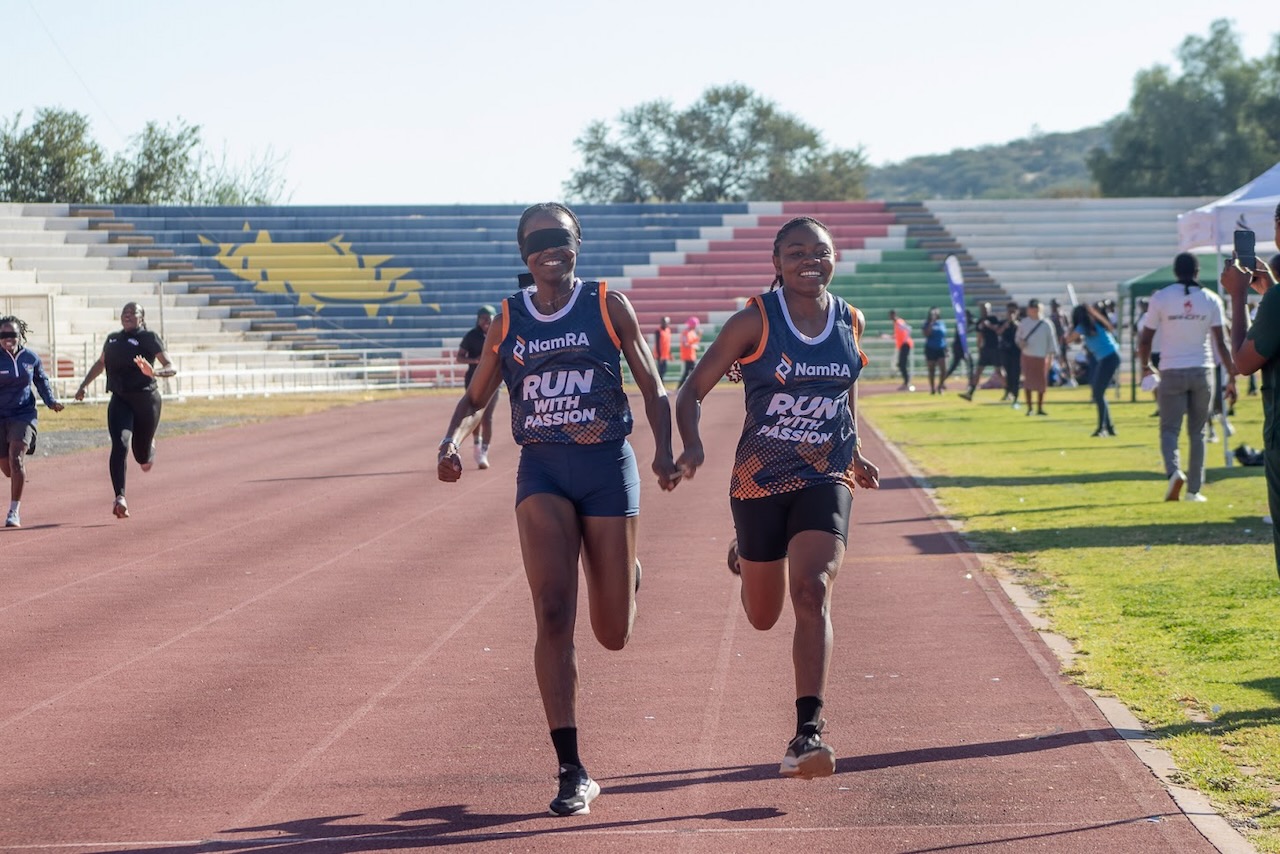
The event, organised in collaboration with Business Financial Solutions at Windhoek Independence Stadium, created an experience that challenged participants to step into the shoes of Namibia’s Paralympic champions.
Participants took on the challenge of running 100m while blindfolded and guided by their friends.
“They quickly discovered that it is far more difficult than it looks. The experience provided a powerful insight into the determination, skill and trust required by athletes who are blind competing at the highest level of para-sport,” the statement reads.
It says through the event, the foundation raised valuable funds but also increased awareness and appreciation for athletes with disabilities who continue to inspire Namibians with their achievements.
Sport On The Movement Foundation chairperson Doufi Namalambo says: “Our athletes’ stories remind us that greatness is defined by the will to rise and dream, often in the face of unseen challenges.”
Since its establishment, the foundation has been a cornerstone for champions like Shikongo, the first Namibian male athlete to win gold at the Paralympic Games.
At the 2024 Summer Olympic Games in Paris, France, Ishitile and her guide, Sem Shimanda, won gold in the 400m T11, setting a Paralympic record. Nambala won two silver medals at the Rio 2016 Paralympic Games and became world champion in the 400m T13 (severe visual impairment race).
The foundation says to celebrate these achievements, they launched ‘Unstoppable’, an international awareness and fundraising campaign supporting Namibia’s para-athletes on their journey to the next Paralympic Games in Los Angeles, United States, in 2028.
Blindfolded running is an intense physical and sensory exercise that requires trust between the runner and a guide. It eliminates visual distractions, forcing athletes to heavily develop their other senses like hearing and touch.
Athletes must always run with a sighted guide. Guides often use a tether (a short rope tied to both runners) or distinct verbal commands to navigate the path safely.
Without visual cues, spatial awareness shrinks. Runners rely heavily on the sound of the guide’s footsteps, changing surface textures and wind direction.
Athletes use blindfolded running for profound trust-building and extreme endurance challenges.