





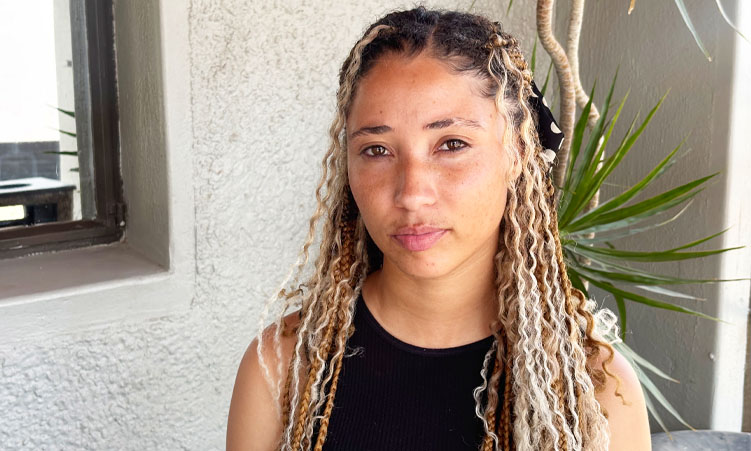
Two “frightening” ride experiences in taxis left Simone Frans (25) questioning whether women can ever truly feel safe when using public transport.
The robberies inspired the entrepreneur to come up with HerRide Namibia, an e-hailing service for women.
Although not yet off the ground, the service will only allow women drivers and passengers to use the app.
Frans is currently conducting feasibility research to get it off the ground, and says she has received mostly positive responses.
“I want women to have a transport option where they can feel safer, heard and protected,” she says.
She says drivers and passengers will all be women.
“This is not discrimination. My research findings show that women go through more violations than men,” Frans says.
She adds that ride fares will be determined based on distance.
“I am not calling us victims, but men are more powerful than us. Women’s safety is a concern,” she says.
Frans says the service will also create job opportunities for women who own cars but have no use for them.
She says feedback from a survey conducted a month ago also revealed excitement among women, adding that they will be safe and comfortable using the rides.
However, she says it is still something she is building from the ground up.
“Drivers’ identities will be verified through facial recognition before passengers enter the vehicles,” she says.
She recalls an experience with a Yango driver who wanted her to share the ride with a stranger, even though she had booked the ride for herself.
“I found someone on my ride. He told me he wanted to assist him and that he was just going to a corner. It was my ride, I paid for my ride fully,” she says.
The Namibian last year reported that three women were robbed in a taxi and forced to withdraw money from their bank accounts and reset their phones. They were given N$30 for a taxi ride back home.
The police last year also reported eight cases of robberies involving taxis in the Khomas and Oshana regions.
Frans says she was first robbed in 2024 while returning home from a party, when a man got into the taxi and later robbed her.
The driver allegedly drove to Dorado Valley and ordered that she hand over all her belongings.
“They told me not to fight,” she says.
She says she had N$260 in cash and a watch at the time, which they took.
She says she managed to hide her phone in her boots. The culprits then left after robbing her.
“I wasn’t badly beaten, but the experience left me frightened,” she says.
The second time she was robbed was in April 2025, when she went to collect perfumes she had ordered from Rocky Crest.
That day she left her cellphone at home, she says.
After collecting her perfumes, she took a taxi back home at around 20h00. She noticed something was wrong when a man in his 50s got into the taxi and sat down without saying where he was going.
“When we reached a quiet area near Otjomuise Fire Station, I realised something was wrong. They later took nine perfumes. Each was N$250,” she says.
They then left her at the spot.
“The man behind insulted and threatened me with a knife, demanding a phone I didn’t even have,” Frans says.
What troubled her even more, she says, was the feeling that she could not trust the transport she depended on to get home safely.
“This mentality worked with me to a point I had to overspend on private transport. The experiences were heartbreaking,” Frans says.
“Our stories are taken very lightly. We are told to open cases. What happens after the case, nothing,” she says.
‘DO NOT SEPARATE’
Windhoek councillor Fransina Kahungu believes women and men should not be separated because they all come from the same womb.
“What if a young boy is standing on the road on a rainy day, should he just be left behind to be washed by the rain? What is going to happen to him, because the rides are strictly for women?” she asks.
Windhoek resident Miriam Apollus (22) says although it may seem discriminatory towards boys, the safety of women should be taken into consideration.
Asked whether women would want to become drivers, Apollus says she had seen women driving for e-hailing services such as Yango and believes they would come on board.
“I was comfortable. We spoke and I was not scared of thinking about being attacked, robbed or raped. I always think like that in a car driven by men,” she says.