



SITUATED within the country’s golden maize triangle lies Kombat.
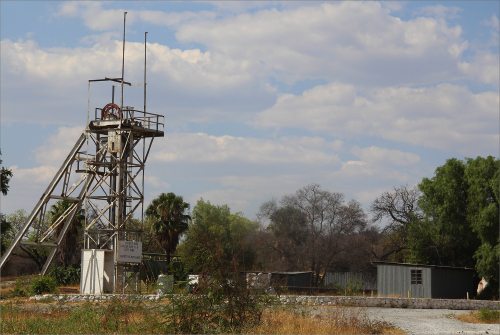
Once known as a prosperous home to copper mining, the place has turned into a ghost town.
Many of the former workers have moved away since the flooding of the mine in late 2007.
Kombat is currently owned by businessman Knowledge Katti, who allegedly bought it for N$50 million but now has offered it to the government for N$160 million.
Katti’s lawyer, Elia Shikongo, stated that the government had expressed interest in the mine for development and its abundant water resources.
Lavish spacious houses with a variety of fruit trees sit empty, while insects scurry into the deepening cracks of the walls.
A drive through a street with ghost houses near the town’s recreation centre makes the taps wetting the thirsty earth more visible.
The recreation centre, which has a football field, rugby field, tennis courts and a swimming pool, among other things, has been invaded by weed and tall patches of yellow grass.
An eerie atmosphere greets visitors entering the recreation vicinity, which was once a source of entertainment in the small town.
The swings creak while the dried out trees sway back and forth, dancing to the tune of the wind.
The air is filled with a heavy stench of the rotting flesh of a dog, right where the mini entertainment club was.
Further into the town sits the Kombat Primary School, where children of those who work at the police, clinic or nearby farms are educated.
Kombat, a town set up in the 1900s after copper was discovered here, once had a population of about 1 000 people. A woman, who worked at the mine for 17 years in the laundry department, said she keeps herself busy tending to her gardens and raising her grandchildren.
“My husband who also worked at the mine for 17 years fortunately managed to get a job at Otavi and we are able to pay our N$1 000 rent and N$500 for electricity to the mine,” says the woman, who refuses to give her name.
Another woman says life is not so bad at the town, as children can still attend the primary school and even though most teachers have left the school when the mine closed down, there are still enough pupils.
“What we want is for the government to keep this town from deteriorating further. Open up a factory to process water or something to give us jobs again. We desperately need money. Right now, drought aid and odd jobs are what keeps us going,” she says.
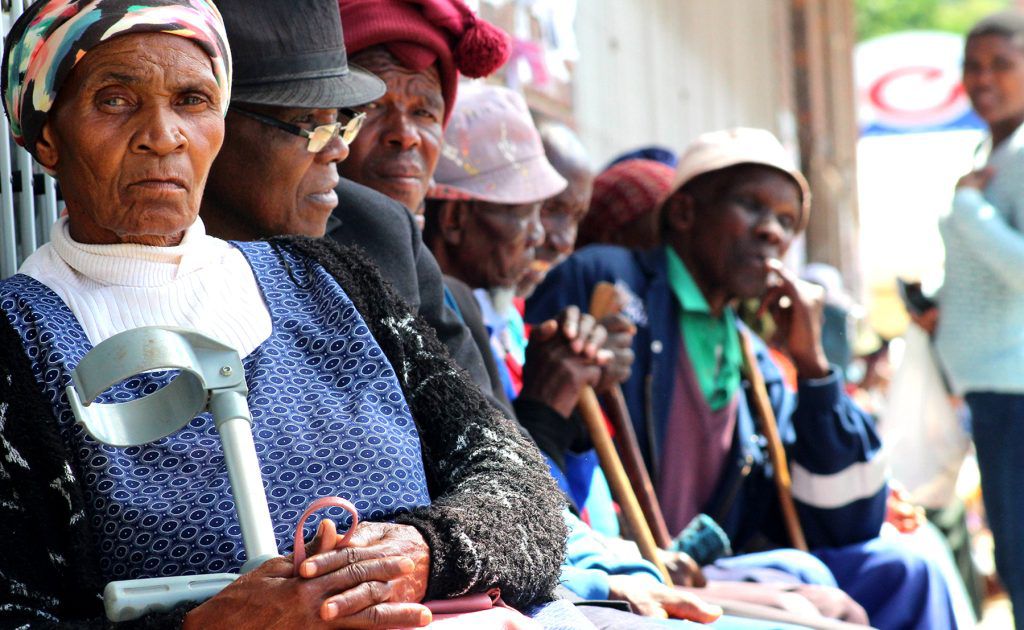
Similarly, a worker at the clinic explains that there is extreme poverty and that most people rely on drought relief food.
He said it is difficult for them to send their children who completed Grade 7 to neighbouring towns where they cannot afford the school or hostel fees.
“Either government should take over and look after us, or the new guy who bought this place,” he proclaims.
Twenty-seven-year-old Ludwig Damaseb, who left school after Grade 7 because his parents could not afford to send him to high school, says he has been doing fencing and other farm related jobs at neighbouring farms to support his family.
A family living at a settlement just three kilometres outside Kombat states that most of them moved to Kombat after the flooding of the mine.
“I worked as a cleaner at the houses of those who worked at the mine. I got N$300 per month but because life is so simple here it was at times enough. We have nothing now, except for support from faraway relatives,” says Frieda Geingos, whose house is filled with her grandchildren and her sister’s children. Her partner, Sebulon Useb narrates that he was one of the miners and earned N$2 000 before the flood.
“Just like everyone else in the area, we are trying by all means to get by. We wake up and look at our children and we get the inspiration to keep trying to get something for the sake of our families,” says Useb.
Shelly Job (15) speaks of many of her age mates sleeping around with men for N$20 or for food.
“People my age have lost their innocence as we are being pushed to go to extremes with this poverty. Our only request is that the mine should be opened or other job opportunities be explored for our people,” she pleads.
She also expresses concern over the lack of electricity in the area, making it unsafe for them at night.
South African company Grove Mining bought the mining town but also sold it to Manila Investment, in which Katti is a shareholder.
Katti had eventually acquired the mining town through his company Havana Investments.