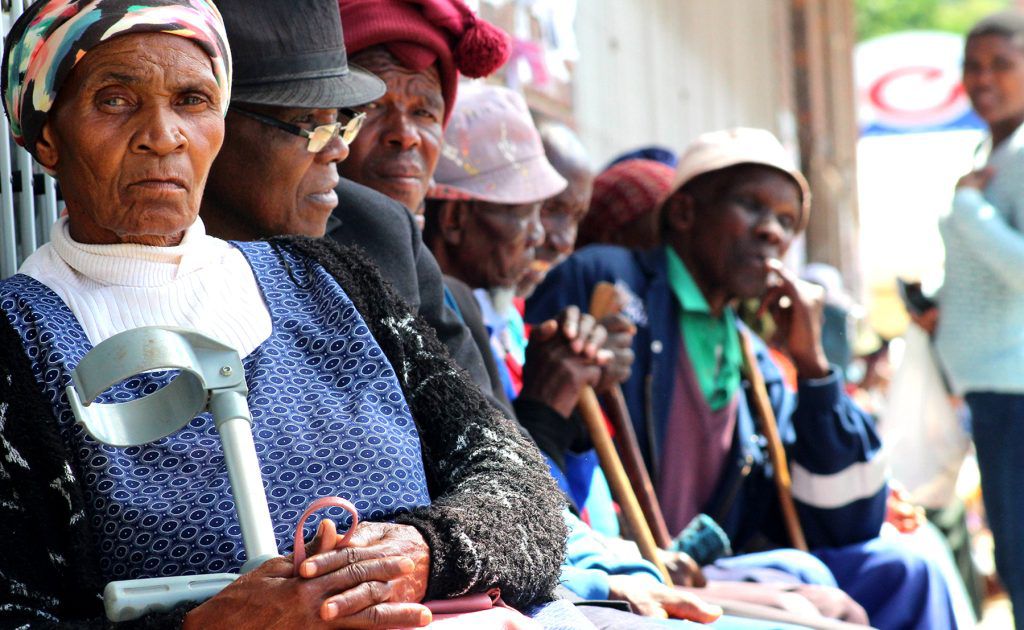




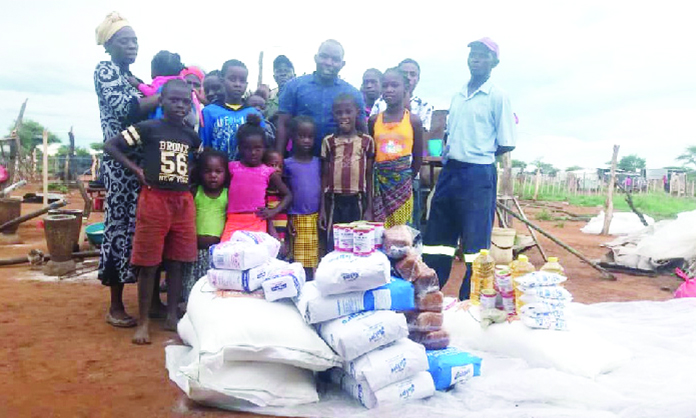
A report on food security among refugees in Namibia by the United Nations High Commission for Refugees (UNHCR) has revealed that more than 75% of 7 000 refugees and asylum-seekers living at the Osire settlement find themselves below the national food poverty line.
The term ‘food poverty line’ refers to the threshold below which individuals or households are considered to be experiencing food poverty.
It represents the minimum level of income or resources required to afford an adequate and nutritious diet, ensuring that people can meet their basic nutritional needs.
The report covers November this year.
It shows that most refugees at Osire are not able to meet their essential needs using their own resources and around 87% of households at the settlement do not have sufficient resources to cover their minimum food needs.
Only 13 % of the refugees are able to meet their needs.
HELP LIMITED
According to the report, the economic opportunities and humanitarian assistance available within the settlement are limited.
The report shows that Osire accommodates almost 7 000 refugees.
Most of them are from the Democratic Republic of Congo (DRC) and Burundi, and have fled their countries due to escalating violence.
“More than 75% of the Osire residents are below the national food poverty line, with the household economic capacity per capita in Osire at N$246, compared to the monthly economic capacity to meet essential needs per capita of N$520,” the report shows.
It states that for a household of six people, the total monthly minimum expenditure basket is N$3 120, while their affordability is around N$1 476.
This leaves an estimated gap of N$1 644 (N$274 per capita per month) on average.
The higher share of resources spent on food means other essential non-food needs (clothes, shoes, sanitary products for women and girls and baby items) go unmet.
This increases refugees’ vulnerability.
Refugee households are spending 66% of their resources on basic food, even after receiving food assistance from the UNHCR, the report shows.
It reveals that up to 76% of households at Osire are considered to be either extremely or highly vulnerable.
The report also suggests that nine in 10 households are unable to meet their livelihood needs, with five in 10 severely struggling to meet their basic food needs.
NEGATIVE COPING MECHANISMS
“As a consequence, they are resorting to negative coping mechanisms, with potentially detrimental repercussions on lives, dignity and livelihoods,” the report states.
The UNHCR says most refugees have no other income beyond the assistance basket provided by itself and the government.
Some 88% of refugees’ households have no source of income at all.
Only 12% of the households have access to some livelihood activities, the report shows.
Some 44% of households rely on agriculture, 20% are in business and 20% have casual labour engagements.
“The agricultural sector presents a significant source of income and food for refugees. However, the lack of access to land and water for irrigation were identified as key barriers.”
FOOD, WATER AND SANITATION
The refugees reported that monthly rations last them between two or three weeks and that they sometimes experience irregular or delayed distribution due to pipeline challenges.
According to the report, Osire settlement has 70 tap stands, of which only 40 are functional.
The report says water shortages were common during the dry season from August to November, with water rationing and trucking resulting in long waiting times and potential issues of sanitation and hygiene.
“Sanitation provision is slightly adequate, with some concerns identified regarding privacy and a lack of facilities in some blocks and others requiring repairs. The settlement has in total 300 latrines, 105 latrines of which need repair.”
Additional facilities are therefore needed given the increasing population.
There are five pits in demarcated locations across the settlement for refuse collection, the report shows.
Deputy minister of home affairs, immigration, safety and security Lucia Witbooi yesterday said she was not aware of the myriad issues highlighted in the report, but promised to give The Namibian feedback as soon as she obtains information.
“Please talk to the executive director,” she said.
Executive director of home affairs, immigration, safety and security Etienne Maritz did not answer calls to his cellphone yesterday, while home affairs minister Albert Kawana could not be reached either.