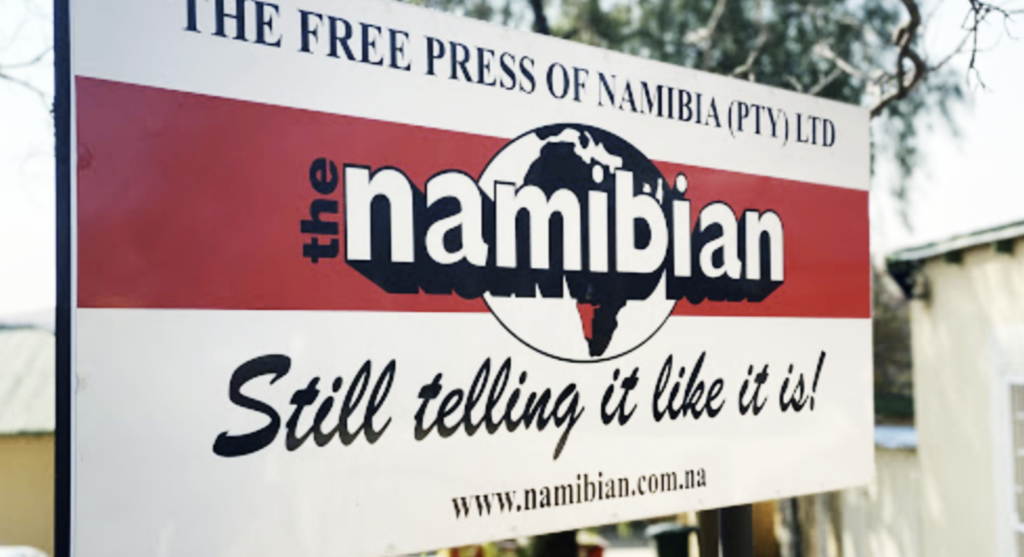
For 41 years, The Namibian has stood as an unyielding beacon of truth, born in the fire of apartheid repression to champion the self-determination of a nation.
First published on 30 August 1985 under the courageous leadership of Gwen Lister, the newspaper endured firebombings, teargas attacks, and political intimidation. Yet it refused to be silenced.
The newspaper’s unwavering commitment to ‘Telling It Like It Is’ also helped birth Namibian democracy and lay a cornerstone for media freedom across the continent.
Today, as we celebrate 41 years of uncompromising journalism, that fierce independence remains as vital as ever.
The Namibian reaching this milestone comes at a time when media organisations globally are struggling financially.
The industry’s advertising income keeps dropping, first to Facebook, Google and now also to artificial intelligence companies that answer a question without ever sending the reader to the newsroom that reported it.
That is why we need your continued support. When you buy a newspaper or advertise with us, you help keep our newsroom asking the questions those in power would rather not answer.
This paper’s democratic and human rights mission is especially crucial when confronting modern political dynamics and rampant misinformation.
It is an era in which politicians are competing with social media influencers and ministers who bluntly refuse to answer questions from the media just because we report on them.
At times like this, our duty remains clear: to keep telling it like it is. And to do so unflinchingly, without fear or favour.
The urgency of our oversight role is reinforced by the latest findings of the 2026 African Media Barometer: Namibia continues to benefit from constitutional protection of freedom of expression, an open environment for media establishment, broad public access to information sources, and the absence of systematic state violence against journalists.
However, many reforms remain incomplete and some key institutions are not functioning as intended.
Namibia’s declining African Media Barometer score should serve as a warning that media freedom protections are not being fully implemented in practice.
Failure to implement the access to information law that was passed in 2022 is an indication of this government’s thinking when it comes to media freedom.
There is a need for greater political will to address structural challenges affecting journalists, access to information, newsroom independence and the funding of journalism.
For Namibia, the continued development of self-regulatory mechanisms such as the media ombudsman represent an important component of this framework.
Strong adherence to media ethics helps maintain professional standards while avoiding the risks associated with excessive state intervention in media affairs.
Public confidence in the media is strengthened when complaints and ethical concerns can be addressed through credible and transparent processes.
Discussions around media freedom must also recognise the changing nature of journalism itself.
Today’s journalists operate in increasingly complex environments where they face legal, financial, and digital risks.
Online abuse and harassment have become significant concerns, particularly for women journalists and those covering controversial issues.
Media freedom carries responsibilities, including a commitment to accuracy, fairness and ethical reporting.
We will continue to reflect on how to improve our work. It is imperative that journalists and media institutions remain committed to and informed by its underlying principles.
Public trust is earned through professionalism and accountability.
Here’s to another 41 years of The Namibian holding power to account, serving the people, and helping safeguard the hard-won democratic freedoms of our nation for generations to come.