





• ROBERT ROTBERGWhen president Emmerson Mnangagwa campaigned in July for Zimbabwe’;s presidency, he promised to be a business friendly leader, and to return his country’;s economy to 20th century times of plenty and prosperity.
But Mnangagwa has already shown himself incapable of jettisoning the state centrist, rent-seeking predilections of his predecessor.
A ‘;big-bang’; sharp break with Zimbabwe’;s recent past is essential to reassure consumers and capitalists. Yet Mnangagwa and his cronies have so far rejected anything forward-looking and sensible.
Mnangagwa’;s administration is struggling to overcome the national economic destruction wreaked on Zimbabwe over two decades under Robert Mugabe.
This included profligate spending, immense debt pile-up, colossal corruption, and ravaging of the country’;s once immensely productive agricultural sector.
As a result, Zimbabwe now lacks foreign exchange with which to buy petrol and ordinary goods to stock the shelves of its supermarkets.
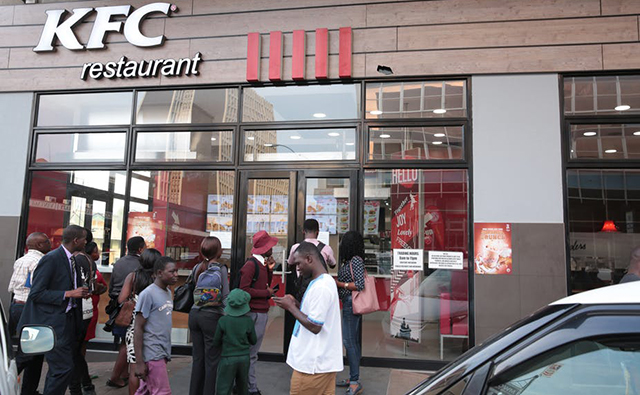
In the last few weeks many shops – such as Edgars, a long-time clothing store; Teta, an eatery; KFC, a fast food outlet – have simply shut their doors. Queues for petrol stretch for miles.
Banks have no US dollars, or South African rands or Botswana pulas (the notional national currency), and therefore cannot supply stores or customers with the funds to carry on business as usual.
The locally created Zimbabwe bond note which is officially supposed to trade one to one with the US dollar, has been trading as high as 10 to one on the Harare black market according to unconfirmed local shopping experiences.
In its 20 October edition, The Economist reported that the bond note, known unofficial as the zollar, was trading for as little as 17 cents, or roughly six to one.
The new administration has naturally resorted to printing its own faux money. That inevitably has led, as always, to hyperinflation and monetary collapse.
China may yet help Mnangagwa – but in exchange for multi-years worth of precious minerals and Virginia tobacco at discounted prices.
With Zimbabwe’;s leadership so thoroughly tainted by decades of peculation and mendacity, and devoid of any real notion of ‘;the public interest’;, Mnangagwa’;s regime is otherwise unlikely to clean up the prevailing fiscal mess because of its refusal to break sharply with the fiscal derring-do of the Mugabe era.
Its principals continue to profit from Zimbabwe’;s economic mayhem.
Zimbabwe’;s economic weaknesses are unsustainable.
Governments in such parlous straits would turn, even now, to the International Monetary Fund, for a bailout – as Pakistan has just done. But Zimbabwe is already in arrears to the international lending institutions and has very few helpful friends left.
Government is running a hefty overdraft. And it’;s been unable to collect as much as it needs from the national tax base.
Its now attempting to impose a 2% tax on internal electronic financial transactions. This only shows desperation.
If implemented, it could yield twice as much revenue as is derived annually from VAT. But that losing manoeuvre has already helped drive commerce underground.
It has also undermined what little confidence consumers and financiers have in their current rulers.
The Mnangagwa government has also reimposed import and exchange controls, thus creating additional incentives to avoid regular channels of commerce. Those controls also permit officials to allocate “scarce” resources and licenses to import, export, and so on. These are well-known occasions for corruption and for giving rent-seeking opportunities to cronies.
Despite the massive loss of formal employment that occurred under Mugabe, the informal sector flourished and Zimbabwe’;s poor probably benefited.
This was partly because under the unity government of 2009 to 2013, when Tendai Biti of the Movement for Democratic Change was finance minister, there were no such controls and there were plenty of US dollars and no questionable bond notes and treasury bills.
The country ran a budgetary surplus. But this all came to an end when the government of national unity collapsed in 2012.
To begin to restore the economy, the government needs to acknowledge corrupt dealings and repatriate the huge amounts of cash that have fled the country as laundered money.