No connection has been made to Namibia’s Fishrot scandal when the Angolan government started the corruption trial involving a former fisheries minister last month.
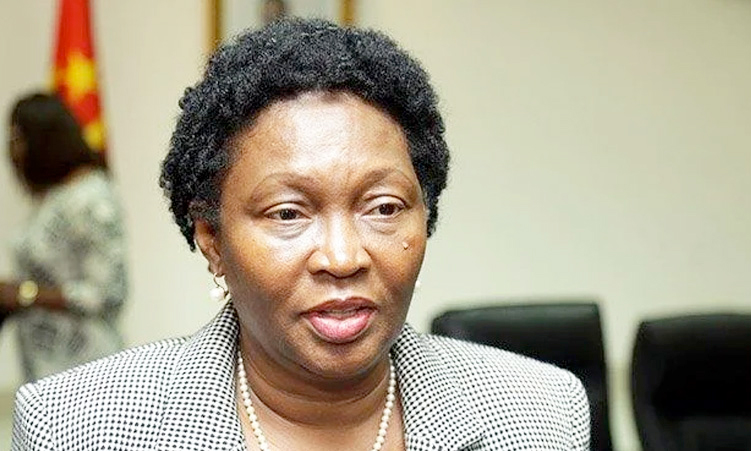
Former Angolan minister of fisheries and the sea, Vitória de Barros Neto, who served from 2012 to 2019, has denied any responsibility for the management or alleged misappropriation of around 300 million kwanzas (about N$5.3 million), when she appeared in the Supreme court in Luanda.
She is accused alongside three other officials, Rafael Pascoal, Yanga Mário, and Jaime Pinto.
She told the court that financial execution was exclusively handled by the sector’s state-owned company, Edipesca.
“I am here because I was charged,” she said during questioning.
De Barros Neto stands accused of embezzlement of public funds from the commercialisation of fish in the common marine zone between Namibia and Angola, during her time in office.
The criminal proceedings began in December 2019, and where brought by the national directorate of investigation and criminal action of the public prosecutor’s office.
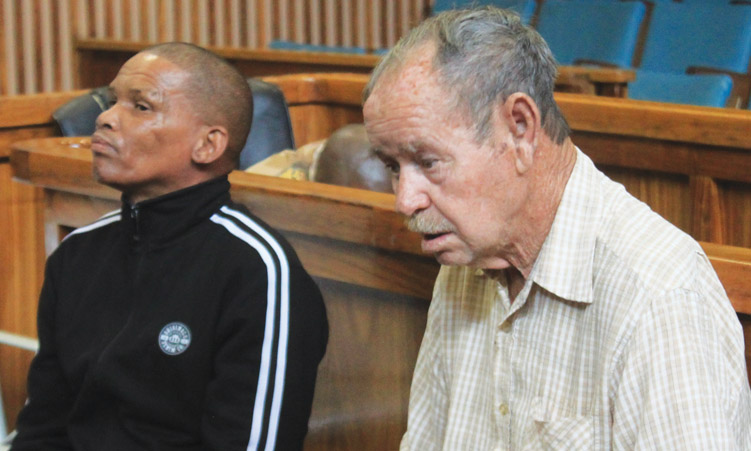
This is around the same time that former justice minister Sakeus Shanghala, fisheries minister Bernardt Esau, and four others implicated in the country’ s largest corruption scandal were arrested.
The Fishrot scandal spans Namibia, Angola, Iceland and Norway and involves kickbacks and questionable Namibian freezer horse mackerel quotas transactions of between N$150 million and N$2.5 billion, involving the Icelandic seafood company Samherji.
The scheme originates from an agreement signed between the governments of Namibia and Angola, involving two Namibian companies Namgomar Namibian SA and the state-owned Namibian National Fishcor Corporation of Namibia (Fishcor), as well as Angola’s Nandomar Pescas Angola.
The seven are still awaiting trial in Namibia.
DENIAL
When de Barros Neto’s trial started on 29 April the Angolan court made no reference to the international corruption scheme exposed by The Namibian over the years.
She argued that, as a government official, her role was limited to political and strategic oversight of the fisheries sector, without authority to approve payments or directly supervise the execution of transferred funds.
She explained that the amount in question resulted from a funding request to the Ministry of Economy aimed at revitalising fishing activities.
The initial project included a partnership with the private company Starfish, which later collapsed after the partner withdrew.
As a result, the funds were expected to be redirected toward improving the country’s fish distribution system. However, she said she did not monitor how the money was ultimately spent.
During the hearing, the former minister denied authorising any payments to companies or individuals, stating that she only made institutional requests to the state-owned company responsible for implementation.
According to the public prosecutor’s office, the 300 million kwanzas, initially allocated to revive the fisheries sector, were diverted from their intended purpose.
The indictment claims that the funds, transferred to the state company’s account, were used for improper expenses, including vehicle purchases, payments to consultants and third parties, and transfers unrelated to the original project objectives.
Prosecutors argue that such actions may constitute embezzlement (peculato), if confirmed by the court.
CO-DEFENDANT’S PROCEEDINGS TERMINATED
Angola’s Supreme Court has terminated proceedings against Pinto, one co-defendant, following confirmation of his death.
The trial continues with the hearing of the remaining defendants and a detailed examination of public fund execution, aimed at determining the destination of the money and potential liability.
CALL FOR JUDICIAL CREDIBILITY
Reacting to the case, human rights activist and lawyer Jaime Mussinda says the trial represents an important test for Angola’s judicial system in its fight against corruption.
He argues that, if proven, the allegations would fall under the crime of embezzlement, given the alleged misuse of public resources.
“This type of case requires a rigorous assessment of responsibility in public fund management, including not only direct actions but also failures in oversight,” he says.
Mussinda adds that high-ranking public officials carry an enhanced duty to ensure proper use of state resources.
“Lack of supervision can, in certain circumstances, also create liability. The law must apply equally regardless of position,” he says.
He stresses that, in the event of conviction, mechanisms for civil liability should be activated, including asset recovery and compensation to the state.
“Beyond punishment, it is essential to repair the damage caused to the public interest,” he concludes.
The trial continues.
*Borralho Ndomba is a freelance journalist in Angola.
*Additional reporting by Ester Mbathera, The Namibian.