
Alice Sishango stares down into the pot of rice she’s cooking on the fire.
“I’ve just put on this rice, and now it’s turned into pap. What rice has the government given us? We don’t know this rice,” she says.
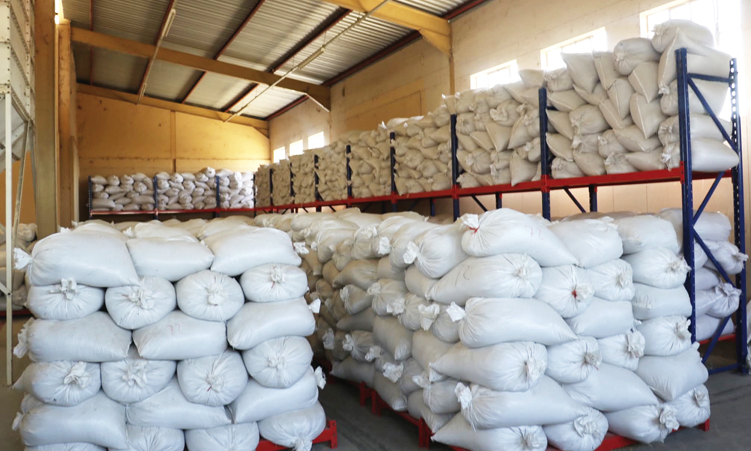
The rice is part of a 5 000-tonne consignment worth N$60 million the government of South Korea has donated to the Namibian government through the Office of the Prime Minister.
The aim is to feed the country’s drought- and flood-affected households.
Sishango’s household is just one of over 1 700 in the Zambezi region benefiting from the 9 097 bags of rice donated to the region.
She and 56 other people were temporarily relocated to the Ngweze community hall after heavy rains at Katima Mulilo destroyed their homes in March.
Sishango says the rice is “too white”.
“Nevertheless, let me cook it; it might be delicious,” she says after recovering from the shock of what happens to the Korean rice when overcooked.
This rice is the one thing preventing her from going to bed on an empty stomach.
‘BREAD BASKET’ A PIPE DREAM
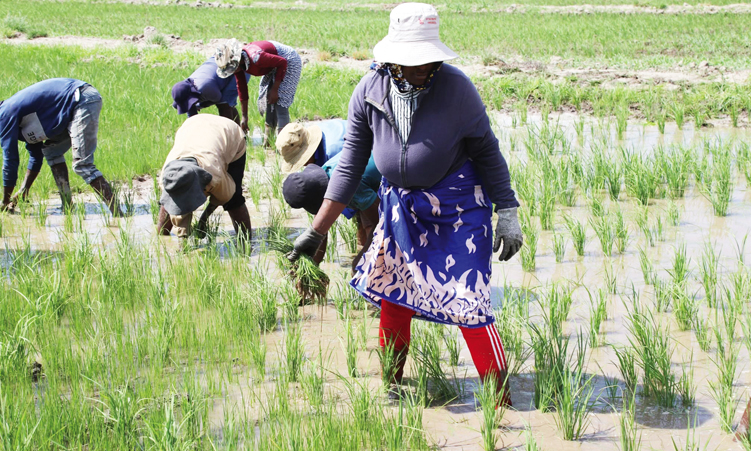
While the government feeds households like the Sishango family with rice donated from Korea, the multimillion-dollar Kalimbeza rice project seems to be a white elephant just 56km outside Katima Mulilo.
It was meant to be the first rice producer in the country, but the project has been dormant for years.
Resident Dobson Kwala wants to know how it is possible that the government cannot feed Namibians locally produced rice.
“The region is half-flooded, and the state produces no food locally to supply the community. Meanwhile, we have fertile land to cultivate.
Leaders have failed to implement the national food security agenda in the region,” he says.
Over the years, Namibians have heard government officials wax lyrical about the Zambezi region’s potential to become the country’s food basket.
Popular Democratic Movement president McHenry Venaani in 2017 during the launch of the party’s new name at Katima Mulilo vowed to turn the region into a food basket if elected to power.
“We are pledging that when we take over power in our country, we shall resuscitate and modernise agriculture,” he said.
Prime minister Elijah Ngurare last year during the Lusata Cultural Festival promised Swapo would transform the region into the nation’s food basket.
“Agriculture productivity in the region has been hindered by a lack of water accessibility, markets, and farming tools.
We must make the Zambezi region a breadbasket. Every village must have a borehole for drinking water, food production, and livestock. This is a matter of human rights,” he said.
Kongola resident Glen Shebo (41) says he has been hearing the government’s plan to turn the region into a food basket since he was 18 years old.
He says ambitions to turn the region into a food basket are nothing more than political rhetoric.
“I’ve lived the reality behind the long-promised vision that the Zambezi region would become Namibia’s food basket.
This promise, rooted in the ideals of our late founding father, Sam Nujoma, was based on clear facts: fertile soil, reliable rainfall, and abundant water from the Zambezi, Kwando, and Chobe rivers.
“Yet decades later, that vision remains unfulfilled – not because of nature, but because of government neglect,” he says.
The Kalimbeza rice project was declared a national project under the agriculture ministry in 2009 – 19 years after independence.
The government heavily invested in the project, with an estimated total infrastructure development cost nearly reaching N$50 million.
More millions were invested in the project over the years, with the latest being N$18 million in the 2024/25 financial year.
This project covers an area of 229ha, of which only 150 ha are irrigable land.
It produces two main rice varieties, known as ‘Irga’ and ‘Supa’.
MINISTRY WEIGHS IN
Agriculture ministry spokesperson Romeo Muyunda says the ministry is still researching other varieties to determine one that is suitable for local conditions.
He says in the current season, the project will produce about 201 tonnes of rice from 46ha of Irga, Niric and Supa rice.
Muyunda’s optimism for the harvest is, however, challenged by external factors such as irrigation issues, flood control problems, uneven land, and poor soil quality.
He says a lack of rice storage and processing facilities have further affected operations, as only 80 out of 150ha are under production.
“We have contracted an engineering consultant to evaluate the issues, conduct a feasibility study, and redesign the plan to resolve them,” he says.
Muyunda says the project is hampered by issues related to the technology for rice production and processing.
“Experts are hardly found in the country.
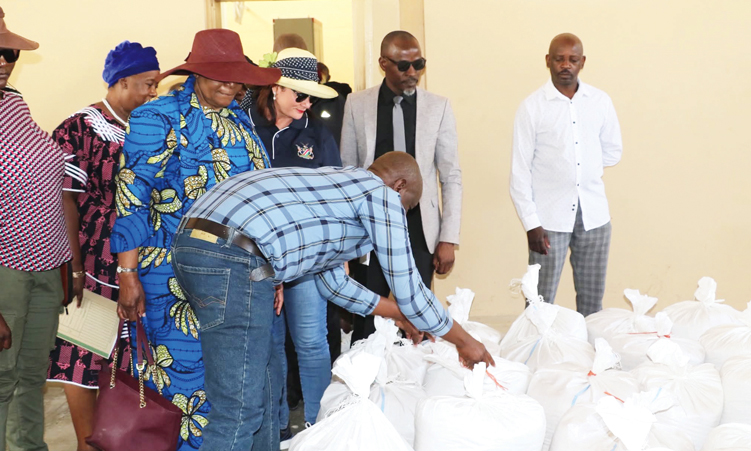
Visiting … President Netumbo Nandi-Ndaitwah during her visit to the Kalimbeza rice farm in August 2025, identified the Zambezi, Kavango East and Kavango West regions as the country’s breadbaskets.
Therefore, the project halts operations when the rice-processing machine breaks down,” he says.
The remaining 79ha not suitable for rice production will be used for horticulture production, Muyunda says.
He says the 5 000ha of land donated to the government are designated for sugarcane plantations, the expansion of rice fields, and cash crop projects.
“The most difficult hurdle in developing this land is the lack of budget from the central government.
However, the government has already begun exploring public-private partnership models to ensure development starts,” he says.
‘ONLY GOOD ON PAPER’
Local food promoter Castrow Muunda says although the rice project has high potential for food sanctuary, economic diversification, and job creation, it is far from being a success story.
He says the strategies outlined in Namibia’s sixth National Development Plan to produce 80% of national food requirements locally by 2030 are only good on paper.
“The implementation is like riding a bicycle with a flat tyre.
Given the fact that the region is a potential breadbasket, agricultural development is taking a long time to be implemented.
A lot should have been achieved if attention was given to the region to make sure current opportunities are harnessed,” he says.
Shebo says the government should focus on irrigation development and mechanised farming support.
He says government subsidies and support systems are poorly implemented.
“Critical resources such as tractors and extension services rarely arrive on time, undermining entire planting seasons.
This is a failure of consistent political will and implementation,” he says.