Young professionals in Windhoek say rising rental costs in the city are making independent living increasingly unaffordable despite being employed.
Sales executive Kondja Nambundunga told The Namibian last Tuesday that finding rental accommodation as a young professional in Windhoek has been a major challenge since relocating there in April.
“As much as we want to live in a comfortable, safe and peaceful place, it comes with a high price,” he said.
Nambundunga said he spent more than a month searching for accommodation through WhatsApp groups before eventually paying someone to help him find a place close to his work.
He said he had to compromise by sharing facilities and giving up some of the comfort he had hoped for.
He runs a bootcamp and works as a music consultant.
He said the additional work helps him manage the high cost of living in Windhoek.
Another young professional, who requested to remain anonymous, describes the search for rental accommodation as “a dreadful, uphill battle”.
“As a tenant you are faced with a brutal combination of sky-high prices, units are often outdated and come with unrealistic conditions such as visitor restrictions or two month notice periods,” she says.
A second young professional, also speaking on condition of anonymity, says rent prices in Windhoek have made it difficult to find decent accommodation in a safe neighbourhood.
“Even when you are working, a large portion of your salary goes towards rent, leaving very little for transport, groceries and other essential expenses,” she says.
She says many young professionals are forced to continue living with family members or sharing accommodation because affordable housing is increasingly out of reach.
Real estate agent Hilde Shindondola says rising property maintenance costs, municipal rates and general upkeep have contributed to increasing rental prices in Windhoek.
“Many tenants’ incomes have not increased at the same pace as rent, so landlords need to strike a balance between protecting their investment and keeping good, reliable tenants,” she says.
Shindonlola says demand for rental accommodation remains high, especially in areas close to schools, businesses and public transport.
Emmil Real Estate principal real estate agent Shekinah Shiimi says some tenants rent properties from owners, furnish them and then offer them as short-term accommodation at higher rates, placing pressure on the long-term rental market.
“Rent has increased because of the repo rate that went up, a lot of people have lost their houses, and many salaried people are also using Airbnb as a side hustle,” Shiimi says.
City of Windhoek spokesperson Lydia Amutenya says the municipality is aware of the growing demand for land and housing, which affects all residents.
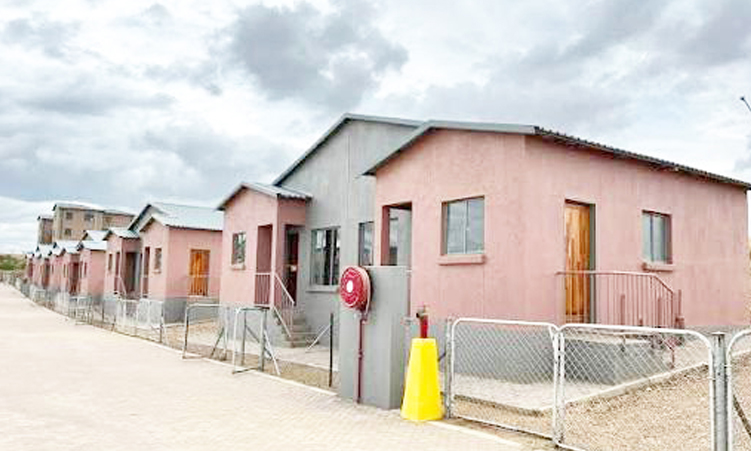
“The city acknowledges that the demand for affordable housing continues to exceed supply and remains committed to increasing housing delivery through strategic partnerships and land development,” she says.
She says the municipality is increasing access to affordable housing by creating new townships, servicing and releasing land for residential development, and working with partners such as the National Housing Enterprise and the Shack Dwellers Federation of Namibia.
Amutenya says land servicing projects in Cimbebasia, Otjomuise, Khomasdal, Goreangab and Havana are expected to start in October, with about 1200 plots earmarked for servicing.