



I am a very frequent user of public transport at the moment. While some may find it surprising or annoying or even shameful, I am quite happy not to own or drive a car.
Few people, especially men, see the economic benefit of not owning a car, and if they do, their ego seems to override any possible economic benefit associated with public transport.
But besides the extra money I am saving, I have turned my frequent trips into little fact-finding missions. Short field excursions, if you like. These are wonderful opportunities to discover and learn about the people of our continent and their cultures.
I am currently a visitor in a foreign land, staying in a beautiful city.
Travelling from my residence to my place of work requires a short ride with public transport. So, every day I get to meet at least two new people – the drivers of the vehicles that ferry me to and from work.
After two weeks of daily commuting, I am yet to hail a ride with the same driver. Thus far, I have met and rode with about 16 individuals, of which a mere five were native to the land. Public transport is clearly a point of entry into the local labour market for those regarded as ‘outsiders’; be they immigrants, refugees or undercover stowaways.
For the most part, I recognise the accents or the names. Some are trying their level best to conceal their origin. I am not surprised. This is not a friendly land, and no one is here because they want to be.
They have to be. Home is no longer an option.
Like everyone else, they’re trying to make a living, even if it’s a half-decent one. For now, almost anything will do, as long as there is a roof over the head and some food for the empty belly.
On the whole, I have enjoyed my rides with professional people. There was an accountant, a few graduates in commerce and the obligatory aspirational lawyer. But that was before he had to flee and saw his family scatter in the wind. Like everyone else I spoke to, he is keeping his head down in the hopes of being allowed to start afresh and build something.
But these are not friendly times and he is not surrounded by friendly people.
How quickly the tide has turned: Natives of this lovely land, who for so long were the targets of racist hatred, now have become the haters.
Each journey lasts no more than 10 minutes, so I have to be clear and precise with my questions. I am struck at how open these drivers are; they feel unwelcome and lonely here in the shade of the lovely mountain.
They miss home and they miss family. And they miss their food; their own food.
Cassava and yams; plantains and palm oil. Vegetables and beans. Peanuts.
But what they miss most of all is the fish. More specifically, Tilapia or or .
Other than the fish perhaps, none of these ingredients are exclusive to any specific locality. Anyone can cook these dishes, provided that you have the right ingredients.
In South-east Asia, people cook frequently with peanuts and for a variety of dishes. As do the West Africans. But other than the actual peanuts, satay sauce and (or ) have very few flavour notes in common. It’s not the peanuts, but everything that goes with the peanuts that makes the difference.
One source of research concluded that people from different regions have developed sensitivities to certain taste sensations and seek food that trigger these. These the researchers referred to as ‘dialects of flavour preference’.
All the gastronomic cultures of our world combine to produce these dialects; they are not confined to national or international boundaries. Aromas are key to flavour and thus for the synergy between foods and drinks, for example. As much as 80% of what we taste is actually aroma. So, in the dialects of flavour found in Western gastronomies, foods with similar flavours are combined to compose dishes. In the recipes of South-east Asia, the opposite applies.
And so my crash course into African cuisine as experienced through the eyes of its displaced citizens continues every day. Each time I ask what food they miss most, I learn about the flavours that define that dish and thus the flavours that tie the people to the customs, the culture and the environment.
My newly met culinary respondents all confirm that Lake Victoria tastes different from Lake Tanganyika, which tastes different from Lake Malawi. It is thus possible to reclassify people by their taste in fish. In this scheme of things, language is only important in so far as it facilitates the buying and selling of fish. Nothing more.
The nation state and its superficial borders have been Africa’s curse since the time of the Berlin Conference in 1884. It divided people who belong together and clumped together those who do not. It is the grounds upon which some have been displaced, maimed and killed. And is it now the basis upon which we look to blame, prosecute and seek revenge on others.
One method used to distinguish in-group members from outsiders is the food we eat – much the same as face markings, tattoos, dress and clothing have been used by traditional communities to display their identities. Tell me about the food you like, and I’ll know who you are.
Because you are what you eat.
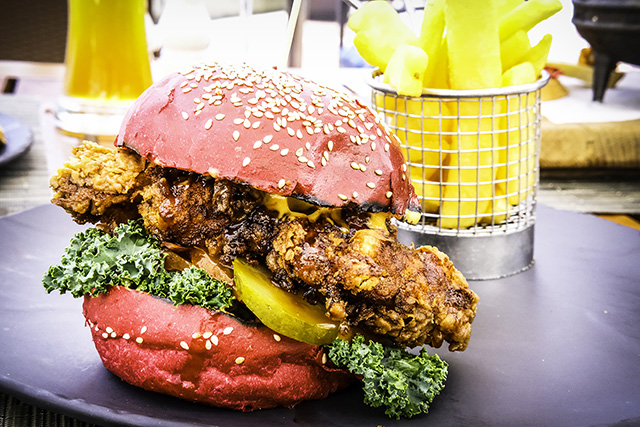
• 8 chicken thighs, deboned
• 1,5 litres buttermilk
• 5 cups all-purpose flour
In an age of information overload, Sunrise is The Namibian’s morning briefing, delivered at 6h00 from Monday to Friday. It offers a curated rundown of the most important stories from the past 24 hours – occasionally with a light, witty touch. It’s an essential way to stay informed. Subscribe and join our newsletter community.

The Namibian uses AI tools to assist with improved quality, accuracy and efficiency, while maintaining editorial oversight and journalistic integrity.
Stay informed with The Namibian – your source for credible journalism. Get in-depth reporting and opinions for
only N$85 a month. Invest in journalism, invest in democracy –
Subscribe Now!