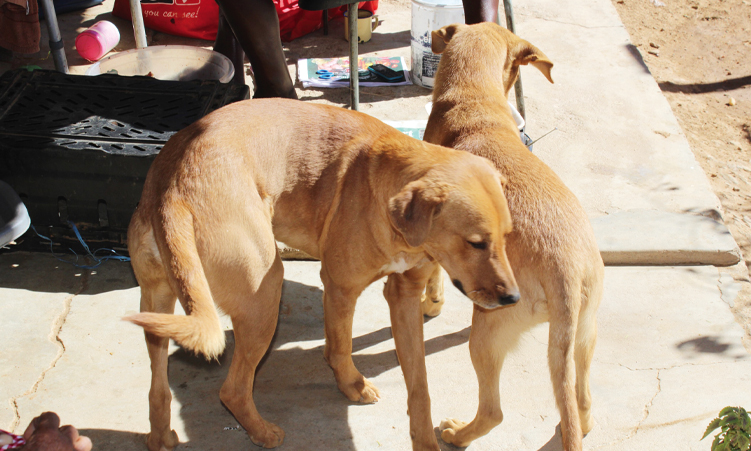
The City of Windhoek has approved new dog control regulations, introducing mandatory registration, licensing fees and stricter measures to manage stray and dangerous dogs.
Dog owners have welcomed this, saying it would help the authorities deal with uncontrolled dogs and keep the public and the city’s dogs safe.
The regulations, which were approved during a council meeting on 25 June, introduces mandatory dog registration, licensing fees, fitness certificates, stricter leash requirements, provisions for impoundment and adoption, and managing dangerous dogs.
Under the new framework if gazetted, owners of a first sterilised dog would pay N$50 per year upon proof of sterilisation, while those with an unsterilised dog would pay N$100 per year.
Owners of a fourth sterilised dog would pay N$300, while those with an unsterilised fourth dog would have to fork out N$400 per year.
Large-scale breeders with five or more dogs would pay N$2 000 per year, while small-scale breeders with fewer than five dogs would pay N$1 000 annually.
Shandumbala resident Kelly !Gorases yesterday said the regulations would help the municipality keep accurate records of dogs in the city.
“It is a good thing because the city will know how many dogs there are. Registration is also important because many people consider their dogs part of the family,” she said.
Another resident, Tracy !Gorases, said stricter controls would encourage owners to take responsibility for their animals and that owners would be easily identified when their dogs attack or injure people on the streets.
Resident Eveline Boois (80) said she supports the initiative, because dogs need to be protected as they also protect families and scare thieves off.
Magreth Tjombe (65) believes it is a positive initiative, but is concerned about the licensing fee.
“I don’t have much money as a pensioner, so paying licensing fees would be difficult. At the same time, dogs help keep us safe at home because there are many thieves in this area,” she said yesterday.
Sylvia Breitenstein, the director of operations at the Society for the Prevention of Cruelty to Animals (SPCA) Namibia, also backs the regulations, saying the measures are necessary because some owners fail to properly care for their animals.
“People are just getting dogs but they don’t actually want to look after the animals,” she says.
She says owners would be traced easily when their dogs are missing if the new regulations are implemented.
Dog trainer Kirsten Drews says dog control in Windhoek is poor as many gates are left open daily, leaving dogs to roam freely.
She wants to know what the municipality would do with dog licensing fees, adding it is supposed to have a fund for stray dogs.
“The SPCA allows stray dogs to be dropped off for free. The City of Windhoek must do more to educate the public on how to treat dogs, avoid backyard breeding, and mistreatment,” she says.
Windhoek chief executive Moses Matyayi says the new regulations were developed in response to persistent complaints about stray dogs, dog attacks and animal neglect across the city.
There has also been an increase in dog neglect and maltreatment and dogs roaming freely without control, which have created safety and welfare concerns among residents.
Windhoek is home to about 20 000 dogs, according to figures derived from a dog vaccination campaign conducted by State Veterinarian Services, he says.
Matyayi says the fitness certificate requirement would ensure that dogs are vaccinated and in good health, helping to reduce the spread of disease while strengthening accountability among owners.
The chief executive says the regulations are designed to strengthen enforcement by addressing operational challenges and legislative gaps that have limited the effectiveness of existing dog-related bylaws.
“Residents of the city keep various dogs as pets, and there is an obligation to ensure their safety, security and health,” he says.