




THE willing buyer-willing seller land redistribution principle, which has been blamed for the escalation in the price of farmland, will not be discontinued – despite Namibians agreeing to abolish it in 2018.
This contradicts the resolutions of the second national land conference in 2018, which directed the government to develop and implement an accelerated land-delivery method.
Under the willing buyer-willing seller policy, the government bought farms at market prices, and had the ‘right of first refusal’ on every farm entering the market.
This approach, however, was costly for the government, and slowed down the pace of the resettlement programme.
Despite this, prime minister Saara Kuugongelwa-Amadhila in a progress report released late last year said the willing buyer-willing seller policy will not be abolished.
She said the government has consulted widely on the abolishment of the principle and found it was not possible.
This is because the principle is entrenched in Article 16 of the Constitution that gives people the right to buy and sell property in Namibia, she said.
“This means the express deletion of the principle from the Agricultural (Commercial) Land Reform Act of 1995 would be a futile exercise as the right to buy and sell remains entrenched in Article 16,” she said.
The prime minister said the government will therefore retain the principle and the expropriation of land in the public’s interest as the only viable methods of land acquisition.
“So far the market has delivered land for acquisition. However, the power of acquisition relies on the status of an economy at a given time. It is the status of the economy that informs how much can be spent … The current economic turbulence did not allow the increase of funds for land purchase,” she said.
A High Court order in the case between Kessl vs Ministry of Lands and Resettlement was used in the development of expropriation criteria, which were gazetted on 1 September 2016, and are ready to be used for expropriation, she said.
Kuugongelwa-Amadhila further revealed that the government has since 2018 purchased 26 farms with a combined value of N$285 million.
The 2018 land conference was tasked with reviewing the progress made towards the implementation of the resolutions of the first national land conference in 1991.
Apart from the willing buyer-willing seller principle, topical issues such as the question of ancestral land claims for restitution, and the expropriation of agricultural (commercial) land were central to the discussions at the land conference.
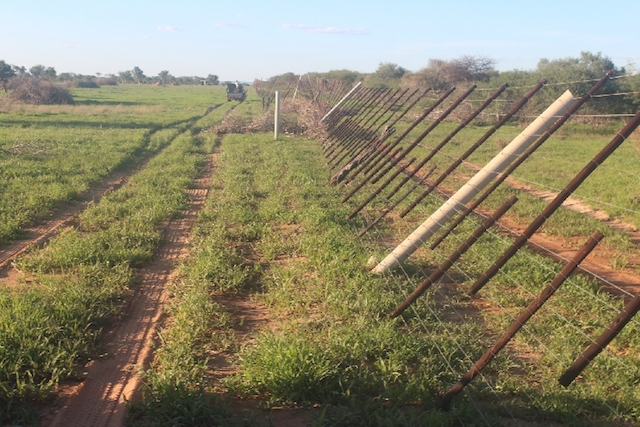
Other issues of prime importance include the removal of the veterinary cordon fence and urban land reform and resettlement.
Various political formations, traditional authorities and non-governmental organisations boycotted the 2018 land summit, describing it as a political gimmick and sham due to the imbalanced representation and the purported “predetermined outcome” of the event by the government.
Nonetheless, the government spent more than N$15 million to host the event.
Another N$15 million was spent to fund the operations of the commission of inquiry into the claims of ancestral land for restitution, established as a result of the land summit.
To date, the prime minister revealed that the government only managed to successfully implement nine out of 176 land conference resolutions.
Landless People’s Movement (LPM) spokesperson Joyce Muzengua says the government’s decision to retain the willing buyer-willing seller principle proves the land conference was indeed a sham as the party predicted it would be when they boycotted the event.
“[It] was a mere talk show that would amount to nothing. It was a travesty and insult to the intelligence of over 800 delegates who attended that conference, and also a waste of taxpayers’ money,” she says.
Institute for Public Policy Research (IPPR) director Graham Hopwood believes the willing buyer-willing seller principle is not entirely to blame for the government’s slow progress on the land reform and resettlement programme.
Factors such as corruption, inefficiency, the failure to establish fair prices for land purchases, and the encouragement of hobby/weekend farmers were rather to blame for the delayed progress and rising public frustration, he says.
While there was unhappiness about the principle, Hopwood criticises the land conference for failing to introduce an alternative system to replace it.
“No blueprint for a new Land Reform Act came out of the conference,” he says.
“The overarching Swapo-adopted culture is focused on self-enrichment and has nothing to do with attending to the needs and aspirations of the majority,” he says.
Kavekotora also believes the willing buyer-willing seller principle is not the problem, but “those who are to implement the principle lack strategic focus”.
Political commentator Ndumba Kamwanyah says it will amount to a wasteful exercise if the government fails to implement the resolutions of the land conference.