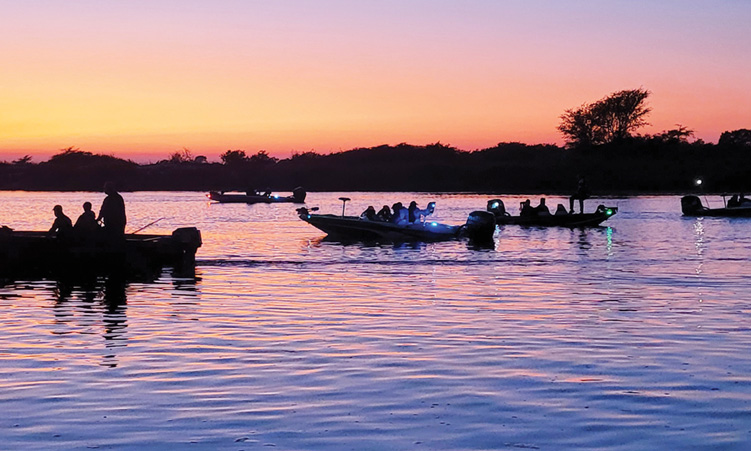
There is a way to read the Zambezi that has nothing to do with charts or forecasts.
The river keeps its own calendar – a slow, deliberate breathing that swells and sighs with the rains, seeding the floodplains and calling every living thing to an old rhythm.
If you want to time a visit so that the line hisses, the reel screams and the water boils with the likes of tigerfish, nembwe and tilapia, you learn to listen to that breathing.
Up here, in Namibia’s Zambezi region, fishing is not a box to be ticked.
It is a patient conversation held by people who know the river’s moods.
Gondwana Collection’s lodges in the north-east, Zambezi Mubala Lodge and Camp, and Hakusembe River Lodge among them, offer fishing as an activity but protect the river with a strict catch-and-release ethic: The thrill is in the fight, the future is in the fish left in the water to swim free.
The most electric moments come when the river exhales at flood recession.
As the rainy season ends and waters begin to fall, channels clear and shallows warm.
Schools of fish become concentrated and relatively easy pickings. On neighbouring rivers like the Chobe, anglers point to April to July as that sweet window for the feeding frenzy; others extend the prime season broadly from late July through to the end of September.
The result is the same: Time your trip around the river’s recession and you will be in for theatre.
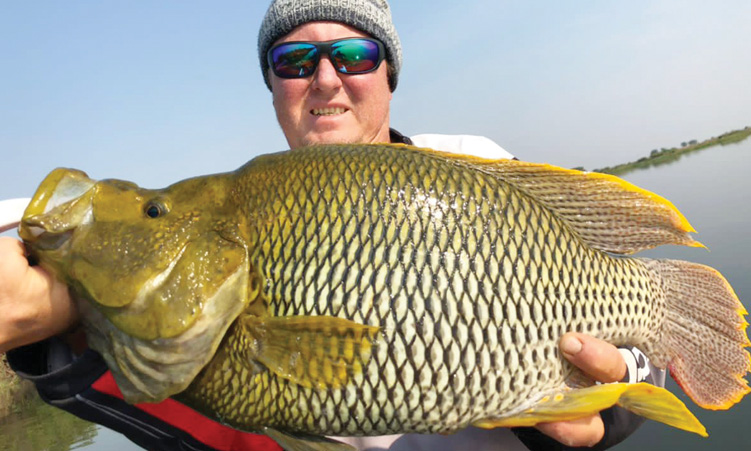
That seasonality makes fishing here more than a sport; it ties tourism to ecology.
The Zambezi’s pulse is shaped by rainfall upstream, annual floods and the long, slow retreat of the water across the floodplains.
Recent changes shows that these flood-pulse characteristics are changing, timing and magnitude shifting subtly with altered rainfall patterns which matter for fish behaviour and for the communities that depend on the river.
Anglers who come to test their strength on the tigerfish must now also reckon with a changing river.
Which is why local governance and permits matter.
Namibia’s Ministry of Environment and Tourism administers permits and frameworks intended to protect freshwater resources and the communities that steward them.
Fishing tourism on the Zambezi sits at the intersection of recreation and resource management: Responsible operators work with the state and with communal conservancies to ensure that a day’s catch does not imperil the next generation’s river.
But the story I’d like to tell is less about tackle and more about the human element of that experience.
The Zambezi River and its floodplains have come under increasing pressure from overfishing.
Illegal night-time netting in breeding channels has severely impacted fish populations, with monofilament nets catching both juvenile and mature fish, preventing natural replenishment.
Established in 2018, the Sikunga Fish Guards Project employs 12 local community members from the Sikunga Conservancy to patrol the river on a rotational basis.
Over the past two years, they have confiscated and destroyed 387km of illegal nets, allowing fish populations to recover substantially.
Thanks to the support of the FirstRand Namibia Foundation Trust, the Gondwana Care Trust is able to assist the Sikunga Fish Guards with financial support on a monthly basis.
These dedicated community members patrol the Zambezi River, ensuring that fishing in the region remains sustainable for generations to come.
Tourism that respects this patchwork, using catch-and-release and supporting conservancies, becomes a kind of ally to the river’s calendar.
It rewards the community that knows how to read the river and helps preserve the very pulse that makes a great day of fishing possible.
If you go, plan around the flood recession (check local guides for the precise window), book through an operator that supports catch-and-release and community initiatives and double-check permits with the ministry.
And if the river decides to be quiet on the day you arrive, remember: you haven’t failed the river; you are simply listening to it.
It will breathe again.