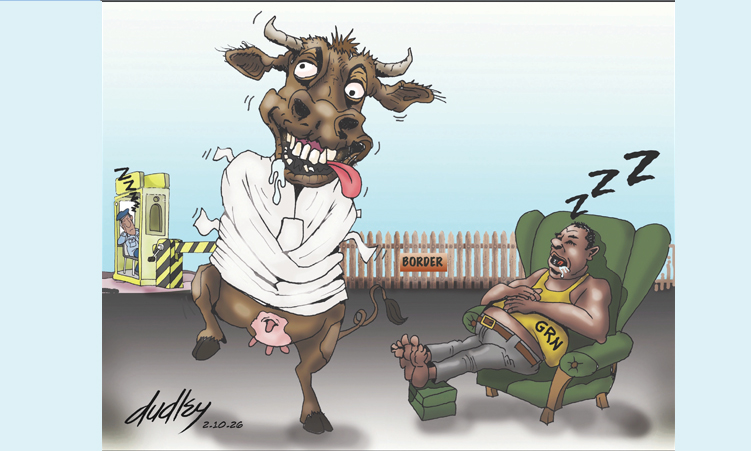
Namibian consumers increasingly find themselves trapped in a marketplace that promises fairness but too often delivers exploitation.
Across the country, individuals buy mobile data that fails to function, unknowingly surrender personal information to third parties, and are denied refunds for defective goods under the guise of rigid store policies0.
These experiences are not isolated inconveniences; they reflect a deeper structural problem within the legal and commercial environment.
Namibia still lacks a comprehensive Consumer Protection Act capable of responding to the demands of a modern economy.
The current legal framework offers fragments of protection scattered across various statutes and common law principles. Yet, these exist without cohesion or clarity.
For the ordinary consumer, the system is difficult to navigate and even harder to enforce.
The Law Reform and Development Commission has already acknowledged that consumer protection in Namibia remains fragmented and needs to be consolidated.
When legal protections exist in isolation, they lose their force, and when enforcement mechanisms are weak, rights begin to fade into abstraction rather than lived reality.
RIGHTS AND REACH
Beneath this fragmented framework, the Namibian Constitution quietly anchors powerful protections that extend into the marketplace.
The right to human dignity is implicated whenever consumers are misled, disrespected, or treated as expendable participants in commercial transactions.
The right to privacy is compromised when personal data is shared without consent, exposing individuals to unsolicited marketing and potential harm.
Equality before the law is weakened when businesses impose one-sided contractual terms that consumers have little realistic ability to challenge.
These constitutional guarantees are not theoretical constructs; they are meant to shape daily interactions.
Yet the complexity of accessing courts and the cost of legal processes often place these protections beyond the reach of those who need them most.
At the level of common law, Namibia already recognises meaningful consumer rights, particularly in relation to defective goods.
A consumer who unknowingly buys a product with a hidden defect is entitled to remedies that include cancelling the sale and obtaining a full refund, or alternatively, securing a reduction in price where the defect is less severe.
In practice, however, many businesses rely on blanket ‘no refund’ policies, even where the law clearly provides otherwise. This disconnect between law and practice quietly normalises non-compliance.
EROSION OF TRUST
The misuse of personal data has introduced a new and troubling dimension to consumer vulnerability.
In an increasingly digital marketplace, consumers often find their information circulating among businesses without their knowledge or consent.
This not only undermines the constitutional right to privacy but also erodes trust in the systems that facilitate modern commerce.
Confidence in the market begins to weaken in subtle but significant ways.
These challenges are compounded by an inherent imbalance of power.
Businesses typically operate with greater access to information, stronger financial resources, and a deeper understanding of legal frameworks.
Consumers, by contrast, often engage with contracts they have little time or capacity to fully understand.
The law itself recognises that markets do not always correct these imbalances on their own.
Without deliberate and structured intervention, unfair, deceptive, and abusive practices are likely to persist beneath the surface of everyday transactions.
WHAT COULD BE
What begins to emerge from this landscape is not only a problem but also a clear direction for reform.
Namibia is at a point where the development of a unified and effective consumer protection framework is both possible and increasingly necessary.
The National Consumer Protection Policy already outlines guiding principles such as fairness, transparency, and accessible redress, pointing toward a future where consumer rights are not merely recognised but enforced.
The gradual movement toward coordinated oversight, including the envisioned Consumer Protection Office, reflects an understanding that fragmented protections can no longer sustain a modern economy.
However, the evolution of consumer protection is not solely a legislative matter.
Businesses themselves shape the ethical tone of the marketplace.
Those that choose transparency, honour their obligations, and respect the rights of consumers contribute to a culture of trust that strengthens both commerce and society.
Practices built on misinformation, rigid disclaimers, or exploitation of consumer ignorance, may appear sustainable in the short term.
However, they ultimately weaken the very foundation on which markets depend.
For consumers, the shift begins with awareness.
The recognition that a defective product can be returned, that personal data should not be freely traded, and that misleading practices can be questioned introduces a subtle but powerful change in the dynamic of the marketplace.
When consumers begin to ask questions, expect clarity and assert their rights, they reshape the environment in ways that legislation alone cannot achieve.
TRANSFORMATION
Namibia’s path toward effective consumer protection is still unfolding, but its trajectory is becoming clearer with each passing moment.
A unified legal framework, accessible enforcement and an informed public, holds the potential to redefine the relationship between consumers and the marketplace.
Such a transformation does not demand abrupt disruption; it grows through the steady alignment of law, policy, and practice around the fundamental idea that fairness is not optional.
In the end, consumer protection extends beyond transactions. It speaks to the value placed on individuals within the economy and the respect afforded to them in their daily lives.
As Namibia continues to develop, the strength of its consumer protection system will quietly reveal the depth of its commitment to dignity, equality and justice, not in theory, but in practice.
– Brian Ngutjinazo, LLM corporate law candidate, University of Namibia.