




Revelations in parliament by health minister Esperance Luvindao regarding allegations that medical doctors are leaving interns to run health facilities are alarming.
While the Ministry of Health and Social Services, alongside the Health Professions Council of Namibia, investigates reports at places like the Mariental and Oshakati hospitals, the medical fraternity must confront a sobering reality.
If true, these allegations represent a profound dereliction of duty.
A lackadaisical approach to the supervision of junior doctors is not a minor bureaucratic oversight; it is a systemic failure with far-reaching and detrimental consequences for our healthcare ecosystem.
It compromises the learning stage of medical interns.
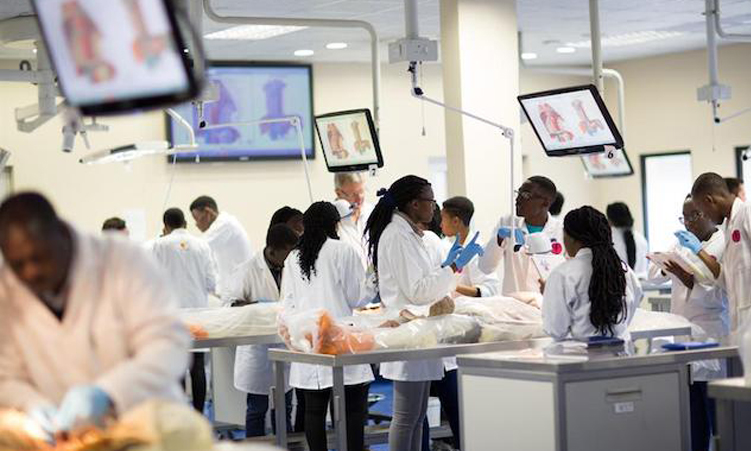
Internship is a critical, structured transition from theory to practical competence.
It relies heavily on the “see one, do one, teach one” apprenticeship model.
When senior medical officers abandon facilities after morning rounds, they deprive interns of real-time mentorship, bedside teaching, and the psychological safety required to make sound clinical decisions.
Forcing an intern to navigate complex medication queries, or perform invasive procedures without an experienced hand nearby, breeds immense anxiety and professional self-doubt.
It creates a culture of fear where junior doctors are disrespected by the very colleagues who exploit their presence to shirk responsibility.
The immediate casualty of an unsupervised environment is patient safety.
Medical interns possess the enthusiasm and theoretical foundation of new doctors, but lack the clinical foresight and finely honed judgement that only years of experience provides.
When emergencies arise, the absence of a seasoned medical officer can mean nothing less than the difference between life and death.
Misdiagnoses, medication errors, and delayed interventions become inevitable when the most vulnerable members of our society are left in the sole care of practitioners who are themselves still learning.
Patients enter state hospitals with the reasonable expectation that they will be treated by, or at least under the direct supervision of fully qualified professionals.
Violating this trust is an ethical failure that threatens to undermine public confidence across the entire Namibian healthcare sector.
Beyond individual patient outcomes, this negligence poses a severe threat to the long-term viability of medical internship education in Namibia.
If the culture of leaving interns stranded becomes institutionalised, the international and domestic credibility of Namibian medical training will collapse.
Regulatory bodies may strip training facilities of their accreditation, stalling the pipeline of newly qualified doctors at a time when the nation desperately needs them.
It risks producing a generation of medical officers who, having been deprived of proper mentorship, perpetuate this cycle of neglect.
This erodes the very educational foundation of our medical system, rendering it incapable of producing competent, well-rounded specialists.
Immediate and decisive structural reforms are needed.
The ministry must follow through on its promise of frequent, unannounced facility inspections to catch absenteeism in real time.
Regulatory frameworks should be tightened so that senior medical officers who abandon their posts face severe disciplinary actions, including the suspension of their licences.
In addition, hospitals must implement robust, digital logbooks where interns can securely report gaps in supervision without fear of victimisation or professional retaliation.
Ultimately, senior doctors must be reminded of their role: they are responsible not only for patients in their wards, but also for shaping the minds of the doctors who will care for the nation in the future.