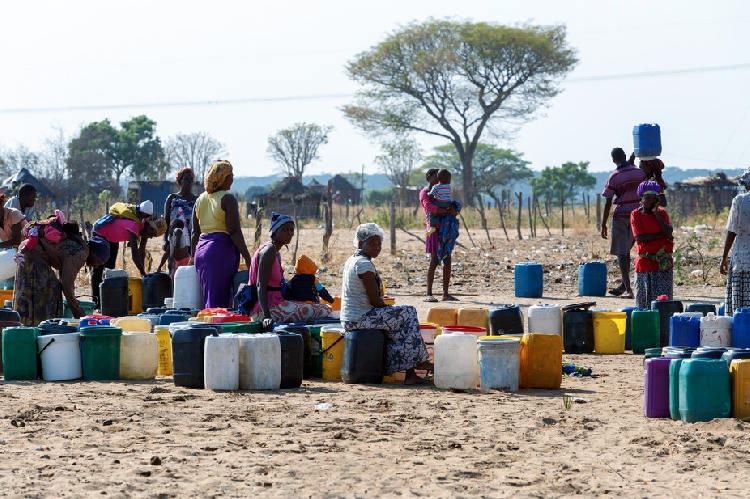
•GINA ZIERVOGEL and MARGARET ANGULATHE world may still argue about whether or not climate change is real. But in vast expanses of arid southern Africa, the daily struggle to cope with a changed climate is well under way.
The lessons being learnt here on a small scale could prove vital in the fight for human survival.
The impact of drought has been felt acutely this season over southern Africa, as El Niño hit hard. Perhaps this is what we might expect under future climate change conditions and so we had better learn how to prepare for it: more frequent years that record less rainfall than usual, along with the associated crippling impact on livelihoods and the economy.
This is particularly the case in semi-arid regions of Africa and Asia. These climate change hot spots are highly dynamic systems that already experience harsh climates, adverse environmental change and a relative lack of natural resources. People here are often further marginalised by high levels of poverty, inequality and rapidly changing socio-economic, governance and development contexts.
This requires an effective response. In northern Namibia and eastern Botswana, research is already under way into what’s currently working and not working in relation to managing climate impacts.
A major regional project is seeking ways to reduce vulnerability and develop longer term climate adaptation responses.
MINIMISING VULNERABILITY
The Adaptation at Scale in Semi-Arid Regions (Assar) project aims to redress the lack of information about the best ways to minimise vulnerability and develop adaptation responses. In addition, it aims to produce future-focused and societally-relevant knowledge of pathways to well-being.
One of the initial steps has been to undertake vulnerability and risk assessment workshops. The case study sites are in northern Namibia’s Omusati region and eastern Botswana’s Bobonong district. These workshops differ from many vulnerability assessments that often focus either on the village scale or on a resource-based sector.
The workshops bring together people from all walks of life. These include village leaders, non-governmental organisations and government officials among others. This group is called the knowledge group. Issues and hazards of most concern are identified through prior interviews and then refined by this group.
During a two-day workshop the knowledge group unpacks how the most important issues impact different livelihood groups in the area and the best responses.
During workshops in Botswana in November 2015 and in Namibia in March 2016, drought was found to be one of the three most important issues facing both regions. One of the exercises was to develop an impact chain to assess possible positive and negative future impacts of drought.
How drought affects Namibia
In Namibia, the indirect impacts of drought on livelihoods that were identified included:
• Reduced crop yields from crop failure leading to loss of income and inadequate food supply in households. This has an impact on health.
• Reduction in water available to wildlife leading to loss of wildlife. This affects the number of tourists and earnings from tourism.
• Reduced fodder production, heat stress and outbreak of diseases affecting livestock health and mortality rates. This reduced milk and meat production leads to loss of income.
• Livestock mortality had an impact on cultural practices. The death of livestock often leads to loss of status, prestige and participation in social networks. Livestock deaths limit the ability of people to participate in social and cultural events like wedding ceremonies.
• All of the above lead to lower household incomes which increases hunger. Malnutrition of schoolchildren leads to poor health and an increased number of school dropouts. Limited household food availability can also increase participation in risky behaviour such as theft and transactional sex in exchange for food or cash. This then leads to an overall increase in household social conflicts.
DROUGHT IN BOTSWANA
In Botswana, there were some similarities and some additional points that were raised related to the impact of drought:
• Rainfall patterns had not been consistent in the past 15 years and the frequency and impact of drought had increased.
• Crop farmers, livestock keepers and mopane worm harvesters are most vulnerable to drought because a lack of water increases the likelihood that their crops will fail, animals will die and mopane worms will be in short supply.
• Livestock farmers in the area are highly vulnerable to drought because they are not able to migrate with their animals in search of water. Those who have migrated have experienced livestock theft when they move closer to the border.
• Traders were thought to be moderately affected by drought because some items are more scarce in a drought but also because households have less income to spend.
• When there is a drought the elderly have to use their old-age grant for food instead of other vital supplies and services. This is made worse by their limited physical fitness.
• The associated lack of food and income can have far-reaching social consequences. These include people adopting risky behaviours including drug and alcohol abuse, truancy, criminal activities, theft and corruption that can lead to family breakdowns.
SOLUTIONS FROM LOCAL COMMUNITIES
In an age of information overload, Sunrise is The Namibian’s morning briefing, delivered at 6h00 from Monday to Friday. It offers a curated rundown of the most important stories from the past 24 hours – occasionally with a light, witty touch. It’s an essential way to stay informed. Subscribe and join our newsletter community.

The Namibian uses AI tools to assist with improved quality, accuracy and efficiency, while maintaining editorial oversight and journalistic integrity.
Stay informed with The Namibian – your source for credible journalism. Get in-depth reporting and opinions for
only N$85 a month. Invest in journalism, invest in democracy –
Subscribe Now!