As a lifelong jazz lover and a South African who lived through the brutal realities of apartheid, the news of Professor Abdullah Ibrahim’s passing at the age of 91 has filled my heart with profound sadness mixed with the deepest gratitude.
Tata Abdullah was not merely a musician; he was a cultural colossus, a beacon of resistance, a spiritual guide, and a dear beloved friend whose music gave voice to our collective pain, defiance, resilience and unyielding hope for freedom. In his melodies, I found both solace for my soul during the darkest nights of exile and struggle, and an unbreakable strength that fuelled my commitment to the liberation movement.
His piano became a soundtrack to our lives – tender yet powerful, sorrowful yet triumphant – reminding us that beauty and truth could never be silenced by oppression.
Born Adolph Johannes Brand in Cape Town’s vibrant District Six on 9 October 1934, Abdullah Ibrahim rose from the multicultural melting pot of the Cape.
Here, the rhythms of the Kaapse Klopse carnival, the gospel hymns of the African Methodist Episcopal Church and the improvisational fire of American jazz fused into something uniquely South African was born.
As the young Dollar Brand, he became a founding member of the legendary Jazz Epistles in the late 1950s, alongside icons like Hugh Masekela, Kippie Moeketsi and Jonas Gwangwa. Their groundbreaking 1960 recording, ‘Jazz Epistle Verse One’, marked the first full-length jazz album by black South African musicians – a bold act of creation amid the tightening grip of apartheid laws.
His music was never confined to entertainment; it was an act of resistance. The iconic ‘Mannenberg’ (also known as Mannenberg – Is Where It’s Happening), recorded in 1974 in a single inspired take, became an unofficial anthem of the anti-apartheid struggle. Named after the Cape Flats township where families forcibly removed from District Six were dumped under the Group Areas Act, the piece captured the pain of displacement, the daily humiliations of apartheid, the resilience of our people and the desire for freedom.
For me, listening to Abdullah’s piano felt like hearing the heartbeat of our struggle. Those rich, rolling chords and improvisational flourishes healed wounded souls across generations.
During my imprisonment in Pretoria Maximum Security Prison, under harsh conditions of isolation and deprivation, ‘Mannenberg’ and other melodies by Tata Abdullah became lifelines that sustained me and fellow political prisoners.
One of the few privileges we had in prison was being allowed to buy records and listen to music, and his compositions provided profound comfort and inspiration.
His soaring notes reminded me of the unbreakable spirit of our people and the certainty that freedom would come. Other compositions offered solace during long, difficult days and sleepless nights, turning the confines of prison into spaces of reflection, hope and quiet defiance.
His music was more than sound – it was nourishment for the soul, a quiet revolution that kept the fire of resistance burning brightly within me and countless other comrades.
My personal memories of Tata Abdullah span many decades and continents. As South Africa’s ambassador to The Netherlands from 1997 to 2001, I had the honour of hosting him during the North Sea Jazz Festivals in The Hague.
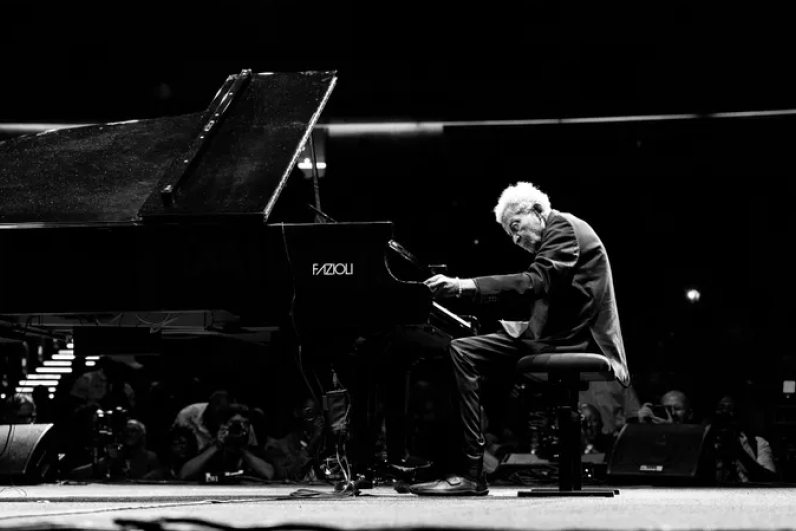
One unforgettable night, he sat at the grand piano in the South African residence and played exclusively for us.
The music that flowed from his fingers was rich, deeply emotional and profoundly moving. It filled the residence with the sounds of home, resistance, hope and a future we were fighting to build.
Abdullah Ibrahim also played a pivotal role in supporting the establishment of the North Sea Cape Town Jazz Festival, which later blossomed into the world-renowned Cape Town International Jazz Festival. Even in his advanced years, his commitment to this legacy never wavered. This March, at the age of 91, he graced the festival with one final performance – a masterclass in grace, genius and timeless artistry.
Over the years, every interaction revealed a man of dignity, spiritual depth and unwavering commitment to truth, beauty and humanity. Upon returning to democratic South Africa, he mentored young musicians, founded academies like the M7 and continued enriching the country’s cultural landscape.
As I reflect on his legacy, I am reminded how Abdullah Ibrahim’s music sustained us through apartheid’s darkest days. It provided comfort in prison cells, inspiration in underground meetings and courage on the frontlines of protest.
Go well, my dear, beloved old friend. May your beautiful soul rest in the salient melodies of eternal peace. – IOL News
– Carl Niehaus is an Economic Freedom Fighters member of parliament in South Africa.