Resettled farmers in the Khomas region last week thanked the government for the land but appealed for improved water infrastructure
SITTING at the back of the crowd, Immanuel Hoebeb leans against the plastic chair supporting his weary back as he tries to keep out the chilly wind.
With nothing more to do for the day, he takes the morning off to attend a farmers’ day meeting where he joins 30 others sitting under a large white tent at farm Ongombo West, east of Windhoek on Thursday.
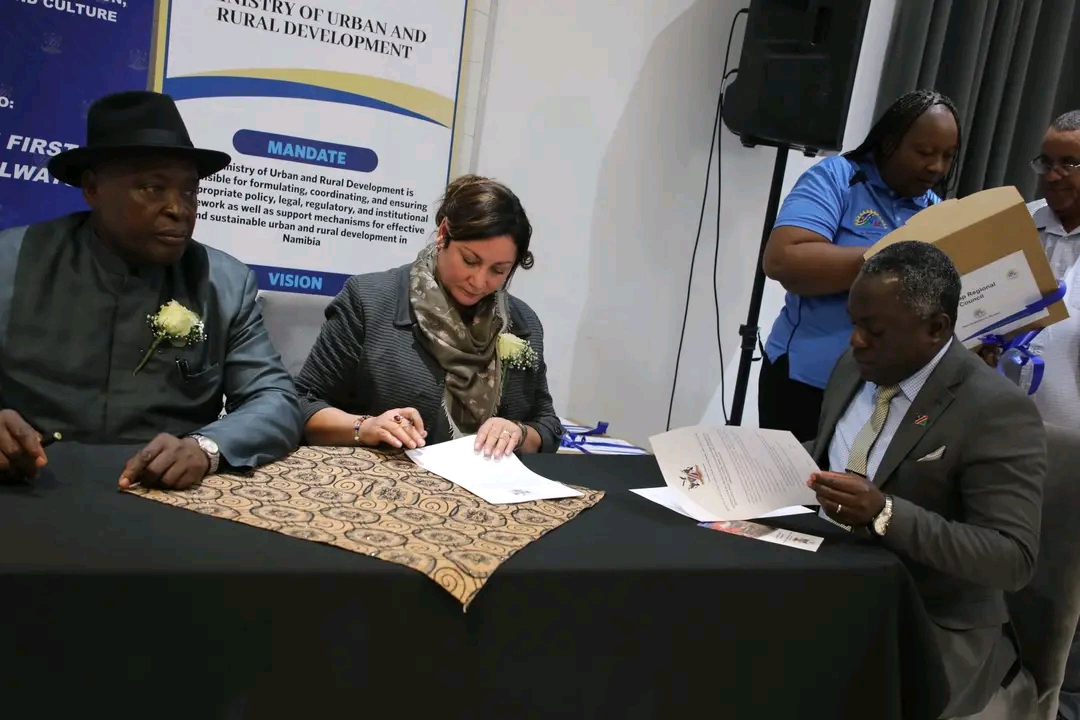
The meeting, an initiative by the Ministry of Lands and Resettlement, attracted farmers and stakeholders from all over the Khomas region.
But Hoebeb (49) is not one of the well-off resettled farmers at this meeting – he came as a member of one of the 27 families fortunate enough to get a plot through the government’s resettlement programme.
One of the top issues on the meeting’s agenda was the lack of water infrastructure – a topic that particularly interested Hoebeb, who, like many others at the meeting, wanted to know what government was doing to address the problem on the resettlement farms.
For Hoebeb, farming is a business he grew up seeing, but never enjoyed, because he does not have the financial means to buy cattle.
“I have lived here all my life,” he says, recalling a time when the farm belonged to a white family – the Wieses – whom he worked for. The family owned a flower business.
Government expropriated the farm in 2005 after a series of controversial events over the killing of a goose and goat and what was believed to be the unfair dismissal of some workers. Hoebeb, together with 10 others, lost their jobs then but seven others stayed on the farm.
Ongombo West became the first farm to be expropriated by government and given up for resettlement under the Land Reform Programme.
Although Hoebeb and his colleagues still live on the farm, their lives have not changed. Three other families, including former prisoners from Robben Island in South Africa, have since joined them.
With only one cow and five sheep to his name, Hoebeb has to find other ways to feed his wife and five children. His small vegetable garden has managed to earn him a few dollars, but it is not much to keep out the hunger.
The onions, tomatoes and mealies that he grows are hardly enough, and the fact that the only water tank at the farm has holes does not make his life any easier.
“There is no water to sustain my garden,” he laments, adding that his entire livelihood depends on the small garden and that if the garden dries up and dies, his livelihood will die with it.
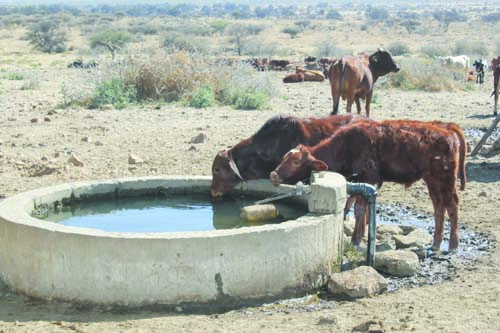
The water situation, however, does not affect Hoebeb and his household alone. The family next door, who moved to the farm in 2007, has to drive their 100 head of cattle kilometres away just to get to a water point.
Bernadette Tjazuko and her husband, Justus Tjazuko, may be better off compared to Hoebeb, but like all the other resettled farmers, the 1 300-hectare farm allocated to them, has poor water infrastructure.
During the meeting, resettled farmers raised this as one of the most pressing issues government has to address urgently.
“It makes farming a bit challenging because the next water point is kilometres away,” said Justus.
Since resettling on the farm, the family has managed to grow their livestock number from only a handful to more than 100 today.
The Tjazukos, originally from Omaruru, say their lives have improved since they were resettled at Ongombo West, despite the water setback.
“Here, we make an income of N$90 000 in a good year just from selling cattle,” says Bernadette.
Being both part-time farmers with full-time jobs in Windhoek, the Tjazukos employ two workers to look after their animals.
Since the departure of the Wieses, the new occupants have managed to keep the farm in tip-top shape, although they say the water infrastructure on the farm is dilapidated.
Last year during the drought, the Tjazukos had to purchase a lot of animal supplements to avoid losing their cattle to the drought.
“It was tough, but we managed to get though the dry season,” Bernadette says.
The Tjazukos may have lived through the drought without losing cattle, but the Vries were not as fortunate.
Despite that setback, the Vries’ own more than 137 cattle, 440 goats and four sheep. The family, originally from the Rehoboth district, were resettled at farm Naudabis in 2001. Their plot measures 1 578 hectares.
Christina says life in Naudabis has snatched her family of five out of the jaws of poverty, but, like all other resettled farmers, they have not been spared from the pains that come with poor water infrastructure.
“When we lost our cattle, government compensated us financially and we managed to replace the ones we lost,” she says.