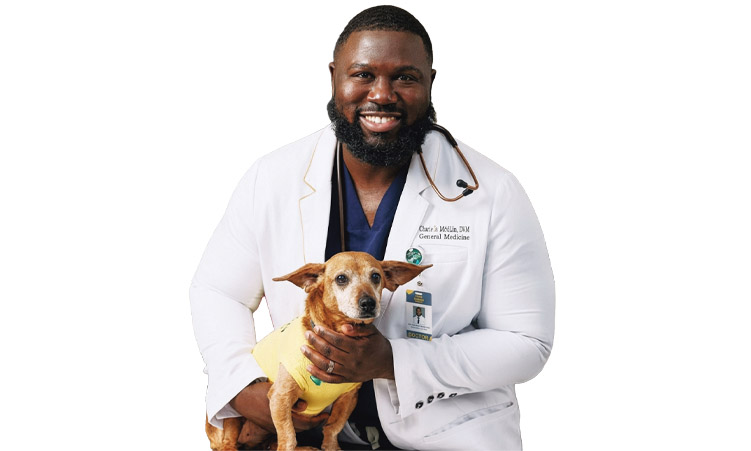
The journey to becoming a veterinarian does not start in Grade 12. In my opinion, it starts with one important question: why?
Veterinary medicine demands your time, energy and mind, both as a student and later as a professional.
Before worrying about points and applications, understand why you want to do it. You will need that answer later.
Growing up at Okahao in the Omusati region, I developed my ‘why’ – because animals were part of everyday subsistence farming.
Later, at Negumbo Senior Secondary School, my love for biology led me to medicine, and eventually I realised that animals had stolen my interest.
If you are still in school and veterinary medicine is somewhere in your plans, my advice is to take your subject choices seriously.
You need a strong science foundation, particularly biology, mathematics and chemistry at AS level, together with English and another subject, preferably physical science. The exact points and grades should always be checked in the latest University of Namibia (Unam) prospectus.
But good marks are only part of the journey. Veterinary medicine is competitive. After a successful application, prospective students still undergo a selection interview before securing a place.
This is why I believe exposure to the profession matters.
Shadow veterinarians and participate in animal-related activities to learn what the career actually involves. That experience can help during the interview, but more importantly, it helps you decide if this is really for you.
My initial application, based on my mock results, was unsuccessful. I improved my national examination results, appealed and eventually gained admission. So, rejection does not necessarily mean the end of the journey.
After that the real fun started.
The veterinary medicine course at Unam is a six-year programme based at Neudamm, a farm campus outside Windhoek, surrounded by nature and animals.
You may be studying late into the night while cattle and birds provide the soundtrack – perhaps reminding you why you are there, or simply shouting at you to finish!
You arrive excited about university life, and before you have properly figured out where everything is, somebody hands you a bone and expects you to know every bump, groove and hole on it.
Expect cadavers, anatomy, practicals, tight schedules, early mornings and long nights. Your social life may suffer. Some friends may even wonder where you disappeared to, but it is incredibly rewarding.
Your training takes you beyond lecture halls and clinics, from farms and laboratories to abattoirs, wildlife reserves and national parks. I remember being out on wildlife trips, learning about animal immobilisation and thinking: “Wait, am I still studying medicine?”
Yes, you are, and that is the beauty of veterinary medicine. You learn across species, from companion animals and livestock to horses, poultry and wildlife.
Along the way, you discover that being a veterinarian does not only mean clinical practice. There are opportunities in public health, laboratories, research, wildlife, reproduction, academia and many other fields.
People often speak about hard work, discipline, sacrifice and studying as though these are optional ingredients for surviving veterinary school. They are not. They are musts. Expect to be challenged by unfamiliar things.
Some will make sense immediately; others may only make sense after graduation when you encounter them in practice. Four years into the profession, I am still learning.
We used to joke that getting into veterinary school is difficult but getting out as a veterinarian is even harder. So, choose your subjects wisely, seek exposure, prepare for the interview, work for the marks and prepare yourself for six demanding but rewarding years.
Above all, know your ‘why’.
You will need it.
– Vaino Kuume is a vet clinician specialising in surgery at the University of Namibia’s Veterinary Academy Hospital.