


Soth Africa’s recent accession to the African Export-Import Bank (Afreximbank) Establishment Treaty as its 54th sovereign member could not have come at a more opportune moment.
The global economy, according to United Nations Conference on Trade and Development, is wobbling at 2.8%, well below the pre-pandemic average of 3.2%. Climate shocks are no longer future risks; they’re here with us. Trade routes are shifting amid geopolitical flux. Alliances are reshuffling, and the old certainties are fading fast.
This turbulence presents Africa the long-awaited opportunity to expeditiously deepen regional integration. Through the African Continental Free Trade Area, the continent is financing infrastructure that actually connects markets and invests in the kind of resilience that cushions its economies against global shocks.
By relying on its sizeable youthful market of 1.4 billion people, Africa is building its preferred destination as a source of raw material and for manufactured goods.
South Africa’s accession unlocks the broad continental coverage by Afreximbank, while placing one of Africa’s leading economies, responsible for nearly 19.1% of the continent’s total trade in 2024, at the strategic core of transforming Africa’s trade architecture. South Africa’s membership influences economies beyond the southern African region, extending into the East, West and North of Africa.
The multilateral bank’s headline commitment of US$11 billion (about N$181.5 billion) not only aligns with South Africa’s National Development Plan 2030, but also reiterates the nation’s commitment to enhancing African industrial development.
This includes a US$8 billion (about N$131.6 billion) country programme focused on energy, mineral processing, and infrastructure, and a US$3 billion (about N$49.4 billion) inclusive financing programme to support small and medium enterprises and economic transformation – all critical areas for South Africa’s growth.
Building on successful initiatives over the years, South Africa will invest heavily in mineral processing, automotive manufacturing expansion, and industrial parks/special economic zones to retain value, create jobs, and boost government revenue.
At a time when critical minerals demand is exploding globally, surging nearly 30% in 2024 alone, South Africa – which accounts for about 40% of mining sales, 59% of global production share and vast platinum group metals reserves – is uniquely positioned to innovate, expand industries and order global trade and diplomacy.
Instead of exporting raw minerals like iron ore and importing finished goods like batteries at a premium, South Africa will now be in a position to process, refine and manufacture more at home, capturing greater value locally.
By processing and manufacturing locally, South Africa enhances its ability to access international trade frameworks like the African Growth and Opportunity Act, to expand markets for its products, while maintaining Africa’s economic agency.
Additionally, South Africa will invest more in critical infrastructure, especially energy generation and transmission. This builds on existing momentum, including strategic support to backbone infrastructure, including R2.36 billion to Eskom to sustain power.
Afreximbank has also supported industrial value addition through initiatives such as a US$3.5 million (about N$57.6 million) Project Preparation Facility, which advanced feasibility studies for an US$849 million (about N$14 billion) titanium dioxide (TiO2) pigment plant at Richards Bay Industrial Development Zone with a planned capacity of 80 000 metric tonnes per annum.
Together, these interventions aim to ensure reliable power, efficient logistics, and fully operational industrial value chains capable of unlocking South Africa’s beneficiation and manufacturing potential.
Last year, Afreximbank and South Africa’s government, acting through the Infrastructure South Africa Programme within the National Department of Public Works and Infrastructure, signed a US$20 million (about N$329 million) joint project preparation facility framework agreement, expected to unlock up to US$750 million (about N$12.3 billion) of high-quality, bankable projects across several critical sectors, including energy, transport and logistics, and digital infrastructure.
Moreover, for the private sector, which drives over 70% of all jobs in South Africa, the partnership aims to drive more private sector-led transformation by forging strategic partnerships with some of the leading existing financial institutions. These collaborations will leverage private capital and expertise to catalyse reforms, unlock large-scale investments, and foster a resilient, inclusive economy.
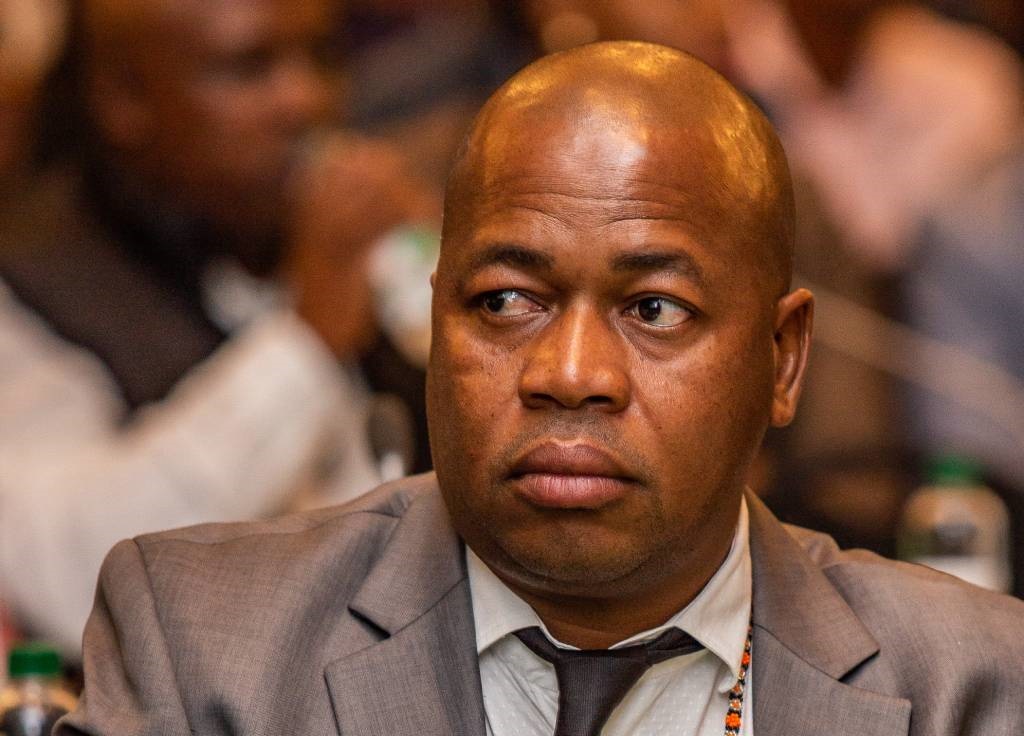
– Mzwandile Masina is the chairperson of the portfolio committee on trade, industry and competition and a member of the National Assembly in South Africa.
In an age of information overload, Sunrise is The Namibian’s morning briefing, delivered at 6h00 from Monday to Friday. It offers a curated rundown of the most important stories from the past 24 hours – occasionally with a light, witty touch. It’s an essential way to stay informed. Subscribe and join our newsletter community.

The Namibian uses AI tools to assist with improved quality, accuracy and efficiency, while maintaining editorial oversight and journalistic integrity.
Stay informed with The Namibian – your source for credible journalism. Get in-depth reporting and opinions for
only N$85 a month. Invest in journalism, invest in democracy –
Subscribe Now!