





President Netumbo Nandi-Ndaitwah’s call to shift towards implementation, accountability, and delivery resonates deeply in a nation where inequality remains a pressing socio-political concern.
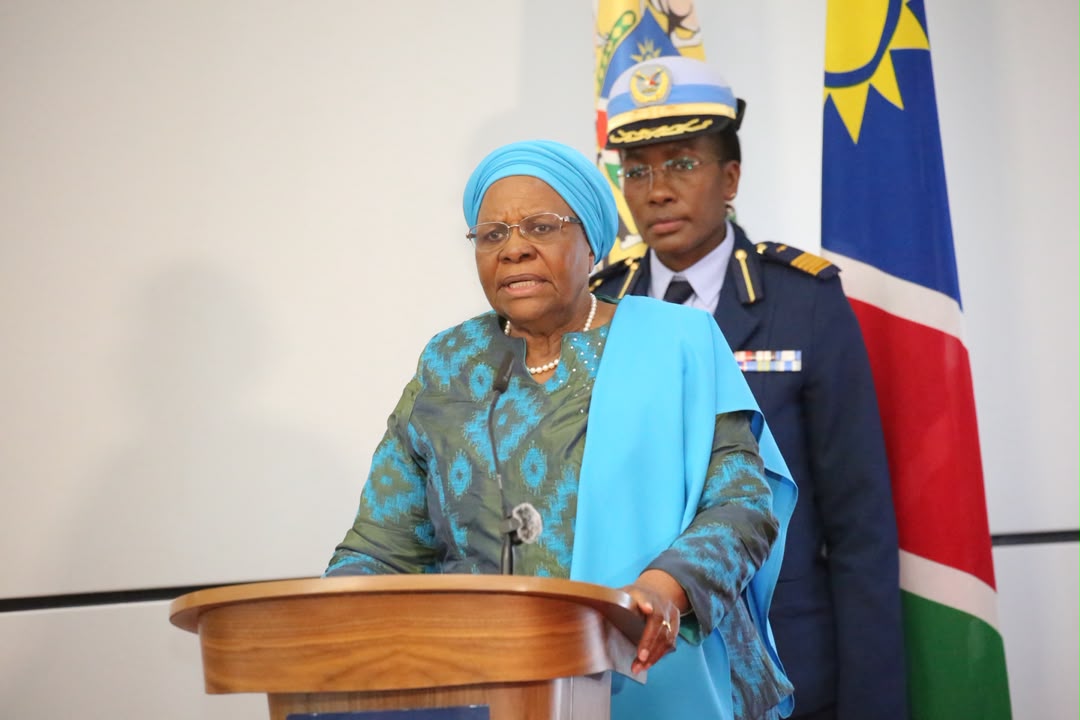
At the official opening of the 13th edition of the annual Mining Expo and Conference in Windhoek recently, Nandi-Ndaitwah delivered a message to capital and policymakers alike: The era of viewing Africa purely through the lens of raw material extraction must come to an end.
Her most notable quote, “Namibians are too few to be poor”, will remain only a catchphrase if we do not act on real domestic value addition.
Nandi-Ndaitwah referred to the Namibia Public Private Forum (NamPPF) and the expo’s theme of assessing progress in creating mining-led economic growth and employment creation. In essence, she laid down an unequivocal political and economic challenge.
Namibia’s rich mineral endowment must be harnessed to drive local value addition, industrial expansion, and shared prosperity for all citizens.
On paper, Namibia’s resource sector indicates a compelling growth story. The mining industry contributed 14% to the nation’s gross domestic product and generated N$7.8 billion in tax revenue in 2025, a remarkable 37% surge from the N$5.6 billion recorded in 2024.
Investor confidence remains robust, underscored by 222 exhibitors at this year’s expo, up from 195 in the previous year.
However, as the president observed, macro-fiscal metrics and rising tax receipts alone cannot remedy structural inequality or absorb youth unemployment.
For decades, resource-rich developing nations have suffered the paradox of plenty: exporting raw, unrefined minerals while importing expensive finished goods.
By urging the mining sector to transition aggressively from mere extraction to in-country beneficiation, the Namibian state is finally signaling a paradigm shift.
Minerals will no longer be treated merely as revenue generators for the treasury, but as catalysts for domestic supply chains, local enterprise creation, and skills development.
A highlight of the president’s address was her reframing of Namibia’s uranium sector.
As one of the world’s leading producers of yellowcake, Namibia occupies a central position in the global clean energy transition. Yet, exporting unrefined uranium oxide leaves significant value on the table.
Framing uranium as a strategic national asset capable of underpinning wider socio-economic development and integrating it into broader nuclear value chains signals a mature geopolitical and economic vision. Progress is already evident on the ground.
Uranium initiatives such as Bannerman Energy’s Etango project and Deep Yellow’s Tumas project generated more than 1 000 jobs during their development phases.
Further, in terms of the Cabinet-backed NamPPF framework, the industry is expected to generate over 18 000 direct jobs and to facilitate an estimated US$2.9 billion (about N$47 billion) in new capital investment. Hopefully these figures represent building blocks for the administration’s ambitious target of creating 500 000 jobs by 2030.
Yet, as the conference theme highlights, dialogue without execution yields little social mobility.
Crucially, it’s good to see the president has expanded policy dialogue beyond just a job count, highlighting occupational safety, employee empowerment, and long-term socio-economic safety nets, including post-retirement medical coverage for mine workers.
By also urging mining houses to empower long-serving employees with capital and entrepreneurial skills, the government is advocating for cross-sectoral diversification that will survive long after mine lifespans end.
Namibia has the legal stability, infrastructure, and institutions required to remain a premier mining destination.
The challenge now rests with both government regulators and industry captains to forge pragmatic partnerships that unlock local beneficiation without compromising international competitiveness.