


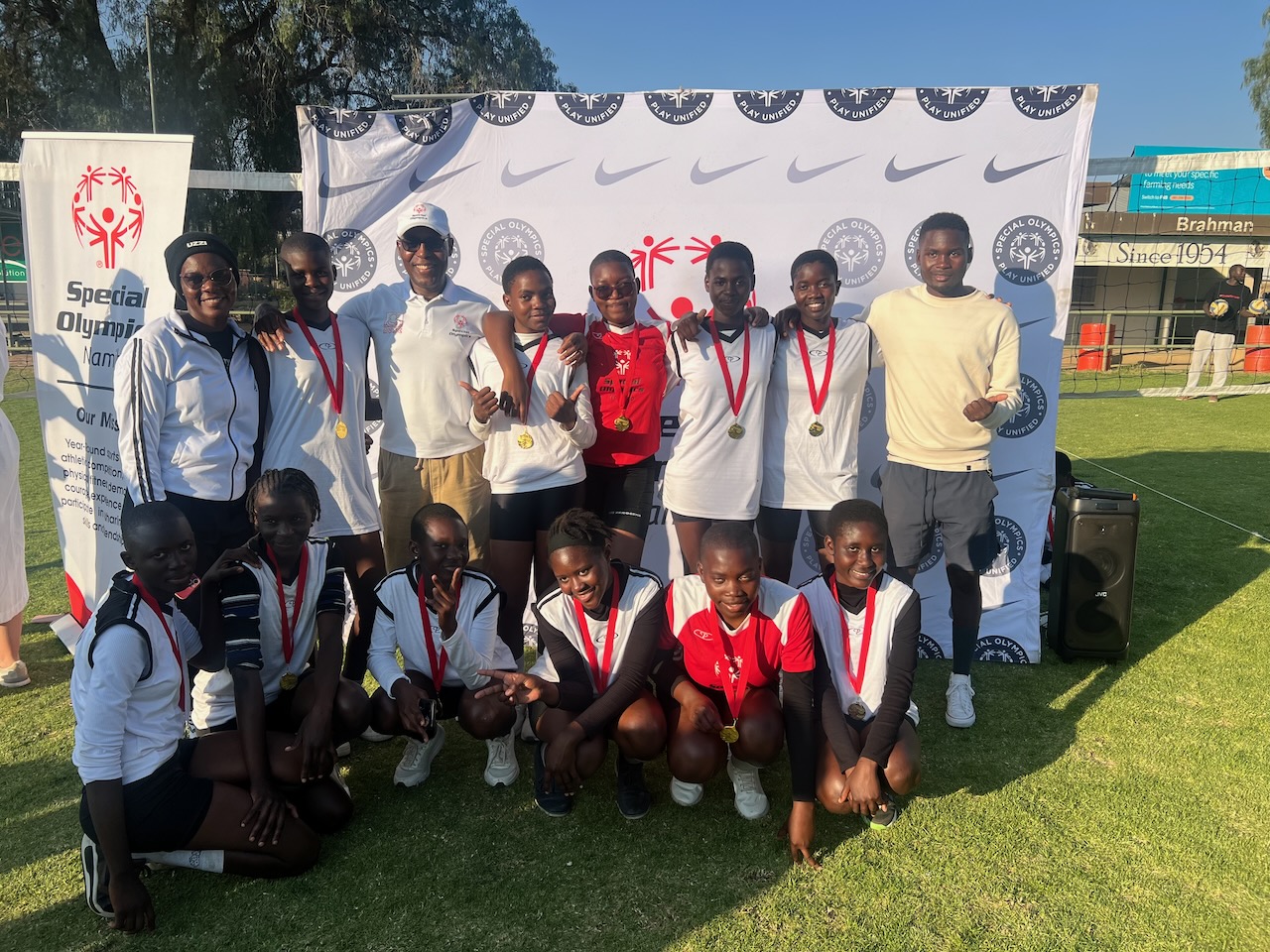
Special Olympics Namibia (SON) has secured its first unified volleyball women’s quota after hosting a national competition, marking a milestone in promoting inclusion and sporting excellence.
SON national director Levien Smit says it was an extraordinary achievement and a testament to the growing strength of Unified Sport in the country.
“This competition served as a qualifying event to determine which women’s Unified team will represent Namibia at the Special Olympics Unified Volleyball World Cup in Katowice, Poland, from 4 to 9 October.
“Only eight women’s and eight men’s teams worldwide got a quota to participate in the Unified World Cup,” she says.
Smit says the spectacular event featured nine teams across the country, including Zambezi, Kavango East A, Kavango East B, Kavango West, Oshana A, Oshana B, Outapi, Dagbreek, and Môreson.
“While the competition aimed to identify the top team in the competitive category, for international advancement, all teams were invited to foster inclusion, skills sharing, and broader engagement in Unified Volleyball,” she says.
“In Special Olympics, sport are offered through three distinct models that support athletes at every stage of their journey.”
The event, recently held at the Katutura Football for Hope, witnessed top-flight volleyball action as teams wanted the podium status at the end of the competition.
‘JOY OF MOVEMENT’
“The recreational model is when athletes and partners come together to experience the joy of movement, friendship, and fun in a welcoming and inclusive environment, while the developmental model focuses on skill building. This model provides structured training opportunities to help athletes grow in confidence and ability within their chosen sport.”
Smit says the competitive model involves that athletes and Unified teams participate in organised competitions and leagues, showcasing their talents, teamwork, and determination on local, national, and international stages.
Each model plays a vital role in advancing SON’s mission to provide year-round sport training and competition for individuals with intellectual disabilities, fostering inclusion, empowerment, and community connection through the power of sport, she says.
RESULTS
The developmental group results saw Kavango East A clinching the gold medal, followed by Kavango West and Oshana B settling for the bronze medal.
In the competitive group section, Outapi took gold, followed by Dagbreek in second place and Môreson in third place.
“Beyond competition, the event served as a platform to promote volleyball development across regional programmes. Coaches and volunteers engaged in knowledge-sharing sessions focused on Unified competition structures and best practices.
“Volleyball will now be added to the roster of sport featured at our biennial national games at Swakopmund, with the goal of expanding year-round training opportunities and increasing participation, as well as fostering relationships with volleyball associations, federations and clubs, and enthusiasts,” she says.
The event also featured a hydration and sun protection station, led by SON health messengers and trained athletes with intellectual disabilities who advocate for healthy lifestyles and wellness awareness.
“Their leadership exemplifies the holistic approach of the Special Olympics to athlete empowerment. In addition, a Unified Champion Schools activation was held with all participating teams. This initiative promotes inclusive youth leadership and whole-school engagement, emphasising the role of athletes, partners, mentors, and coaches in building inclusive communities through sport.”
Smit says Unified Sport is a cornerstone of the Special Olympics movement, bringing together individuals with and without intellectual disabilities on the same team.
‘FRIENDSHIP, UNDERSTANDING, INCLUSION’
“It is grounded in the belief that training and playing together fosters friendship, understanding, and social inclusion.
“Special Olympics Namibia remains committed to expanding Unified Volleyball across schools and communities, with aspirations to offer competitive opportunities for both men and women athletes in future national competitions.
“This is the first Unified Volleyball Women quota Special Olympics Namibia has received, and this is a major achievement for our programme.”
Smit says in Unified Sport, teams are made up of people of similar age and ability.
“That makes practices more fun and games more challenging and exciting for all. Having sport in common is just one more way that preconceptions and false ideas are swept away.”
Through programming in sport, health, education, youth, leadership and community building, Special Olympics Namibia creates opportunities that address the injustice, isolation, intolerance, and inactivity faced by individuals with intellectual disabilities and their families, she says.
Founded in 1968, Special Olympics is a global movement to end discrimination against people with intellectual disabilities.
“We foster the acceptance of all people through the power of sport and programming in education, health and leadership. With more than four million athletes and Unified Sport partners and one million coaches and volunteers in over 200 accredited programmes, Special Olympics delivers more than 30 Olympic-type sports and over 100 000 games and competitions every year.”