



THE Topnaar community that lives along the Kuiseb River in the Erongo region is concerned that proposed donkey abattoirs could lead to an increase in donkey thefts.
“My people hear stories regarding this matter, and some are concerned,” said Topnaar Traditional Authority chief, Seth Kooitjie.
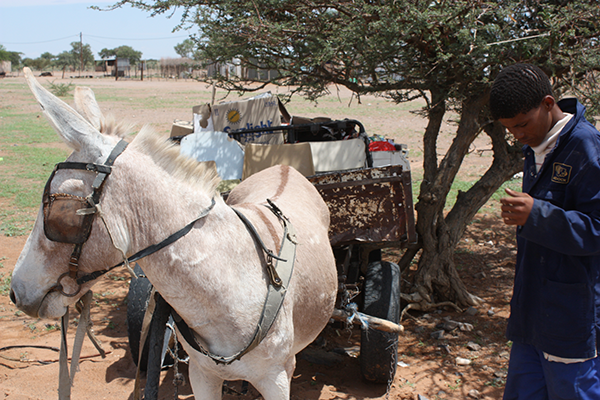
He told Nampa on Monday that they used donkeys for transport and sometimes sell to those who slaughter the animals for meat.
Kooitjie said they still did not understand the proposed abattoirs’ effect on their animals.
“It might not be a bad business, but if it has disastrous consequences, government must put in place strict laws and procedures to control such businesses,” he suggested.
Kooitjie’s comments come in the wake of proposals by Chinese investors to establish donkey abattoirs at Outjo and Okahandja.
Each proposed abattoir plans to slaughter at least 70 donkeys per day, which amounts to over 25 000 donkeys per year.
There is a large market for donkey skins in Asia. The hides are used to manufacture a gelatine known in China as ‘e’jiao’, believed to have anti-aging and libido-enhancing effects.
Apart from transport, donkeys are also used as plough animals in Namibia.
The 2016 Animal Census, by the agriculture, water and forestry ministry, indicated that there were 144 647 donkeys in the country at the time.
Approached for comment, Outjo mayor Marius Sheya said the town council would not impose the proposed abattoir on the community, especially if there was evidence that it would negatively affect livelihoods.
Sheya said on Monday that an environmental impact assessment (EIA) was underway, after which the council would consult the companies involved and the local community.
“The companies applied for land to establish the abattoir, but it was not approved as yet. Nothing will be started before all the views and the final findings of the EIA are thoroughly considered,” he said.
Okahandja mayor Johannes Hindjou said his council informed the abattoir stakeholders to consult the public first.
“Our position is to bring them together with the community and hear their objections,” he said.
Kenya is the only African country with an operational donkey abattoir.
Tanzania, Botswana, Uganda and Ethiopia closed their abattoirs, according to Alex Mayers of Britain-based Donkey Sanctuary, on Saturday.
Mayers, who is in Namibia to assess the views of the public on the issue, told Nampa donkeys represent access to clinics, water, markets, and fields, especially for people most vulnerable to droughts and floods.
He noted that town councils had an opportunity to safeguard the livelihoods of many people who mostly depended on donkeys.
“Namibia is at an exciting moment in time where strong leadership and the good decision should be made before it loses a vital resource,” he said.
Mayers said it would not be wise to compromise livelihoods and the species on a handful of jobs created through the establishment of abattoirs.
He said research had also shown that there were only 44 million donkeys in the world and an annual demand of four to 10 million skins, meaning the sustainale survival of the species was under threat.
Last week, the Damara community voiced their objections to the abattoirs through an organisation called Donkib (||îb) Ge Cultural Group. – Nampa