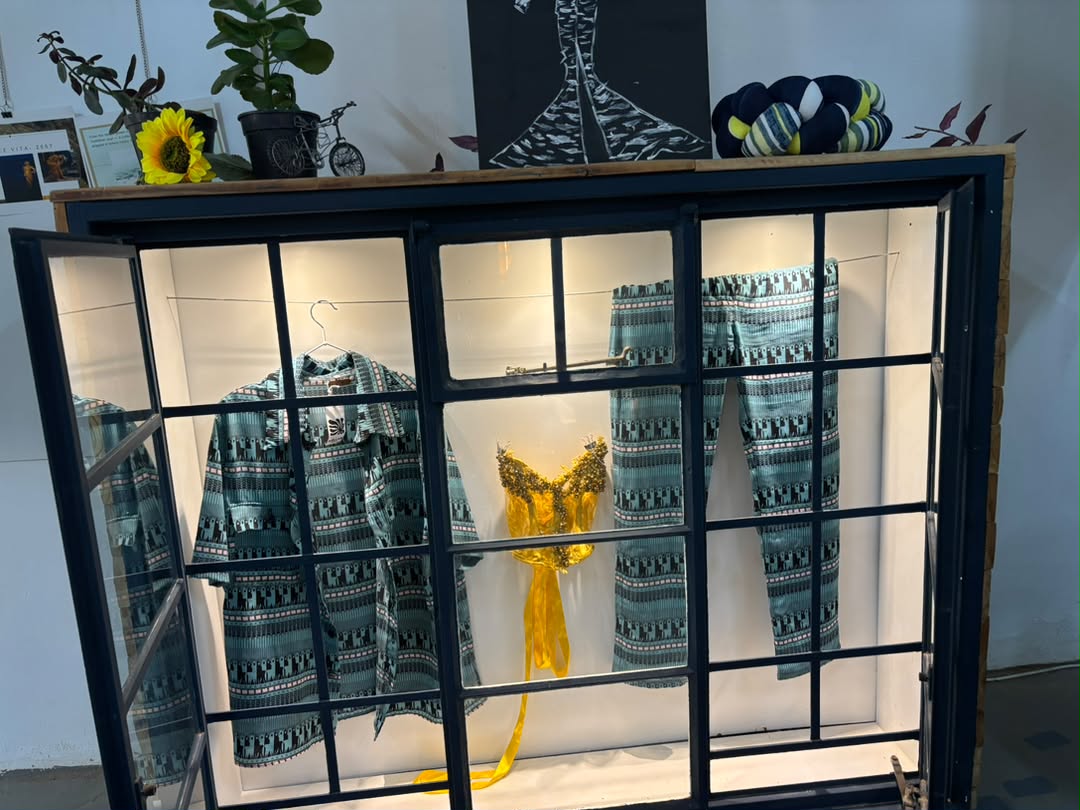







The huge turn out at last week’s ‘For Tony’ benefit exhibition at the National Art Gallery of Namibia (NAGN) spoke volumes about the character and talent of arguably one most iconic photographers to come out of Southern Africa.
There are few people who ever really find their true purpose and passion in life.
Anyone who knows Tony Figueira personally or, like myself, grew up admiring his work and the way in which people spoke about their experiences with him, his big heart and his mastery of light, would know that he found and revelled in his.
Whether he was braving reprisal as a photo-journalist in heady years prior to independence, leading the way in fine art photography or just immortalising magical matrimonial moments, his commitment to sharing his perspective of the world has been unwavering.
Angolan by birth, Tony’s interest in photography took off when he was 16, while ‘monkeying’ around with a school friend’s camera. He knew then he wanted to be a photographer and writer. He went on to study journalism at Rhodes University in Grahamstown, South Africa, in 1984.
He knew early on that life was lived “moment by moment by moment” and decided to embrace this by leaving a lucrative career in the motor repair industry to follow his passion for photography.
He bought his first Pentax camera via mail order and set off on a journey that would change his life.
“I paid for it with money I made from playing music,” Tony said.
He then spent many years documenting Swapo’s internal struggle for liberation and documented a wide variety of events – from the unspeakable to the celebrated. Tony was there to document some of Namibia’s most historic moments, including the return of Sam Nujoma, Nelson Mandela on a visit back to Robben Island and eventually South Africa’s exit from Namibia after the implementation of United Nations Resolution 435.
He maintains that his most memorable moment will always be the day Namibia achieved independence.
“The pre-independence year or so was tense. And the years before even more so. Namibia was the place to be as a photographer.”
“Tony is a great man and in his own way, he contributed to liberation struggle. His camera was his weapon and many times an image can have a much greater effect than a bullet,” friend and fellow artist Hishishi Papa said.
During this time, he worked with some of the foremost media outlets of the time, including Voice of America (VOA), O Publico (Lisbon), Gemini Agency (London), the Rand Daily Mail, the Weekly Mail (Johannesburg), and of course, The Namibian.
“I was initially involved with the concept of starting the newspaper when Gwen Lister and Dave Smuts initiated the project. I was there when the first edition of the paper was published. That was a very special moment. Through the years I have contributed, both as a journalist and a photographer, with features and images. I think The Namibian should be given major recognition for its role in the liberation struggle, as it was without a doubt one of the most influential means of communicating what was going on in the country then. It became the platform for those fighting the system from within.”
Tony’s background in film photography and developing prints in darkrooms underscore his purist approach to photography.
“I believe true photography has to be composed in the mind before the shutter is released. It’s all about understanding light and having the technical ability to achieve the image you want.”
This, however, did not stop him from fully embracing the digital revolution.
“I have fallen in love with the digital age. It is such a far cry from what I ever imagined photography would, and still will, become. Its immediacy has generated a whole new audience and a world of creativity that takes photography into new realms.”
“But digital has also made people lazy. They don’t even think about the image. Or the tool. Many just snap away like zombies,” Tony added.
After spending a year on a Richard Pakelppa documentary shoot in his native Angola, Tony had fully come to grips with the brave new world of digital photography and decided to then set up what would soon become an institution of art, creativity and inspiration, Studio 77.
Along with good friend and internationally acclaimed wildlife photographer Hans Rack, they set up shop in 2004 in small studio along John Meinert Street. From there, they grew Studio 77 into the premiere photo studio in the country before moving to a bigger space at the Old Breweries Complex.
“I’ll never forget the time I sat against the back wall of this incredible triple volume empty space and wondered ‘how the hell am I going to pay the rent!’”
Hans had since left Studio 77 to focus more on his work as an engineer and wildlife photographer.
As technologies changed and developed, so did Studio 77, slowly taking on more and more aspects of photographic work, and photographic related fields, adapting to the changing aspects of the digital industry.
Throughout his career, he has also been greatly involved in efforts to make Windhoek and Namibia more creative through exhibitions, music and the performing arts. Despite a busy schedule of his own and being in high demand as a corporate photographer, he committed much of his time to training the next generation of photographers and was always willing to assist and inspire.
Filmmaker Perivi Katjavivi was on hand to attest to this. “Tony is an incredible being, he helped me launch my production company six years ago and was always there for advice and to motivate young creatives. It’s very emotional to see such an icon put down his camera because he has shown the world, through his lens, our world in the most magnificent fashion.”
“Cancer changes everything, but you have to stay positive,” he says.
He chose to follow a more holistic approach to therapy. “In the last 25 or so years, nothing has changed in the treatments of cancer. And the conventional success rates are just appalling.”
Since his diagnosis, Tony has continued to work and according to long time friend, Supreme Court Judge Dave Smuts, “even while ill, Tony would not let that love subside”.