As I prepare to depart this Saturday for Germany, I do so not only as an academic participant, but as part of a broader effort to understand how interdisciplinary, global collaboration can shape the future of sustainable agriculture.
I am a bachelor of agriculture (sustainable agriculture) honours student at the Namibia University of Science and Technology, and a selected participant in the Global Intercultural Project Experience (GIPE+ 2026), a programme funded by the German academic exchange service DAAD.
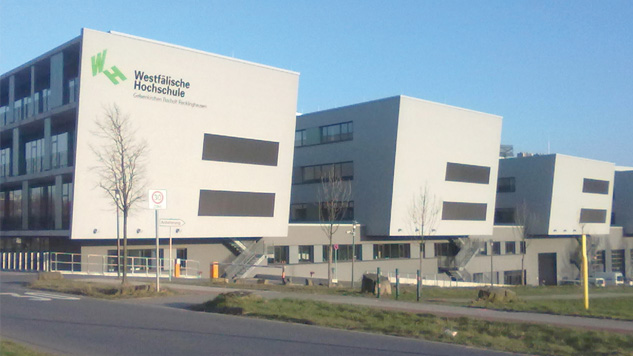
The initiative brings together four universities: Westfälische Hochschule in Germany, Atma Jaya Catholic University of Indonesia, Universidad Católica San Pablo, and Nust in Namibia.
GIPE+ is designed to move beyond academic theory into applied, real-world problem solving.
This year’s focus is Quilca in Arequipa, Peru, a rural agricultural area facing challenges such as water scarcity, climate variability, and declining productivity – conditions that strongly mirror those in Namibia’s own agricultural landscape.
A defining feature of this programme is its interdisciplinary team structure.
Our group consists of five students: a master of science in data science student, a bachelor of engineering in civil engineering student, two bachelor of science honours agriculture students (including myself), and a bachelor of computer science student specialising in cybersecurity.
This diversity reflects the reality that modern agricultural transformation is no longer driven by agriculture alone.
Today’s agricultural systems require the integration of data science for precision agriculture and predictive analytics, civil engineering for irrigation systems and infrastructure, cybersecurity for protecting digital agricultural platforms, and agricultural science for production systems and sustainability.
This convergence reflects the complexity of modern development challenges.
For Namibia, this is particularly relevant.
Agriculture remains central to rural livelihoods, yet it is constrained by climate variability, limited technological adoption, and water scarcity.
The integration of digital tools, infrastructure development, and data-driven decision-making offers pathways for transformation.
GIPE+ 2026 requires participants to develop practical, implementable solutions aligned with the Sustainable Development Goals. The emphasis is on execution –timelines, measurable outcomes, and real-world applicability.
Intercultural collaboration is another strength. Working with students from Europe, Asia, and Latin America exposes participants to different agricultural systems and problem-solving approaches.
This diversity strengthens innovation and adaptability.
Exposure to Germany’s industrial systems, including institutions such as the German Mining
Museum, further deepens understanding of how economies evolve through innovation and transition.
As I prepare to depart, I do so with a strong sense of responsibility to translate global learning into local impact within Namibia’s agricultural sector.
Ultimately, the value of GIPE+ will be measured not by participation, but by transformation.
- Benedick Louw