





Helao Shityuwete is remembered by his children as a man who sewed his daughter’s ballet costumes, fed them sugarcane, and taught them human rights.
He was a war veteran to the public, but a “gentle and present” father to Tulimelila (39) and Frederick Shityuwete (35).
‘Tuli-bel’ says her father’s greatest legacy goes beyond the role he played in Namibia’s liberation struggle.
It is also the values he modelled at home – dignity, equality, kindness and the courage to speak out about unfair treatment.
“He handed me the torch.
My work in human rights is to follow in his footsteps in my own way,” Tulimelila says.
The former Robben Island political prisoner, anti-apartheid activist and labour advocate died on 29 August a few days after he turned 92.
Tulimelila says he was a gentle father who cooked, played, taught his children about birds and plants, and how to make oshikundu.
“He brought our country liberation, but how do we make it better even after it is liberated?
“He saw what was happening in Namibia was not right and didn’t accept things.
He thought there is a better future for our country,” she says.
Tulimelila says her father treated everyone with respect and dignity. She says going to town with her father would always take hours as he stopped to greet everyone.
“He treated everybody with respect … he taught us that,” she says.
Shityuwete was a firm labour advocate, fighting for the rights of all workers and the dignity of all.
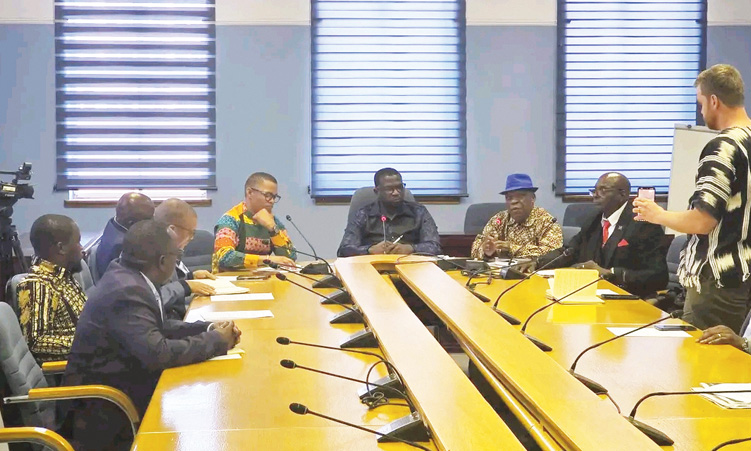
He and Andimba Toivo ya Toivo started the Namibian Former Robben Island Prisoners Trust, which takes care of former Robben Island prisoners and their families.
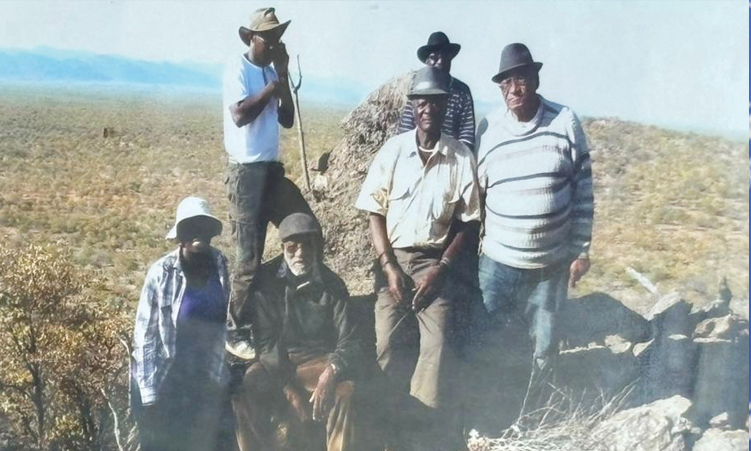
The trust is currently chaired by Marten Kapewasha, who was imprisoned together with Shityuwete on Robben Island in the 1970s.
Shityuwete was also a founding member of the then Ministry of Labour and Manpower Development.
GENTLE MAN
Tulimelila describes him as a hands-on father.
“He took care of us, played with, bathed, and cooked for us.
He taught us how to make oshikundu as well,” she says.
She remembers her father feeding her sugar cane as a young girl, using a Swiss Army knife.
“He actually surprised me with some sugar cane some years ago. It brought back wonderful memories of my childhood. I would still 100% want him to feed me sugarcane,” she says.
THE BALLET COSTUME
Shityuwete was also known in the ballet community. He could sew, a skill he acquired during his years on Robben Island.
Tulimelila says he often sewed in his free time.
She remembers arriving at ballet practice with her father being the only black parent.
“He made all my ballet costumes … He was famous in the Windhoek ballet community,” she says.
ROBBEN ISLAND
Tulimelila says the family went to Robben Island in 2000 to see where Shityuwete had spent his years imprisoned.
They stayed for two days as he took them around the island and told them stories about his time there. She was only 13 at the time.
“We saw the cell where he was kept, the parade ground where prisoners secretly hid a radio, and the limestone quarry that caused prisoners eye problems,” she says.
“I also learnt how newspapers were important to prisoners at the time,” she says.
Tulimelila says the connection with news stayed with her father throughout his life.
At home, newspapers could be found everywhere.
“You open a cupboard, and he’s got a stash of newspapers there,” she says.
‘NATURAL TEACHER’
Tulimelila says Shityuwete knew the names of many plants and birds in the garden and would explain things to his children as he went about his day.
He also taught them how to make traditional food as he and his wife were from different cultures.
“He was a natural teacher. There was always oshikundu at home,” she says.
HANDSOME MAN
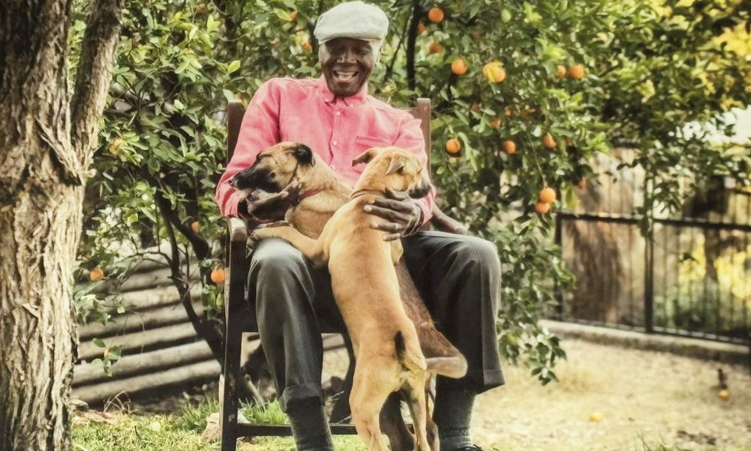
Shityuwete and his wife Jane met in March 1986 in London when Swapo sent him there to study.
Jane says she liked him the moment she saw him.
She even tossed a coin with a colleague for the chance to interview him for a scholarship.
“He came in a white suit carrying a rolled-up umbrella and nervous.
He was so handsome,” she says.
Shityuwete proposed the day after the interview, and the couple got married in December that same year.
“I thought it was a bit unprofessional because I was a student adviser and he was a student, but I said yes,” Jane says.
In 1987 they had Tulimelila before Shityuwete moved back to Namibia in 1990.
Jane says they embraced each other’s cultures, but she hated the “bitter” oshikundu.
“I just never got the taste for oshikundu. He was a good cook,” she says.
Jane moved to Namibia permanently in March 1990, a few days before independence.
Back then, she says, there were no phones and they travelled on municipal buses. They had Frederick in 1991.
“He was the most wonderful man. He never liked hypocrisy and tribalism.
He was humble and clear about what he was fighting for,” Jane says.
She says he was not a traditional African man who did not cook or share roles in the house.
“He was a true feminist in his own thinking,” she says.
Shityuwete’s death leaves Betuel Nuunyango as the only surviving member of the group of 37 Namibian nationalists who were imprisoned on Robben Island in the 1960s.
Vicky ya Toivo, the widow of Andimba Toivo ya Toivo, Shityuwete’s friend, mentor and teacher, describes him as a beautiful soul and a devoted family man.
“Having known him, he never liked special treatment. He was a man of equality,” she says.
She says Shityuwete believed that if people work together, they can achieve goals.
PIONEER
To Kapewasha, he was a brave comrade, educator and mentor who motivated and politically educated fellow Namibians during their years in prison.
He says Shityuwete used his years in prison to broaden the political understanding of other prisoners and discuss international affairs with them.
An avid reader, he also spoke several languages and taught fellow prisoners Portuguese and French.
“He was a pioneer of the liberation struggle. He was strong, courageous and motivating.
He inspired me very much. I was a young man then and very happy to meet a trained soldier,” Kapewasha says.
Kapewasha and Shityuwete met on Robben Island in 1974.
Shityuwete is survived by Jane, Tulimelila and Frederick.