




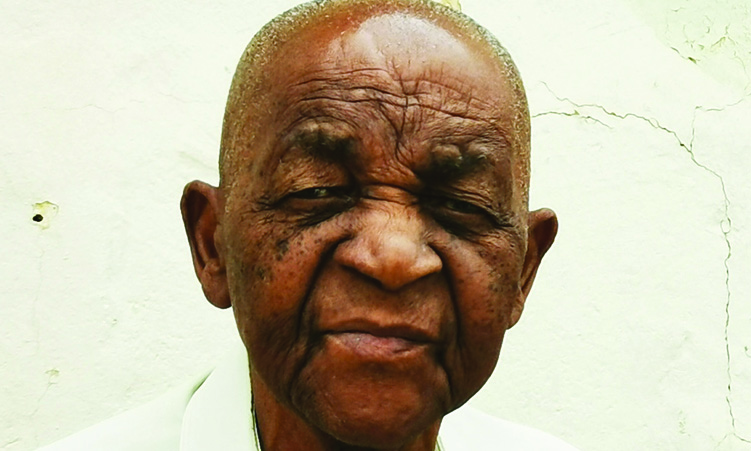
When Simon Mogane completed his training in construction at the Vlak Foundation Industrial College (the present Gauteng), his first assignment was to help build a new location for black people in Windhoek.
Born in Pretoria, South Africa, Mogane made Namibia his home over 60 years ago after being sent by the apartheid-era South African regime to build houses and schools for the black population in Windhoek.
His assignment, as part of a select team, was to build a new location for the black community in Windhoek, when the apartheid South African regime recognised the need for progress and development in then South West Africa.
“In South Africa, the salary was 20c an hour and for us to come to South West Africa, where we were offered 30c an hour, we were very happy,” says the 91-year-old.
Mogane arrived in the country on 14 February 1958 with a team of builders, carpenters and plumbers, entering an undeveloped and bush-covered area that would later become Katutura.
Under the guidance of the Windhoek municipal council, they established a small camp in the middle of nowhere that served as their sleeping quarters.
“We built a shack about 12 metres by 9 metres. We used it as our sleeping place, nothing else. And they built us a small dam that we used as a water storage,” he says.
They commenced their work by constructing an office for the municipality before moving on to build four-roomed houses, starting with Nama 1 and continuing through Nama 4.
“All the houses were the same. Four rooms with a toilet and water tap outside. The reason for the outside toilets was because it had to follow the sewage and water lines. The houses also had to have iron doors. The Boers said if we used wooden doors the blacks would break the doors down and make fire with the doors,” he chuckles as he recalls the memory.
They made the bricks on-site and at the time constructed up to three houses a week, he says.
In 1959, Mogane helped build the first school – Mandume Primary School – creating education opportunities for the growing community.
However, his construction journey was not without its challenges.
“We had language issues. We came from South Africa, and the people we had to train here were all Aawambo. They didn’t understand English or Afrikaans. It was some old people who worked in the mines in Johannesburg who spoke Fanakalo who assisted with translations,” he says.
In 1959, a significant chapter unfolded in the history of the Old Location. Following a riot, people were allocated houses in what is now Katutura.
A new contractor introduced innovative construction techniques and they could then construct up to six houses in a day. This technique was used at Nama 10 and some houses in Damara and Gemengde locations.
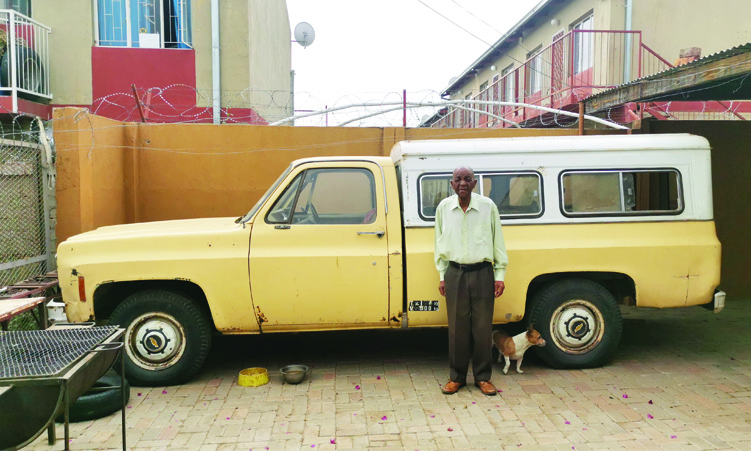
By 1964, locals had acquired the skills to build houses independently.
“The idea was to come here and teach these people to build,” he says.
In 1990, Mogane ventured into entrepreneurship, establishing his construction company, which he ran until 2011.
Mogane’s passion for construction became a family legacy, with one of his sons following in his footsteps as a builder. Thami Mogane (61), his third oldest son joined his father in the construction industry in 1985 and the two have worked on several major projects together.
“My father is the best at the craft. He was a foreman who even taught many white people who later became his bosses,” said Thami.
His story comes after the City of Windhoek announced that it is working on an initiative to convert seven houses built between 1959 and 1960 in Katutura and Khomasdal into heritage assets and include them in the municipality’s heritage register.
Katutura resident Chalfa Mugagabe says he was raised in a house built by Mogane.
“The work of oupa Mogane is visible for all to see. I am still living in a house that he built in the 1950s. The house has no crack and the roof does not leak. The house is still solid,” he said.