





On 2 December, members, guests, and invited stakeholders gathered in Windhoek for the Open Session of the Namibia Professional Hunting Association (Napha) Annual General Meeting (AGM) under nearly unbearable heat. Temperatures hovered around 40 degrees Celsius, the kind of heat that settles heavily on shoulders and drains energy long before midday. Even inside the venue, the weight of the conditions could not be ignored.
It was an unintentional reminder of the realities faced daily by those working in Namibia’s conservation hunting sector. Long hours, physical labour, vast distances, and extreme weather are part of the job, not exceptions. As members reflected on the past year during the Open Session of the AGM, those realities formed an unspoken backdrop to every interaction and moment of recognition.
The Open Session is a space for engagement and acknowledgement. It brings together members, partners, and guests to reflect on shared values and to recognise the people who give practical meaning to conservation hunting in Namibia. During the course of the day, the programme paused to honour three such roles: hunting assistant, camp attendant, and chef of the year.
These awards were not about visibility or rank. They were about individuals whose work defines the lived experience of professional hunting, far from public platforms and formal recognition.
When the awards were introduced, the room grew quiet.
“The following three awards are truly dedicated to the unsung heroes of our conservation hunting fraternity, the dedicated staff members from our esteemed members. Your tireless efforts behind the scenes have made a profound impact on the success of Napha and conservation efforts in Namibia. Your passion, expertise, and commitment to excellence are the foundation upon which our community stands.”
In that moment, it became clear that these awards represented more than individual achievement. They represented livelihoods, families supported through steady work, and pride earned through responsibility carried day after day under demanding conditions.
Where the Experience Begins
For an international hunting guest, the Namibian experience begins long before the first day in the veld. It starts at Hosea Kutako International Airport, sometimes after more than 20 hours of travel. Fatigue, uncertainty, and anticipation all arrive together.
What meets the guest first is not wildlife or landscape. It is a person.
A calm greeting. A steady presence. Someone who understands both the journey and the responsibility that comes with welcoming a guest to Namibia.
Perhaps it is Kleovas Shiveni, known to everyone as Digo, waiting patiently. He knows the drive will be long, that dust will follow the vehicle as the city fades behind them, and that the weather, whether extreme heat or winter cold, will shape the days ahead. Along the way, he adjusts the pace, offers reassurance, and begins to share the country through quiet, unforced conversation.
By the time the farm gates open, the guest no longer feels unfamiliar. That first interaction sets the tone for the entire stay and helps determine whether Namibia becomes a place people return to.
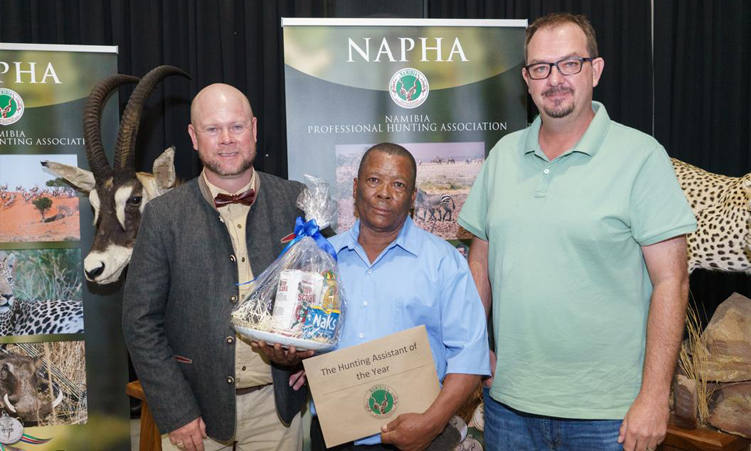
Strength and Skill in the Veld: Hunting Assistant of the Year Moses Swartbooi
Some careers are built quietly, shaped by loyalty and consistency rather than recognition.
Moses Swartbooi has been part of the Kruger family for more than 30 years. He began his working life as a farm worker in the early 1990s and moved with his family to Omujeve Hunting Safaris in 2006. Over time, he became an indispensable part of the operation.
When the Mashi concession was acquired in 2012, Swartbooi distinguished himself as an exceptional tracker and elephant hunter. His ability to read the bush and judge trophy animals accurately earned him deep respect from clients and colleagues alike. His work requires patience, responsibility, and sound judgement, particularly in remote and demanding conditions.
Beyond his bush skills, Swartbooi is known for his practical abilities, especially with vehicles. His knowledge has resolved breakdowns far from assistance, protecting both people and operations. His work provides stability for his family, supports education for his children, and offers the security that comes from long-term employment built on trust.
The Person Who Sets the Tone: Kleovas “Digo” Shiveni
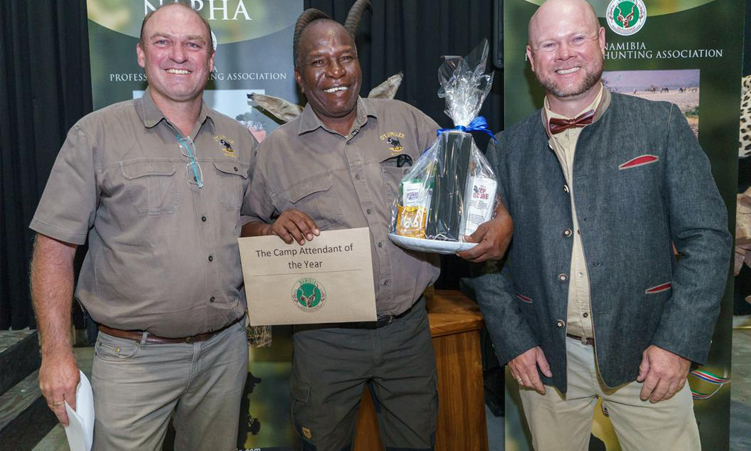
When Digo stepped forward to receive his award, he paused briefly, visibly overwhelmed. Then came a dignified smile, sincere and unguarded. It was the expression of someone who has spent a lifetime doing his work without expectation of recognition.
Born on Farm Otjisazu in 1963, Digo’s life has always been rooted in the land. After completing school at Döbra, he entered an industry that was still taking shape. Tourism and conservation hunting were unfamiliar environments, and the learning curve was steep. One of his greatest challenges was language, particularly German, which was essential for guest interaction.
He approached this challenge methodically and with determination. Step by step, he progressed from game drives to airport transfers, and eventually into full guest care.
Since joining Otjiruze Safaris in 2004, Digo has become one of the pillars of the operation. For more than 25 years, he has carried out every task required, frequently without being asked. Airport transfers, guided photographic safaris across Namibia, Zimbabwe, and Botswana, assistance in the bush, maintaining lodge operations, and entertaining guests in the evenings with stories shaped by lived experience.
He speaks six languages fluently and knows birds and animals instinctively. At 62 years of age, he continues to work with consistency and pride. His work supports his wife, children, and extended family. It has paid school fees, kept households stable, and allowed him to lead by example through discipline, responsibility, and care for others.
Care Behind the Scenes: Chef of the Year Heidi Shefeni
The kitchen is rarely seen, yet it is felt every day. It is present in early breakfasts before sunrise, in warm meals waiting after long hours in the veld, and in the quiet sense of care that turns accommodation into comfort.
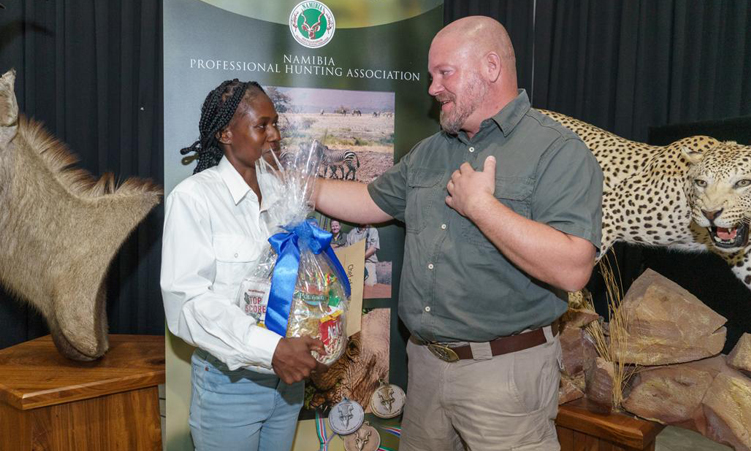
When Heidi Shefeni’s name was announced, surprise was written clearly across her face. She had not been told she was being considered for an award. She had simply been asked to attend the Open Session. Nervousness gave way to disbelief, and then to quiet joy.
Originally from Mariental in the Hardap region, Shefeni began her career in hospitality in a scullery at a restaurant and coffee shop in Walvis Bay. The work was demanding and overwhelming at times. She recalls struggling with new systems, unspoken expectations, and the pressure to perform while still learning.
She overcame these challenges by asking questions, making notes, prioritising tasks, and committing to steady improvement. Supported by her parents and driven by self-discipline, she built a career that now sustains her and contributes directly to the stability of her family.
The skills she gained extend far beyond cooking. Communication, teamwork, time management, problem-solving, and professionalism have become part of her daily life. The award, she says, belongs not only to her, but to her family, who shared in the sacrifices and now share in the pride.
More Than Individual Awards
These three individuals represent thousands of similar stories across Namibia. Behind every hunt is a value chain that includes hunting professionals, camp staff, cleaners, drivers, taxidermists, shipping companies, and logistics providers. Each role supports households, extended families, and rural communities.
Professional hunting in Namibia is not simply a job. It is a respected career that offers financial stability, a connection to nature, and a tangible contribution to conservation. It allows individuals to support families with dignity and to plan for the future.
In 2015, the hunting sector supported approximately 15 000 jobs. Today, that number exceeds 16 000, directly affecting more than 30 000 Namibians when family dependency is considered. Despite hosting only around 3 200 trophy hunters per year, each visitor supports the livelihoods of more than nine people.
Why It Matters
For rural communities, these jobs mean food on the table, school fees paid, medical care accessed, and dignity preserved through honest work. They mean skills passed from one generation to the next.
The awards presented during the Open Session of the NAPHA AGM were acknowledgements of the people who carry the experience of Namibia’s conservation hunting every single day.
When guests leave Namibia, they may remember the trophies. but what brings them back is the people.
These roles do not only sustain a profession, they sustain families, communities, and futures.