MOST mornings, Swakopmund is covered in dense fog, which usually lifts before midday.
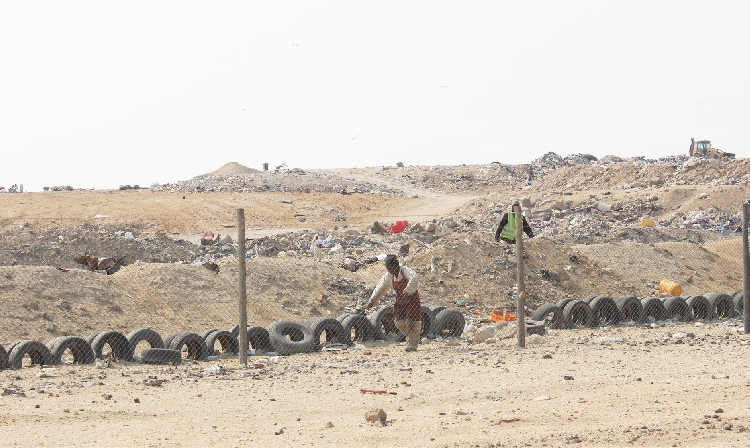
The day becomes warm and sunny and if one is on the side of the DRC informal settlement one will never miss the smell from the piles of trash from the municipal dump site just outside town.
The dump site, surrounded by a two-metre fence is about 300 metres from the DRC informal settlement.
Swakopmund is one of the fastest growing towns and tourist attractions in Namibia. As a beach resort, the town is particularly popular during the December holidays, thanks to the cool weather and its set of amazing tourist attractions.
But on the side of town where the dump site is, life is a struggle since about 50 people – most of them women – have to sift through ‘mountains’ of rubbish in search of valuables they can sell.
Here, strangers have become friends and family, having one thing in common which other people see as disgusting as they go through the filth.
Today, however, it is not sunny as the big rubbish trucks rumble in through the gate to off-load while people rush in the hope of getting the best items. Some women told The Namibian that they have no choice but to make the dumpsite their workplace, even if they face danger and risk contracting all sorts of diseases every day.
Fillipine Namases (41) has been coming to the dump site for the past 17 years to support her extended family after her husband and two children died.
“Working here with these people helps me keep my mind off the worst day of my entire life when my husband and my children died in a shack fire.
The screams of the children and visions of my husband running back to get them to safety, and all of them burning to death sometimes haunt me because I had to watch helplessly as our shack burned down,” she stated.
Namases was wearing a worn-out face mask, and said women are particularly vulnerable in this environment.
“We come here at our own risk. Many people who started before me have died, or have one or other terminal illness.
I fear that too, but what can I do? It is better than sitting at home and being unproductive. At least from here, I make between N$100 and N$150 a day.
“That is enough for food for a day. I am only left with one child and other family members,” explained Namases.
Very hard at work is 51-year-old Fundeni Matheus, who said she had raised all her eight children through this ‘job’, and she has been coming here for the past 25 years. She added that some people misunderstand what they do.
“We do not come here to look for food that people or shops throw away, although there are others who do that. We come here to look for metal, plastic and paper, amongst others, things that can be recycled. That is what we come here to collect for sale, and if I work hard from eight in the morning until four, I take home N$200 every day,” she noted.
Matheus said she sent her children to school this way, and two are at university already. Most of the people at the dumpsite know that there could be a better life or job out there, but unemployment is not the answer, and they do what they have to do.
“This place is the most filthy and dangerous condition anyone will want to work in, but still we get up every day and come here to ‘work’ because we all have responsibilities.”
In an age of information overload, Sunrise is The Namibian’s morning briefing, delivered at 6h00 from Monday to Friday. It offers a curated rundown of the most important stories from the past 24 hours – occasionally with a light, witty touch. It’s an essential way to stay informed. Subscribe and join our newsletter community.

The Namibian uses AI tools to assist with improved quality, accuracy and efficiency, while maintaining editorial oversight and journalistic integrity.
Stay informed with The Namibian – your source for credible journalism. Get in-depth reporting and opinions for
only N$85 a month. Invest in journalism, invest in democracy –
Subscribe Now!