CHINA AND RUSSIA ARE dramatically reshaping world politics. For centuries, the global centre of economic activity shifted westwards, forming the basis of the rise of the West.
Since 2000, however, the centre has been pulling eastwards. As with the rise of the West in the 18th century, the eastward movement cannot but have momentous geopolitical consequences.
Russia broke with the post-Cold War, Western-driven order with its 2014 annexation of Crimea, which was part of Ukraine.
China’s break with the West has been gradual. Nevertheless, its flagrant disregard for The Hague International Court of Justice’s 2016 ruling against Chinese territorial claims in the South China Sea was a key turning point.
China and Russia are challenging the Western liberal order. Instead of falling in line with the West, it now looks like the West may need to adapt to an increasingly non-Western driven world.
The whole concept of the ‘West’ is seriously under threat.
TRANSFORMING GEOPOLITICS
China is transforming geopolitics with its Belt and Road Initiative (BRI) at a time when the Western alliance is under internal pressure from Brexit (the United Kingdom’s withdrawal from the European Union).
The formation of Brics – comprising the five leading emerging economies of Brazil, Russia, India, China and South Africa – is another formidable challenge to Western hegemony.
Many economists believe China’s economy is already bigger than that of the United States in terms of purchasing power parity and could surpass the US in market terms within five years.
In addition, the developing world collectively is projected to enjoy almost two times the absolute growth in GDP compared to developed markets and account for 65% of global growth within the next five years.
Following Russia’s military operation in Ukraine on 24 February 2022, the US, the EU and their allies swiftly imposed diplomatic and economic sanctions on Russia.
Russia was excluded from the Council of Europe and voted off the United Nations Human Rights Council.
Russian diplomats were also expelled by various Western countries. Economically, about half of Russia’s foreign reserves, roughly US$315 billion were sanctioned, and strong export controls were introduced.
Hypocritically, over the past 50 years, the US has invaded many countries but no such severe and unilateral sanctions have ever been imposed on America. However, the West may have underestimated the consequences of its actions.
Energy costs are rising exponentially. With 40% of Europe’s gas originating from Russia, the importation and price of gas have become defining issues in daily politics.
In Germany, there are calculations that halting Russian gas imports could result in a 3% decline in GDP.
THE UN’S DILEMMA
The main body for responding to international peace and security issues is the UN Security Council.
It has far-reaching powers to restore international peace and security, including the authorisation of military action and mandating sanctions that every state should impose.
However, permanent members of the council have a veto power over any action.
Even where a permanent member is accused of being the aggressor, the veto applies. Nonetheless, the UN General Assembly still has a residual responsibility for maintaining peace and security under the UN Charter.
WESTERN STRATEGY
The struggle to isolate Russia will be costly to sustain. Spiralling prices for fuel, fertiliser and food exported by Russia are a risk in terms of wider socio-economic instability in many countries, particularly Africa.
We are told that a long-term solution for Western countries is to invest economically and politically in Africa, arguably Russia’s most formidable potential economic competitor.
According to a publication by the United States Institute of Peace, dated 6 July 2022, titled ‘To Counter Russia’s Aggression, Invest in Africa’, a transatlantic partnership with Africa can bolster democracies and global order in the long term.
This strategy is designed “to strengthen a rules-based world against economic coercion by authoritarian powers, stabilise African democracies by enabling them to deliver for their people and strengthen international institutions and laws by including African countries fully in them”.
As a result, many Western leaders are now traversing Africa or inviting African leaders to their capitals, looking for new investment opportunities, particularly in the green hydrogen sector, with no let-up in sight for Western countries’ acute economic troubles.
Sarcastically, at the US Africa Summit in Washington DC in December 2022, US president Joe Biden announced an agreement aimed at bolstering trade ties with Africa.
This, after years in which the continent took a back seat to other US priorities, as China made inroads with investment and trade.
Ironically, this time Zimbabwe was invited, just to be slapped with additional new sanctions, simultaneously. But Africa is acutely aware of Western shenanigans.
TENSIONS
The US “rules-based order” is positioned around world hegemony and it means Western domination violating international law.
Currently, the US and its allies are engaged in ‘economic warfare’ against Russia and China and promoting “Taiwanese self-sovereignty” claims, as tension rises in Asia. North Korea’s exponential increase in a nuclear arsenal and the unprecedented frequency of new missile tests appear to indicate a readiness for confrontation.
The recent Russian deployment of a hypersonic frigate of Zircon missiles on a voyage to Atlantic and Indian oceans and the Mediterranean Sea could be a warning.
With the US and its allies’ bullying tactics dominating geopolitics and economics, and Africa’s bitter experience with the West during the liberation struggle, one wonders whether default trust issues with the West may dissipate.
No one can know the future precisely. Nonetheless, almost 30 years since the end of the Cold War, geopolitics looks poised for another turn of the wheel that may not be as favourable to Western interests. We are ushering in new global disruptions.
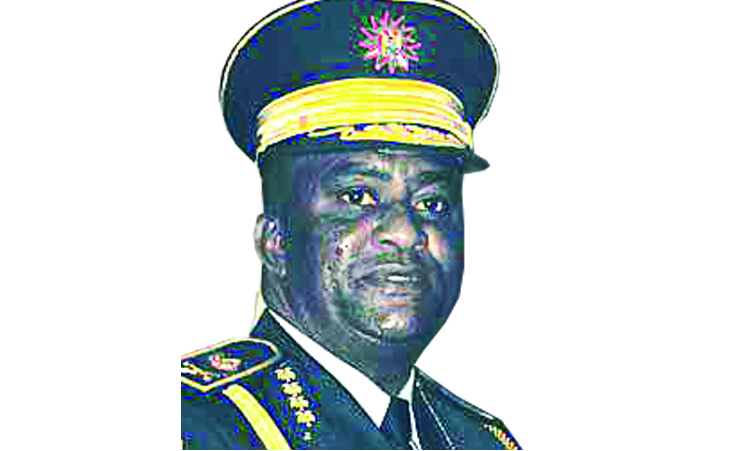
– Major general JB Tjivikua served in the Namibian Police for 27 years