






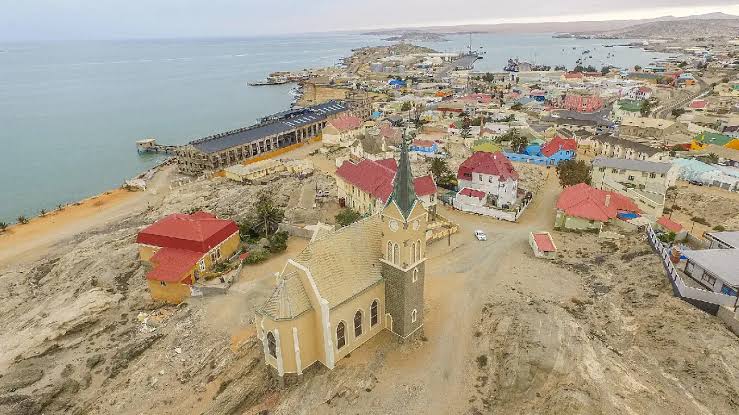
Off the coast of Lüderitz, drill ships hover over one of the most exciting oil discoveries of the century, and the nation holds its breath for a final investment decision.
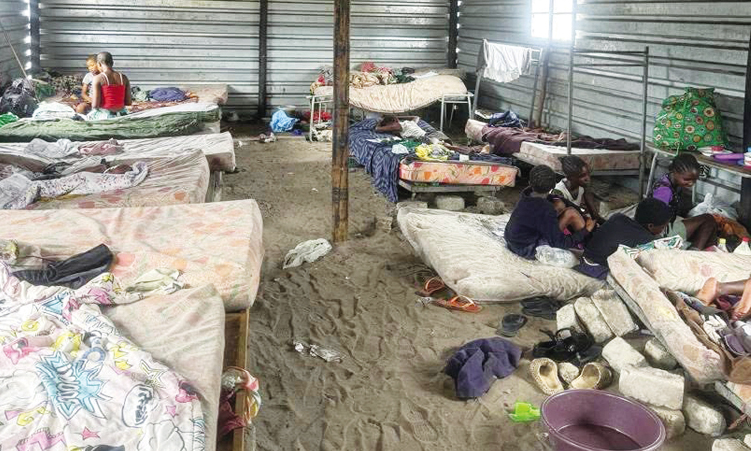
A few hundred kilometres inland, on the sandy edge of Windhoek, the corrugated roofs of Havana stretch to the horizon. We are transfixed by the first frontier and quietly embarrassed by the second. I have come to believe we have it precisely backwards.
For a generation we have read Namibia’s informal settlements as a wound to be healed: a housing crisis, a service backlog, a cost the budget cannot bear. That reading is the single most expensive misjudgement in our economic policy.
Those settlements are not a liability sitting on the national balance sheet. They are the largest reserve of untapped capital in the country, and we persist in filing it under ‘problem’.
Peruvian economist Hernando de Soto gave this phenomenon its name: dead capital. The poor, he observed, are rarely poor because they own nothing. They are poor because what they own is legally invisible.
A family may occupy a plot for two decades, build on it, trade around it and raise children within it, yet without a secure title that home cannot be mortgaged, pledged as collateral, insured, cleanly inherited or developed with borrowed money.
It remains a shelter. It never becomes capital.
De Soto estimated that the world’s poor were sitting on trillions of dollars of such frozen wealth, locked out of the formal economy by the absence of a document.
Namibia holds one of the most concentrated reserves of dead capital anywhere on earth. Close to 40% of Namibians live in informal settlements.
Roughly nine in 10 do not qualify for a mortgage. We require more than half a million homes, and we remain, by most measures, the second-most unequal country in the world.
Every one of those silver-roofed homes stands upon land its occupant does not legally own. That is dead capital, at national scale, in plain sight.
PROGRESSIVE LAND ACT
Our instinct as a state has been to answer this with construction: to build houses, at a target of 10 000 a year. To complement this concretely and accelerate hard delivery even more we do not need to invent the mechanism.
We have already built it. In 2012 this country passed the Flexible Land Tenure Act, one of the most progressive land laws on the African continent.
We do not need to invent the solution. In 2012 we passed it into law, and then we left it in a drawer.
Its stated purpose, written into the statute itself, is to grant residents of informal settlements a simpler, cheaper form of title and to empower them economically through those rights.
It created an elegant legal staircase: a starter title that rises to a land-hold title and, in time, to full freehold ownership.
It is, in effect, a machine for turning a shack into a bankable asset. And then we let it gather dust.
The regulations took six years to finalise. The first titles were issued only in 2021 to roughly 900 households against nearly 135 000 families who need them – a world-class key, fitted to the lock and abandoned.
The opportunity before us is not to house the poor. It is to bank them. First, title it, converting the Flexible Land Tenure Act from a modest pilot into a national mobilisation, with a digitised land registry and properly resourced land rights offices.
Second, bank it, designing housing finance for the way Namibians actually live: micro-mortgages, incremental loans that finance a room at a time, and credit secured against land hold title. Third, and most powerfully, fund it with our own money.
Our pension funds are already legally required to channel a share of their assets into local, developmental investments, and our largest fund alone has committed tens of billions to alternative assets.
A deliberate portion of that could finance the formalisation of the very settlements in which many pensioners’ own children live: Namibian savings, recycled into Namibian ownership, without waiting on a single foreign donor.
Fourth, build differently, delivering serviced land and a secure title and allowing citizens to build incrementally, as billions across the Global South already do, faster and cheaper than any state programme.
And fifth, formalise the economy on top, because a bankable address turns an informal trader into a business a bank can serve and a taxpayer the state can finally reach.
We speak endlessly of the dividend that oil and green hydrogen may one day deliver.
OWNERSHIP AS DIVIDEND
But the deepest dividend a nation can pay its people is not a cheque. It is ownership. A citizen with title holds collateral, a stake, a reason to invest where they stand and something to pass on.
That, and not a once-off transfer, is how a society begins to dismantle an inequality as old and as deep as ours: by democratising assets permanently rather than redistributing income once.
This is not a Namibian curiosity. Informal urbanisation is the defining feature of the 21st century developing world, and no country has yet cracked how to convert it into formal capital at scale.
Namibia, small, financially sophisticated, sitting on a pool of mandated domestic capital and already holding the enabling law in its hands, is almost uniquely equipped to be the nation that shows the world how.
The rigs off our coast are a magnificent wager on a future that has not yet arrived.
The silver houses on our doorstep are a magnificent asset we already own and stubbornly mislabel a burden.
Namibia is not short of capital. So much of our capital is simply dead, and the instrument to bring it back to life is gathering dust.
It is time to turn the key.
– Jason Kasuto is the managing director of Monasa Advisory & Associates, a Namibian transaction advisory firm working across capital markets, research and development finance.