





A National Assembly motion proposing that the voting age in Namibia be reduced from 18 to 16 years may appear progressive, perhaps even inclusive.
However, a deeper look at this issue reveals more complex constitutional, developmental, social, and political implications which should not be overlooked for the sake of political expedience.
Namibia’s Constitution enshrines fundamental rights and freedoms, and outlines clear thresholds of responsibility and accountability.
The framers of our Constitution did not randomly decide on the age of 18.
It was deliberate: a balance between acquiring a basic education, civic maturity, and the capacity to understand the gravity of shaping governance through the ballot box.
Children’s rights are protected under both domestic and international law.
Among others, the United Nations Convention on the Rights of the Child, to which Namibia is a signatory, emphasises the importance of protecting children from exploitation, manipulation, and harm.
By definition, individuals under 18 are classified as children.
Extending voting rights to children of 16 contradicts not only the spirit of the Constitution but our international obligations.
It effectively lowers the age of political vulnerability and opens the door to undue influence.
WHAT’S THE GOAL?
It is important to ask ourselves what the goal of this proposal is?
If it’s about broadening democracy, why not rather focus on higher participation rates among adults already eligible to vote?
Statistics show that adult voter turnout has been declining.
Would it not be wiser for political parties and the government to direct their energy towards restoring faith in governance, improving service delivery, and addressing corruption, unemployment, and poverty – issues that disillusion many adult voters?
If we cannot convince adults to participate in elections, what logic is there in recruiting children into the same system?
This proposal also poses a dangerous precedent.
If a 16-year-old is considered mature enough to vote in national elections, are we to assume they are equally mature to stand as candidates in local authority councils, in regional councils, or even the National Assembly?
If the answer is no, we already face an inconsistency. Democracy must be coherent and principled; it cannot be applied selectively when it suits political convenience.
DEFINING DIFFERENCES
We must also appreciate the difference between voting in student representative council (SRC) elections and voting in national elections.
SRC elections often revolve around school-related concerns and carry limited real-world consequences.
National elections are about determining the leadership that will manage national resources, decide on defence and foreign policy, negotiate trade agreements, and make laws that govern every aspect of our lives.
To conflate the two is to trivialise the gravity of national governance.
Critics may argue that at 16, young people are already working, paying taxes indirectly, or should have a say in decisions that affect them.
The remedy is not to lower the voting age.
The solution lies in strengthening youth empowerment policies, improving education, creating safe spaces for youth voices, and ensuring that elected leaders act on issues affecting the youth.
Giving a ballot paper to a 16-year-old does not guarantee that these structural problems will be solved; it only transfers the burden of responsibility onto children not yet equipped to carry it.
Adolescence is a critical stage of cognitive and emotional development.
At 16, most young people are still grappling with questions of identity, peer influence, and academic pressure.
Scientific studies in developmental psychology confirm that the brain, particularly the prefrontal cortex responsible for long-term planning and decision-making, continues to mature well into the early 20s.
To impose the weight of national political decision-making on 16-year-olds is not only unfair but potentially exploitative.
THE TRUST FACTOR
We can’t overlook possible political motives behind such proposals.
Extending voting rights to 16-year-olds may not necessarily be about inclusivity, but more about enlarging the voting pool for short-term electoral gain.
Political parties must resist the temptation to use children as pawns in their struggle for power.
If they genuinely want to earn the electorate’s trust, they must focus on policies that uplift families, reduce unemployment, and create a fair economy.
Trust cannot be manufactured by expanding a voter roll with children; it must be earned through genuine service and leadership.
Namibia is a young democracy but it must remain a responsible democracy.
We must uphold both the spirit and the letter of the Constitution.
The age of majority is not merely a number, it is a social contract that marks the transition from childhood to adulthood, from dependence to responsibility.
Diluting this contract by lowering the voting age undermines not only the sanctity of our democracy but also the protection we owe to our children.
OUR REAL TASK
It’s commendable that leaders want to innovate in strengthening democracy but lowering the voting age to 16 is neither the solution nor the correct path.
We must respect our children and not use them as tools for political gain.
Let’s rather give them the space to complete their education, to mature, and to prepare for the future.
When they turn 18, they will enter the democratic process with greater awareness, independence and readiness.
The real task is to ensure that our democracy remains credible and functional so that when the young people come of age, they inherit a system worth participating in.
If we prematurely burden them, we risk condemning them to regression instead of empowerment.
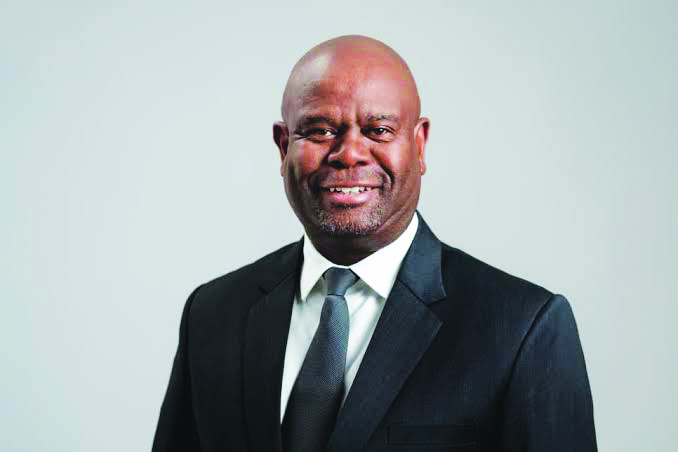
- – Hidipo Hamata is a former parliamentarian. These are his personal views, not those of any party or organisation.