



Too many times have I heard “Coloureds don’t have culture”. This is a statement I have many battles with as I completely disagree.
In a country where communities were shaped by apartheid regulations and laws, you find that many neighbourhoods have their own vibe and atmosphere. Black locations are the embodiment of black culture, while white locations exude luxury and wealth. And then you have the ‘in-betweener locations’ that have their own ambience.
A community torn apart by identity and marginalisation, there has recently been a stir amongst Coloured communities, especially in South Africa, where they are fighting back against being sidelined.
Born with Namib Desert sand between her toes, a woman brought up in Upington, Eleanor du Plooy, has recently challenged the unsettling meanings of Coloured identity on News24.
Running the Ashley Kriel Youth Desk at the Institute for Justice and Reconciliation in South Africa, Du Plooy said “recent racial tensions in the Western Cape – fuelled by dissatisfaction over housing, poor service delivery and inhumane living conditions – have again thrust Coloureds into the national spotlight and elicited enthusiastic debate online and in other media, about the nature and form of this category of South Africans. Centering this issue, however, is not a case of Coloured exceptionalism but rather an acknowledgement of a group of people who have expressed feelings of being marginalised by dominant groups in South Africa”.
She also mentions that experiences of white racism have shaped Coloured identities as well as anti-black prejudice and racism and if these racial tensions are not addressed, harmful consequences could be the result.
Du Plooy said her experience of Coloured identities is that this community is not a homogenous group, “not in terms of personal politics and political thought, or even a primary language. And yet, despite this, there is a definite group ethnic consciousness”.
“This narrative of racial ‘mixing’ is especially harmful as it shrouds coloured identities in shame and renders Coloureds cultureless within popular narratives.”
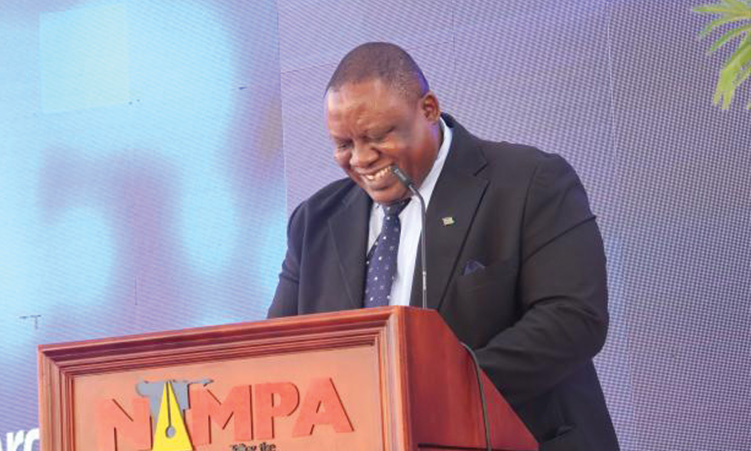
Former media and public relations practitioner, Cape Town-born Jonathan Sam mentioned that he was raised with a black identity and has regarded himself as black, and Coloured, his entire life. “I grew up in Cape Town, deprived of many of my basic human rights, like all other black people in the country.” He later moved to Namibia for personal reasons.
After finishing university, Sam embraced the Black Consciousness philosophy outlined by Steve Biko.
“A philosophy that has directed my life and my outlook on the political scenario around me – both in South Africa and Namibia. It was only after Namibia’s independence that I started having my personal doubts – impacted by how my Bantu-speaking peers regarded people who are generally and fondly known as Coloureds.”
Sam said the reality that this community is not regarded as black by the majority of Namibians, and specifically the ruling party, is in fact a sad truth.
“A strong case in point is the application of Affirmative Action, which has resulted in only a handful of mixed race persons appointed in important positions by government, for example. I can think of only the Steytlers in the president’s office, the Smiths of TransNamib and the Van Kents and Steenkamps in education off the top of my head.”
Questioning the differences and relationship dynamics between Coloured and black people, Sam, as a Black Consciousness follower, believes there should not be any political difference in the way the two groups view each other. “But alas, this is far from the reality, as the two groups, sad to say, view each other with suspicion.”
Sam believes that if Coloured people embraced Black Consciousness, the issue would subside, however due to the distinct divide, this community has strayed from the notion of a unified consciousness and “are speaking strongly in the direction of forming a laager to protect the little they still have. I can see inherent dangers if this should come about, but on the other hand, there is safety in numbers, so to speak.”
Though there may be a perception that this philosophy excluded the Coloured community, Sam explained that this movement is inherently the unified pride of all people who are not white, and being comfortable with being black as opposed to white – against which the struggle was fought primarily.
“That was the enemy and it was important that one had to define oneself first before challenging any enemy. No enemy can be tackled on a fractured front. And this is what Black Consciousness advocated. It’s a philosophy that did not exclude any person who is not white. Coloureds have to decide for themselves whether they want to embrace the philosophy. Sadly, many of them have rejected it.”
As Namibian Coloureds have a strong link to their South African siblings, the dynamics of their different surroundings haven’t impacted the cultural bond between the two to a large extent, Sam, who has photographed both communities, said. “Most people like to be photographed,” he joked.
Not having seen many Coloured names or faces popping up in Namibian history books, especially surrounding the topic of the apartheid struggle, Sam said that in South Africa, there are many examples of Coloured people who played an important role in this era.
“In Cape Town, for example, I have the utmost respect for the thousands of youths who were willing to sacrifice their lives and defied the strong military presence in the Coloured townships with only stones.”
As people of Khoisan, Bantu, European and Asian decent, the Coloured community has struggled within themselves about the term Coloured – used during the apartheid era to seperate Africans from the people who are ‘not so African’.
“I personally don’t like the term Coloured.
Which colours are we referring to? It’s abhorrent – mainly because it was drafted by an oppressive regime bent on dividing a community to make it easier to oppress. Many have thought about a suitable word to describe a group of people of mixed race. But this is so ludicrous because aren’t we all of mixed race? The fact remains, there should never have been a distinction of different groups in the first place,” Sam concluded.