



THE expression of emotions is pivotal to health and well-being. But what exactly does ‘emotional expression’ mean and is it the same for everyone?
The issue is certainly much more complicated than usually assumed since – due to socio-cultural diversity – people have different emotional styles, i.e. emoting in relation to the somatic, the group or the self.
The somatic-emotional style is predominant in Namibia and entails a pattern in which the emotions are dulled or not verbally vented – and consequently converted to bodily sensations. This is often linked to an autocratic socio-cultural context. After all, Hendrik Verwoerd’s doctoral research focused on ‘the blunting of emotions’.
Nonetheless, in order to comprehend this particular emotive type, it is essential to highlight the dynamic exchange between the psycho-physiological and socio-cultural circumstances of emotions.
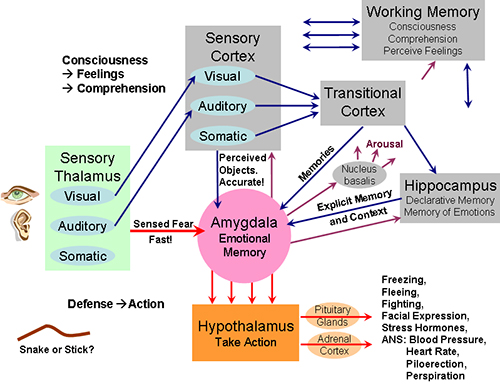
Humans are born with four basic emotions, i.e. happiness, anger, fear and sadness. These primary emotions are located in the brainstem, with the approach emotions (happiness, anger) situated in the left hemisphere and the avoidance emotions (fear, sadness) on the right side.
Simultaneously, the brainstem controls autonomic functions such as heart rate, digestion, breathing, body temperature, swallowing, vomiting, wake and sleep cycles, and so forth. All these tasks impact on how emotions are revealed in the body.
The cranial nerves that originate in the brainstem regulate the facial sensations, eye movements, the face, neck and shoulder muscles, etc. So, facial expressions of the rudimentary emotions are universal. Noteworthy is that evolution probably intended anger – the powerful emotion – to be an adaptive reaction, though the socio-cultural setting usually encourages the inhibiting of it.
Thus anger is central to the subject of emotional articulation. Maybe Russian culture is spot-on in viewing the so-called negative sentiments as productive.
Compared to the brain, the peripheral nervous system is of greater consequence to three of the elementary emotions – fear, sadness and happiness – as the relevant bodily sensations are not only manifested through this system, but as these sensations allow for the recognition of these emotions and might even be regarded as part of the cognitive processes.
Anger, however, remains in the head and moves from the brainstem to the frontal lobes, i.e. from the neck (stiffness), to the jaws (tension), the side of the head (aches) and to the brain (blind with rage). Fear – the physical emotion – is expressed in most people through a sense of ‘fluttering butterflies’ in the abdominal area which actually involves tension in the smooth (involuntary) muscles of the colon.
This awareness spreads from the abdominal region upwards in the body and could include palpitations, chest pressure, sweaty palms, shivering, dizziness, etc. Fear (or anxiety) is also the response that comes out mostly in dreams and is generally the emotion closely connected to a somatic-emotional style.
Sadness – the painful emotion – travels from the heart (heavy feeling), through the throat (choked up) and up to the eyes (crying). Happiness – the uplifting emotion – similarly starts in the heart (light feeling) and glows throughout the body with people feeling warm (heightened sensations) and as if they are floating. Secondary or advanced emotions (e.g. resilience, surprise, disgust, jealousy, guilt, curiosity, empathy, etc.) emerge due to language acquisition. The variety and intensity of these complex sentiments are determined – not by the brain – but by language and culture.
It is accurate that most language and speech functions are located in the (front) left hemisphere – where the approach emotions are found – while conscious thought (inner speech) and higher cognitive functions are also situated in the frontal lobes.
However, the linguistic element acts on the neuronal network in the brain and transforms it. In short, language – that arises from the socio – cultural framework – pulls emotions to a higher level. Emotions are not passive experiences of the body and are not unchanging, but flowing and vibrant.
This emotive energy coordinates and generates internal reactions of the body. Hence, the communication of emotions advances them. And, indeed, emotional expression has many other benefits, e.g. to counter somatisation, to enhance individuation and generally to serve as the main compass in socio-cultural situations.
So, Namibians might be posing questions such as: What could be, to borrow from the psychologist Lev Vygotsky, the Zone of Proximal Emotional Development (ZPED) that every Namibian should strive for? Which are the beneficial emotions to co-construct? What are the socio-cultural mechanisms that make the potential emotional scaffolding possible? Namibians ought to be emboldened to verbalise their emotional reactions. It is time to heal the emotions.